
 E-Paper



Rude Food by Vir Sanghvi: Chicken Tikka Manchurian?

 Prefer HTon Google


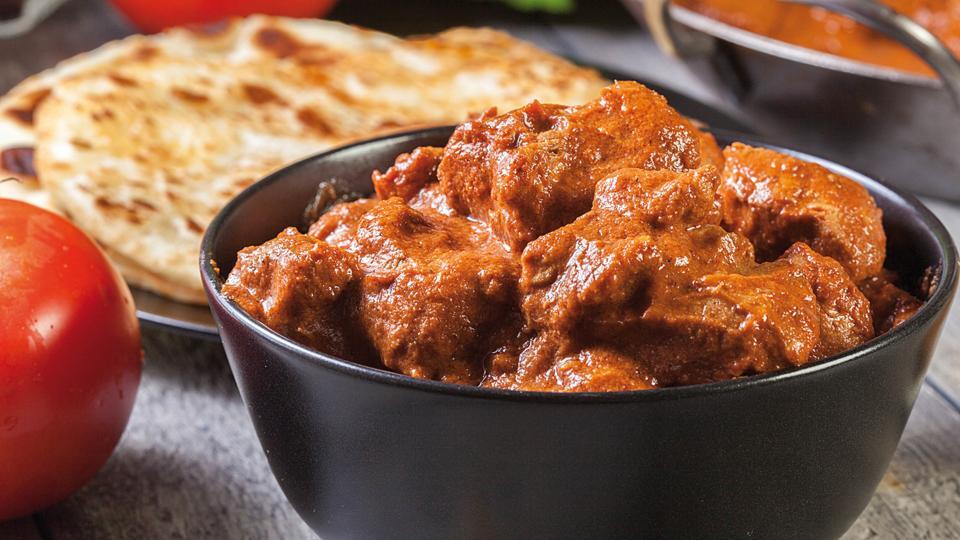
The UK’s beloved Chicken Tikka Masala is as authentically Indian as our Chicken Manchurian is authentically Chinese. And it’s nothing like Butter Chicken
It must have sounded like a good idea when he pitched the story to his editors. Some time in the 1990s (I can no longer remember exactly when) Charles Campion, who was then the food critic for the magazine of The Evening Standard, a London paper, had a thought.
Suppose he got some Indian foodies to judge the Indian food served in the UK? He would fly to Delhi with several vacuum-packed boxes of curry from Indian restaurants in the UK.
He would gather a bunch of foodies and ask them to try the food. They would judge the curries and he, Charles Campion, would record the judging process for posterity.
And so, Charles flew to India with his boxes of curry. He had a large budget (in those days, newspapers had money) so he got his local fixers to set up a tasting area in a lovely monument in Hauz Khas. And he hired the great Raghu Rai to shoot the event.
There was just one problem. He chose Chicken Tikka Masala as the curry the Delhi foodies were going to judge. Did he know then that nobody in India had heard of Chicken Tikka Masala? My guess is that he did not.
Anyhow, we turned up at Hauz Khas and watched fascinated as Charles pulled out packet after packet of what he called CTM (for Chicken Tikka Masala). None of us had seen anything like it. Some of the curries were a lurid orange, the kind of shades you only get from food colouring. All of it was pretty revolting as far as I can remember.
Charles had a story. But not the one he came for. We were certainly not going to say that the CTM from Restaurant A was better than the CTM from Restaurant B. There really wasn’t much to choose.
But he did go back and do a story saying (shock! horror!) that Indians had never heard of Chicken Tikka Masala.
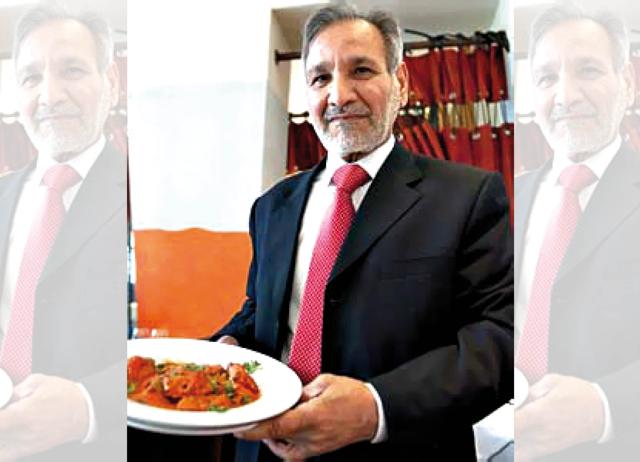
I thought back to that afternoon last week when I read that Ali Ahmed Aslam (‘Mr. Ali’), the proprietor of a restaurant in Glasgow, had died. Aslam was regarded by the British press as the inventor of Chicken Tikka Masala.
By now, Brits know that it is not an Indian dish, but that works in CTM’s favour. It is regarded as a symbol of a multi-racial, multi-cultural Britain.
Indians, who are still not familiar with the dish, are often fooled by the name. They believe that because it involves Chicken Tikka, it must be some variation on our own Butter Chicken. In fact, not only do the two dishes have a completely different history, they also look and taste completely different—as I discovered that day, over two decades ago in Hauz Khas.
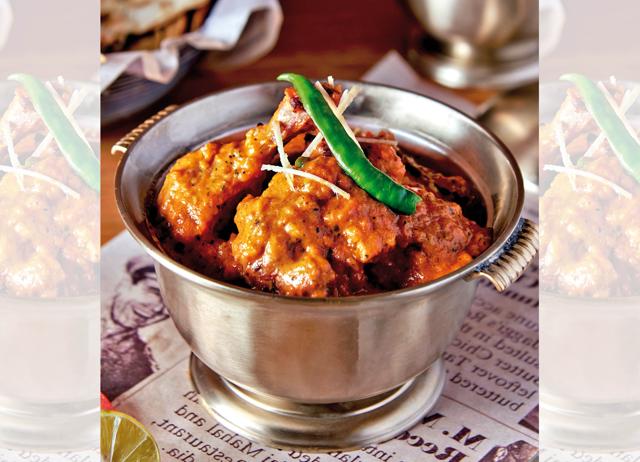
The origins of our own Butter Chicken are well known. Tandoori Chicken was invented (probably in the 1930s) at a restaurant in Peshawar called Moti Mahal. After Partition, some employees of the Peshawar Moti Mahal came to Delhi and opened a version of the original restaurant here. Though Tandoori Chicken was a hit in Delhi, the owners did not know what to do with the leftover, dried-out chicken.
So, they invented what we now call Makhni sauce. This was made mostly from tomatoes and butter with a little sweetener (sugar in the old days, honey later) to balance out the sourness of the tomatoes and some kasuri methi.
I call it a sauce, because that is what it was. It certainly wasn’t a curry in the traditional sense. At Moti Mahal, they would dunk the pieces of leftover Tandoori Chicken in the sauce to rehydrate them and thus was Butter Chicken born. (Sometime in the 1950s, I reckon.) The sauce was so delicious that Moti Mahal started adding a version of it to Punjabi black dal, (which traditionally, had no tomatoes), creating the Dal Makhni ( later refined as Dal Bukhara) that we know so well today.
That sauce, which is difficult to make and is (almost like the sauces of French cuisine) strained at least twice to give it a perfect consistency, has nothing to do with Chicken Tikka Masala.
Maunika Govardhan, the chef and bestselling cookbook writer, was brought up in India and recalls, “I first heard of CTM when I moved to Britain two decades back. The cooking techniques for both Butter Chicken and CTM vary, and so do the ingredients.”
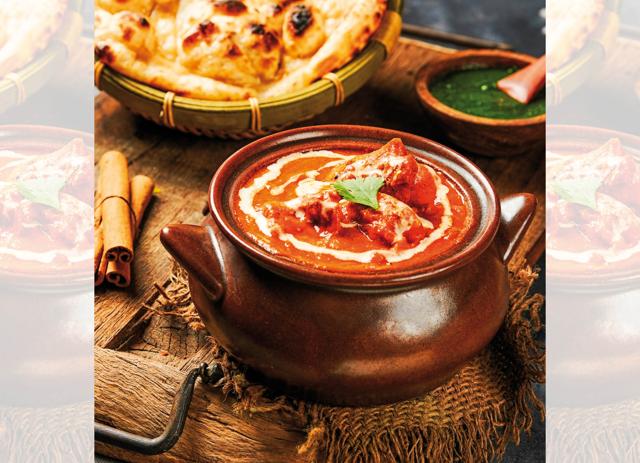
So what is a CTM? The consensus among the London chefs I spoke to was that there is no one classic recipe as there is for the Makhni sauce. The official origin story which appeared in all the obituaries of ‘Mr. Ali’ in the British press is that British customers at his Glasgow restaurant found his kababs a bit dry on their own, so he invented a gravy for them to eat the kababs with. He used a can of tomato soup and spices, according the approved version of the story, though there is no agreement on what those spices were.
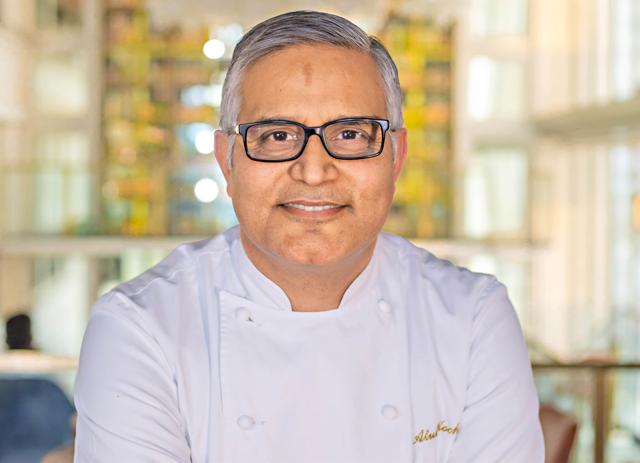
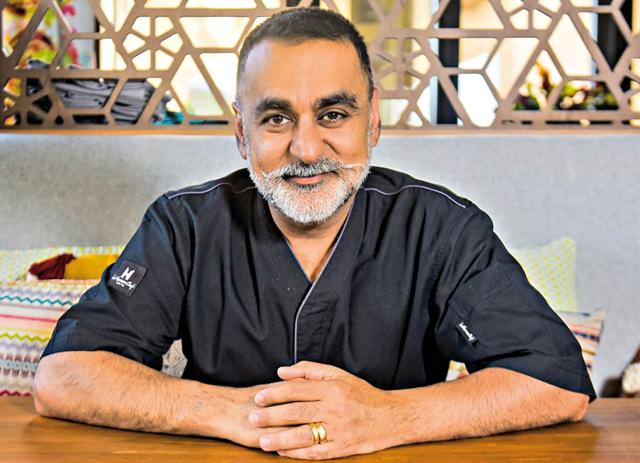
I went to the two chefs who might know best. Indian food was only taken seriously in the UK after 2001 when two young chefs, Vineet Bhatia and Atul Kochar, won Michelin stars for their restaurants. I called Atul in London and asked him if he knew how exactly CTM was made. He said that he had a rough idea but he did not want to be too specific because there were many different versions of the dish.
Vineet was in Buenos Aires on the way to Antarctica when I tracked him down. He said that he had also heard the stories about cans of tomato soup but wondered if they were urban legends. In his experience, the basic difference between Butter Chicken and CTM was that while Butter Chicken relied on the Makhni sauce (originally, the dish had bones because pieces of Tandoori Chicken were used), CTM tended to be a curry made with boneless pieces of Chicken Tikka. It had tomatoes in common with Butter Chicken but it was much more a standard UK restaurant curry made with spices of the chef’s choosing (garam masala, coriander, haldi, chilli powder, jeera etc.)

Broadly, both Atul and Vineet agreed that it was just another of the curries created in the UK’s Indian restaurants, (both men were careful not to use the term ‘curry house’) but one that had become more popular than the others.
I took their wisdom to Sujoy Gupta, the veteran Taj chef who has now taken over at St. James Court in London. Sujoy was as clear. CTM has no Indian counterpart. It is just another made-in-Britain curry. It requires none of the skills involved in making a Makhni Sauce, which should be smooth and glossy like a French veloute. He did not want to knock CTM. But he could understand why its popularity has been largely restricted to the UK and why it has never caught on in India.
I thought back to the look on Charles Campion’s face when we rubbished the CTMs he had so lovingly packed. But that’s okay. Chinese people feel the same way when we make them try Chicken Manchurian.
And perhaps that is the right parallel. Chicken Tikka Masala is as Indian as Chicken Manchurian is Chinese. But as long as people enjoy the dish, who are we to be judgemental about it?
The views expressed by the columnist are personal
From HT Brunch, December 31, 2022
Follow us on twitter.com/HTBrunch
Connect with us on facebook.com/hindustantimesbrunch


