
 E-Paper



Keep subtitles on? Here’s why we say, Aye aye, caption

 Prefer HTon Google


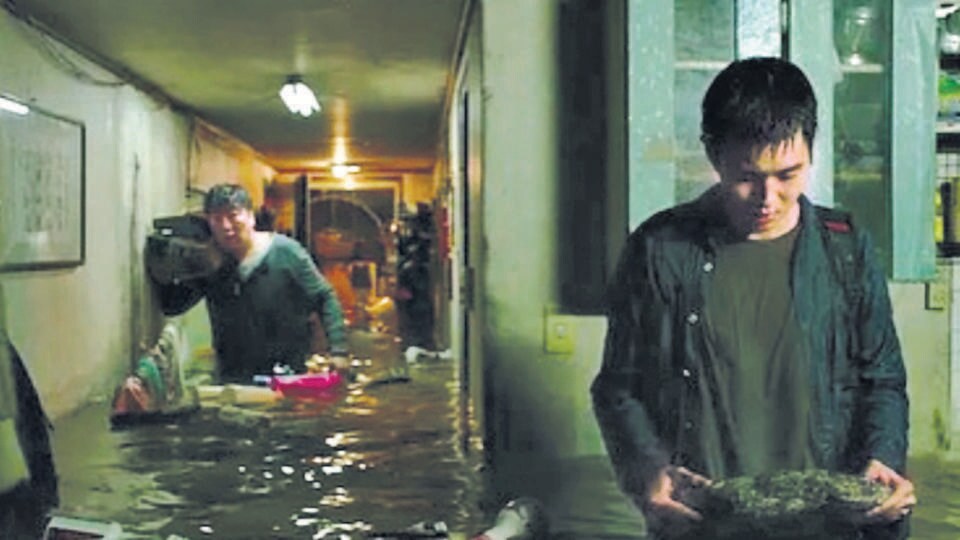
Pro tip: Watch everything with the subtitles on. They aren’t just for world cinema. Half the fun is at the bottom of the screen
In his acceptance speech, as he picked up the 2020 Golden Globe award for best foreign-language film for Parasite, South Korean director Bong Joon Ho made a passionate comment about subtitles. “Once you overcome the one-inch-tall barrier [on the screen], you will be introduced to so many more amazing films.” The film went on to win a Best Picture Oscar. It’s pulled in $262 million worldwide. Everyone’s loved the story of a poor family preying on a richer one, and empathised with the class struggle.
That one-inch-tall strip on the screen is now an essential part of the viewing experience. A 2019 survey of 5,616 US consumers by Verizon Media and Publicis Media found that 80% of respondents are more likely to watch an entire video when captions are available. About half admitted that captions are important because they watch video with sound off. And close to 80% said they prefer videos with subtitles, regardless of how and where they watch them.
But why are viewers still hung up about subtitles? Why do some people gripe about them appearing in the same language? And why haven’t more viewers taken to closed captions, which also describe other audio cues (background music, ringing phones, explosions)?
Subtitles aren’t just for film class, the Mubi app and obscure Criterion Collection bootlegs. They help keep up with fast-talking shows by Aaron Sorkin. They let the eyes catch the wordplay that the ears might miss. Those who squinted through the final season of Game Of Thrones will remember how they came to the rescue when it was too dark to see what was going on.
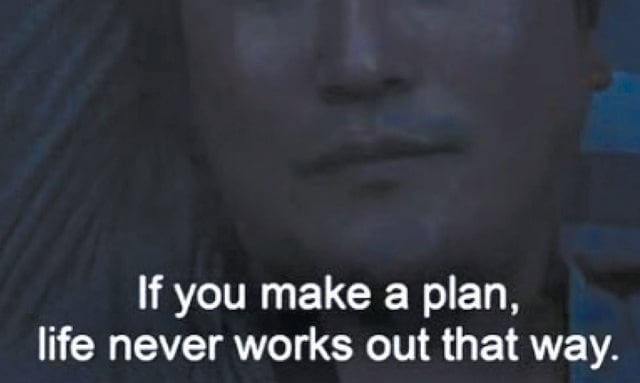
Plus, they can be fun. Closed captioning was introduced to help the hearing-impaired make sense of all the audio on screen. The inclusivity has led to some unexpectedly silly moments in TV viewing. When characters speak French on an English-language show. The text unhelpfully says, “Speaking French”. When censors bleep part of the dialogue, the captions say “Bleep” too. What, pray tell, is “Vocalises dramatically”? Do they mean Maria Callas or Chewbacca?
Other times, that one-inch-tall text space can be surprisingly descriptive. Season 4 of Stranger Things saw some odd examples. As the slimy monster, Vecna, rose to power, the scenes were captioned: “Tentacles undulating moistly”, “Ichorous tentacles constrict”, and “Wet squelching”. Reading them somehow felt ickier than watching the show.
Thank the captions for when a new or half-forgotten tune plays in the background, and the text helpfully mentions that it’s Xtal by Aphex Twin. (Who’d ever guess from those opening bars?). Or when fans discover Ezra Furman entirely from watching Season 1 of Sex Education. It makes all the smaller descriptions, “Screams loudly out of the fear of the unknown”, “Intensity intensifies” mostly forgivable.
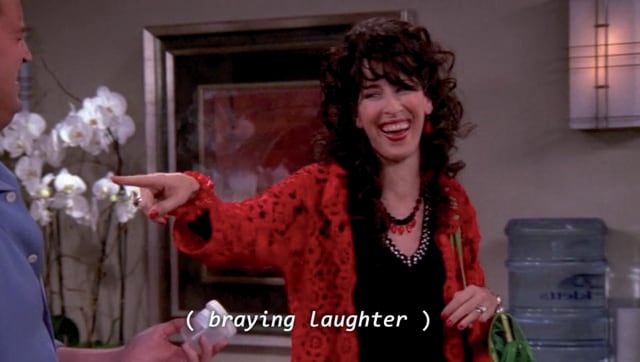
For India, same-language subtitles have been invaluable in smaller towns, where viewers have been able to polish up their English and work out pronunciation simply by watching TV. Remember Janice’s signature laugh from Friends? Captions describe it as “Braying” and “Machine-gun-fire-like-laughter”. And let’s not pretend any of us knew the difference between a chuckle and chortle before we had captions.
On the other hand, captioning for any of the Minions films is a cakewalk. Just add the description of the noises and sounds the characters make and the rest of the dialogue, “Speaking Minionese”.
The text is becoming something of an art form. For the 2004 Russian horror film, Night Watch, director Timur Bekmambetov insisted on subtitling the film himself. The subtitles don’t merely sync with the dialogue, they’re a part of the storytelling process. Bekmambetov deploys typographic effects and animations. In one scene, the words dissolve away like blood.
Sure, turn the captions off. Disregard subtitles entirely. But half the fun is at the strip at the bottom of the screen. Why miss out?


