
 E-Paper



Vaseline vs. Glycerin: What is better for your skin and why?
Vaseline and glycerin are both popular winter skincare essentials, but which one is actually better for your skin?

 Prefer HTon Google


When it comes to skincare, two humble ingredients have stood the test of time: Vaseline and glycerin. Far from the glamour of face serums, or expensive creams, Vaseline, and glycerin have been long-trusted by our mothers and grandmothers for their skin. But if you had to choose one, which one is actually better for your skin, especially during winter, and why?
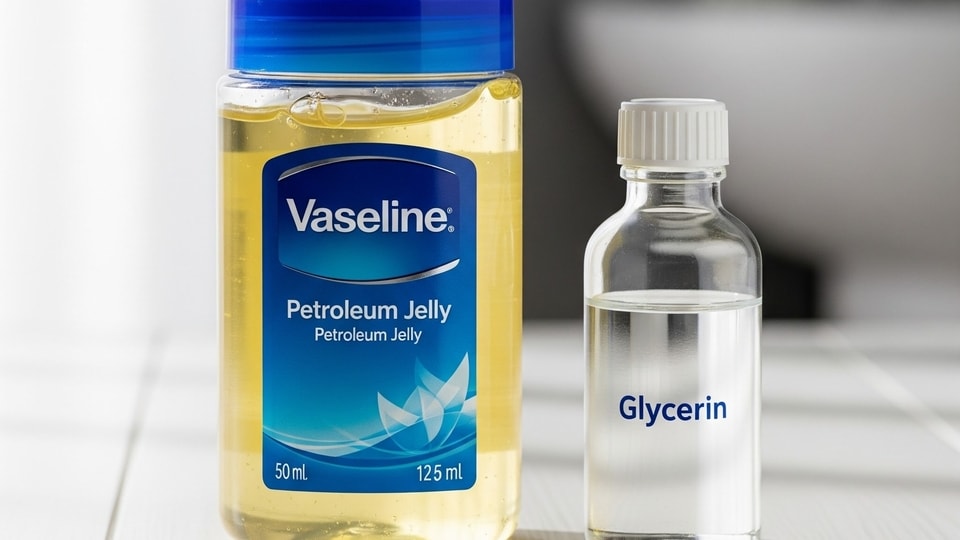

What exactly are Vaseline and Glycerin?
“Glycerin and Vaseline work best when you think of them as a team: glycerin acts like a moisture magnet that pulls water into the skin, especially when applied on slightly damp skin, while Vaseline creates a powerful occlusive barrier that locks in up to 99 percent of that moisture,” Dermatologist Dr Shweta Tripathi, co-founder at MySkindom, tells HT ShopNow.
Think of Vaseline and glycerin as two very different types of moisturisers working toward the same goal: hydration. But they take completely different routes.
Vaseline, also known as petroleum jelly, is an occlusive. It is a soft, waxy raincoat that forms a protective layer on top of your skin, preventing water from escaping. It doesn’t add moisture itself. Instead, it traps what’s already there.
Glycerin, on the other hand, is a humectant. It is the sponge of skincare. It pulls water toward itself, whether from the deeper layers of your skin or from the environment, bringing hydration exactly where you need it.
What are the benefits of Vaseline and Glycerin for skin?
Vaseline: The Barrier Builder
If your skin is dry, cracked, chapped, or irritated, Vaseline works like a seal. It helps your skin heal by shielding it from cold weather, wind, and friction. That’s why it's a favourite for treating cracked heels, chapped lips, minor cuts and scrapes, dry eyelids or elbows and for post-procedure healing.
The downside? That same protective layer can feel heavy or greasy. For acne-prone or oily skin, it may feel suffocating, even though it isn’t technically pore-clogging.
Glycerin: The water magnet
If your skin is dehydrated, tight, flaky, or dull, glycerin helps pull moisture into the top layers. It is lightweight, water-loving, and works beautifully in lotions, serums, cleansers and hair products.
Glycerin leaves skin soft, plump, and hydrated. It is suitable for most skin types, including oily and sensitive skin. However, when used alone, glycerin can feel sticky, and in very dry climates it may pull water from within your skin instead of the air, causing more dryness unless paired with another moisturiser.
What is better?
The answer lies in what your skin truly needs.Dr Tripathi explains: "Glycerin is lightweight, non-greasy, and ideal for normal to moderately dry skin during winter. But in very dry climates it can backfire by drawing water from deeper layers if not sealed properly. That’s where Vaseline shines, particularly for very dry, flaky, or cracked areas such as lips, heels, elbows, hands, or eczema-prone spots.
For dry skin:
This is where the match gets interesting. Glycerin hydrates, but the hydration can vanish quickly if not sealed in. Vaseline seals, but only works well if there’s moisture underneath.
So, the best choice? Both—layered.
Apply glycerin (or a glycerin-based lotion) first, then top it with a thin layer of Vaseline to lock everything in. This combo is often called “slugging” in modern skincare terms.
For oily or acne-prone skin:
Glycerin wins by a landslide. It hydrates without feeling heavy, and it won’t trigger breakouts. Vaseline won’t clog pores scientifically, but the occlusive layer can trap sweat, bacteria, and dead skin, creating the feeling of a breakout waiting to happen.
For sensitive or eczema-prone skin:
Vaseline takes the lead. It’s extremely gentle, contains no fragrances or preservatives, and protects irritated skin beautifully.
Glycerin is still helpful, but when the skin is very compromised, it can sting slightly.
For very dry climate or harsh winter:
Vaseline is better as the final layer. Winter air steals moisture fast, and glycerine alone may pull hydration out of the skin. Vaseline helps prevent water loss and protects your skin barrier.
So, who wins overall?
There is no universal champion, but here’s the simplest way to decide:
- Choose Vaseline if you need protection, healing, or barrier support.
- Choose glycerin if you require hydration, softness, and plumpness.
- Use both if you want the best of both worlds—hydration and protection.
Dr Tripathi's advice is simple: "Apply a glycerin-based moisturiser first. Then seal it with a thin layer of Vaseline wherever extra protection is needed, creating the perfect balance of deep hydration and barrier repair.”
(Note to readers: This article is for informational purposes only and not a substitute for professional medical advice. Always seek the advice of your doctor with any questions about a medical condition.)
Similar articles for you
Winter skincare alert: 5 morning habits that are drying out your skin and causing premature ageing

Catch your daily dose of Fashion, Taylor Swift, Health, Festivals, Travel, Relationship, Recipe and all the other Latest Lifestyle News on Hindustan Times Website and APPs.


