
 E-Paper



Japan sees surge in foreign tourists splurging on kimonos, knives, and meals thanks to weak yen

 Prefer HTon Google


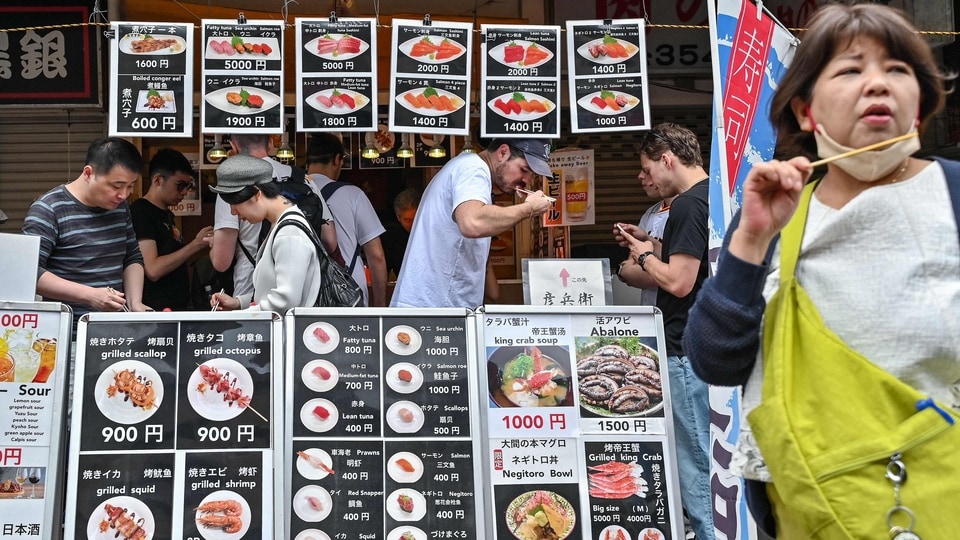
Weak yen attracts foreign tourists to Japan, leading to record visitor numbers. Tourists indulge in shopping for shoes, traditional clothes, and handmade knives
Foreign tourists are flocking to Japan in record numbers and thanks to a sliding yen many are living like kings, splashing out on everything from kimonos to knives and slap-up meals. "I bought three pairs of shoes, which is something I would never normally do," French tourist Katia Lelievre, 36, said with a laugh in the bustling Asakusa area of Tokyo famous for its Buddhist temple and souvenir shops. The brands available in Japan are the same as in Europe -- Converse, Nike and Adidas -- but because of the exchange rate "it was really worth it" to buy, she told AFP.
"The food is really cheap. (I spent a lot) especially on food. I tried everything I wanted," Dominique Stabile, 31, visiting from Italy, told AFP. “I had a budget set and I didn't exceed it, so I'm happy.” Local businesses are also benefitting. "A lot of people do the math and when they see the equivalent in their country's currency they say: 'Wow, I'm going to buy that too'," said Saori Iida, who works in a shop selling traditional second-hand Japanese clothes. (Also read: Greece: Athens' former airport transformed, Ellinikon emerges as largest smart city in Europe )
"Yesterday, we had someone who bought 15 kimonos," she said. "Thanks to the weak yen, foreign customers are buying a lot of handmade knives, even as prices rise," said Yuki Suzuki, 21, who works in a shop selling knives, another tourist favourite. "I feel like there are now more customers who want to own sets and buy a little more, for example several blades made by the same craftsman," she told AFP.
Very reasonable ramen
In March the monthly number of foreign visitors surpassed three million for the first time, up 11.6 percent from March 2019 before the Covid pandemic torpedoed tourism. Spending per head soared 52 percent over the first three months compared to the same year. Currency movements help explain why. In 2019 a dollar bought 112 yen, compared to almost 158 on Wednesday, a 34-year low. On Monday it briefly hit 160.
A bowl of ramen noodles costs around 1,000 yen, which in 2019 was around $8.90 and is now $6.30. A luxury watch or handbag labelled at 700,000 yen in Tokyo now costs the equivalent $4,430, a snip compared to $6,250 five years ago. Many shops exempt tourists from Japan's 10-percent sales tax if they show their passport. The biggest spenders per capita are Australians followed by visitors from Britain and Spain, according to the Japanese tourism agency.
‘Great value’
The slide in the currency is blamed in part on the Bank of Japan's maverick policy of ultra-low interest rates while other central banks have hiked theirs. Japanese household consumption has been in constant decline since March 2023, due to inflation -- the weak yen makes imports pricier -- weakening purchasing power.
Some Japanese are also unhappy about the invasion of big-spending tourists, thronging stores and clogging up their favourite restaurants. One town plans to put up a barrier blocking the view of Mount Fuji. Visitors are "getting great value for money," said Akiko Kohsaka, an economist at the Japan Research Institute and an expert on tourism.
"It may mean tourists may choose to stay at better hotels than usual, or stay in Japan for an extra day or buy brand items," she told AFP. "Even with sandwiches or hamburgers -- things that visitors can buy at home -- they can sense that they would not get that kind of value for their money at home," Kohsaka added. "I think Japan can have confidence in itself as a tourism destination. Even if the yen reverses its trend, I do not think it would lead to sharp falls of spending by tourists."


