
 E-Paper



Qatar: Discovering Gulf’s Pearl Ahead of FIFA World Cup 2022

 Prefer HTon Google


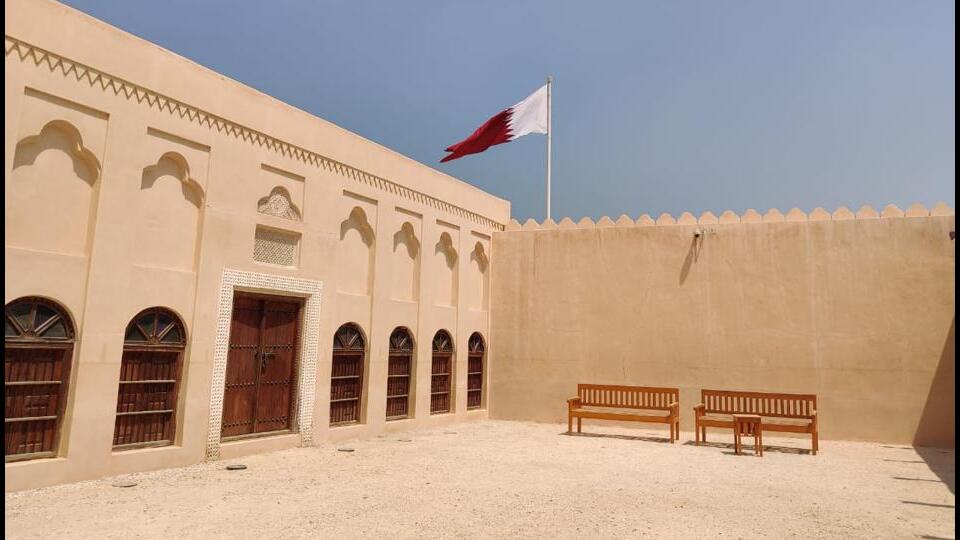
Ahead of the FIFA World Cup 2022 which is being hosted by Qatar, Doha has its eyes on the ball, literally. A group of journalists (including the author) was invited from the world over to view Qatar’s heritage showcased through art, heritage sites and museums.
The Arabs have a saying, which translates to: “If you have much, give of your wealth; if you have little, give of your heart.” Arid desert landscape, unforgiving climates and uncertain warrings may have given rise to this way of life among the bedouins (nomads) of the Arabian Peninsula who depended on each others’ kindness for survival, but this heartening idea of hospitality survived well into later generations. Qatar, one of the youngest countries to emerge out of the Gulf, proves to be the pulsating seat of this centuries-old culture that the Arabs have cultivated, preserved and promoted. Ahead of the FIFA World Cup 2022 which is being hosted by Qatar in November, Doha has its eyes on the ball, literally. A group of journalists (including the author) was invited from the world over to view this heritage showcased through art, heritage sites and museums.
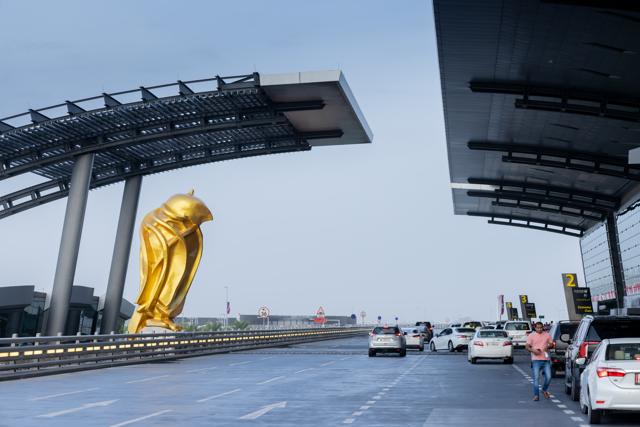
Landing in Doha post midnight, I witnessed the glittering pearl that the Capital city is. Towering skyscrapers juxtaposed with dhows (wooden boats) along the shimmering inland waters of the Persian Gulf are a reminder of the country’s history which began with pearl-diving and the futuristic vision it now beholds. Art in nature, art in manmade structures – even the light masts (300 in total on the highway connecting Hamad International Airport to Doha city) are marvels in themselves. Swathed with lyrics of Qatari poems and glowing in hues of pinks, greens and blues, they are the first introduction to the Qataris’ commitment to their art. Qatar Museums, the official government body that looks after museums, public art, design studios, archaeological sites and more, had curated an enriching itinerary that took us deep into modern and contemporary art, natural history, ancient civilisations that inhabited Qatar, sports legacies among other experiences. As a pre-cursor to the opening of the World Cup, Indian artist Shilpa Gupta’s light installation, done in her handwriting, I Live Under Your Sky Too, will also be presented at Stadium 974. This line rises and shines from lines of a ruled book in three interwoven languages – English, Arabic and Malayalam, an ode to the national and migrant languages. “The light installation acknowledges and celebrates the diverse groups of communities that inhabit Doha which converge from different parts of the world,” says Gupta.
Doha’s Cultural Artbeat
Beginning our day at the National Museum of Qatar with refreshments at the museum’s Desert Rose Café, we were taken through an evolutionary journey of the anthropological and natural landscape of the country. The museum, overlooking Doha Bay, is an auditory and visual spectacle as sounds of the sea, birds and animals, coffee roasting on open fires are mimicked while oral narratives accompany certain other sections. One such section screens Nafas, a short film by Indian filmmaker Mira Nair, that traces the lives of pearl divers. Through the galleries in the museum, the visitor can witness the country make its indelible mark on world map, most importantly with the discovery of oil in 1940. The tour ended with an exclusive sneak-peek into The Qatar Auto Museums, which is in the works along the Lusail Expressway.
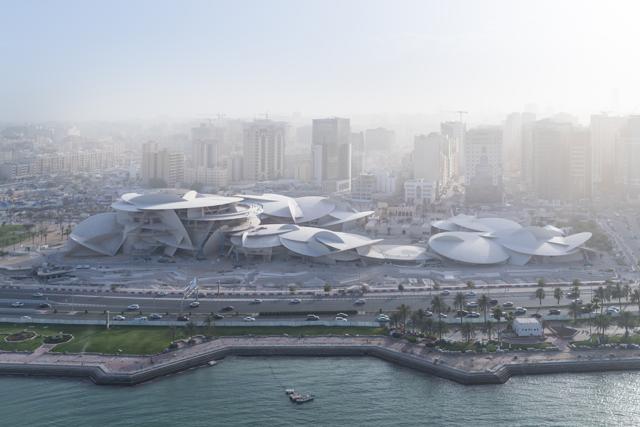
Must see: Your Brain to Me, an immersive video installation by Swiss artist Pipilotti Rist.
Must eat: Jiwan restaurant with expansive views of Doha Bay and the city’s up and coming quarters.
A short distance away is the Museum of Islamic Art (MIA) which houses, among many artefacts, Quran manuscripts in various calligraphic styles. Situated along Al Corniche, a waterfront promenade, MIA has 18 galleries dedicated to the Islamic way of life, tracing its journey from Mecca and Medina to its foothold in Spain, Turkey and onwards to the Silk Route, Central Asia to South-East Asia, the last gallery being the latest addition to the museum.
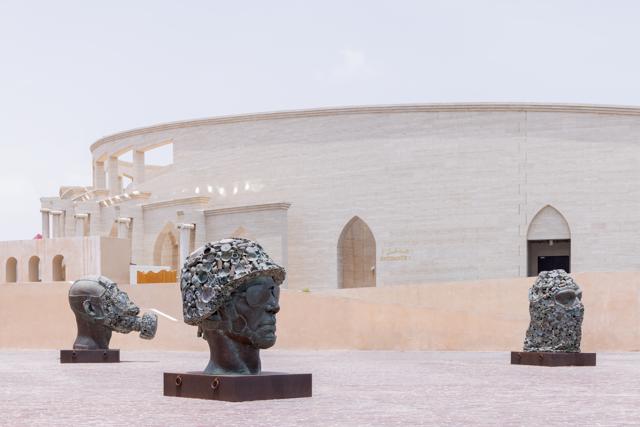
Must see: Indian artist Subodh Gupta’s sculptural installation, Gandhi’s Three Monkeys depicting one in a gas mask, one as a soldier and the third in a terrorist hood at Katara Cultural Village.
Must eat: Mamig, a Lebanese-Armenian restaurant in Katara Cultural Village, a heritage hotspot with restaurants, an amphitheatre and galleries.
Sports, Spatial Studios and Souqs
Man’s mortality-defying quest for adrenaline is as old as man’s quest for survival. Sports, thus, became an intrinsic part of life. As civilisations developed, sports were given more sophisticated makeovers. All this is showcased at the highly-interactive 3-2-1 Qatar Olympic and Sports Museum inside Khalifa International Stadium, beginning with sports in eighth century BC to sports now. One of the largest sports museum in the world at 19,000 sqm, it houses F1 legend Michael Schumacher’s Ferrari, boxing ace Muhammad Ali’s gloves, cricket hero Sachin Tendulkar’s bat, medals won by athletes, 38 original torches from Summer and Winter Olympics bought from the International Olympic Committee among other memorabilia. It also has a library with over 4,000 books on sports.
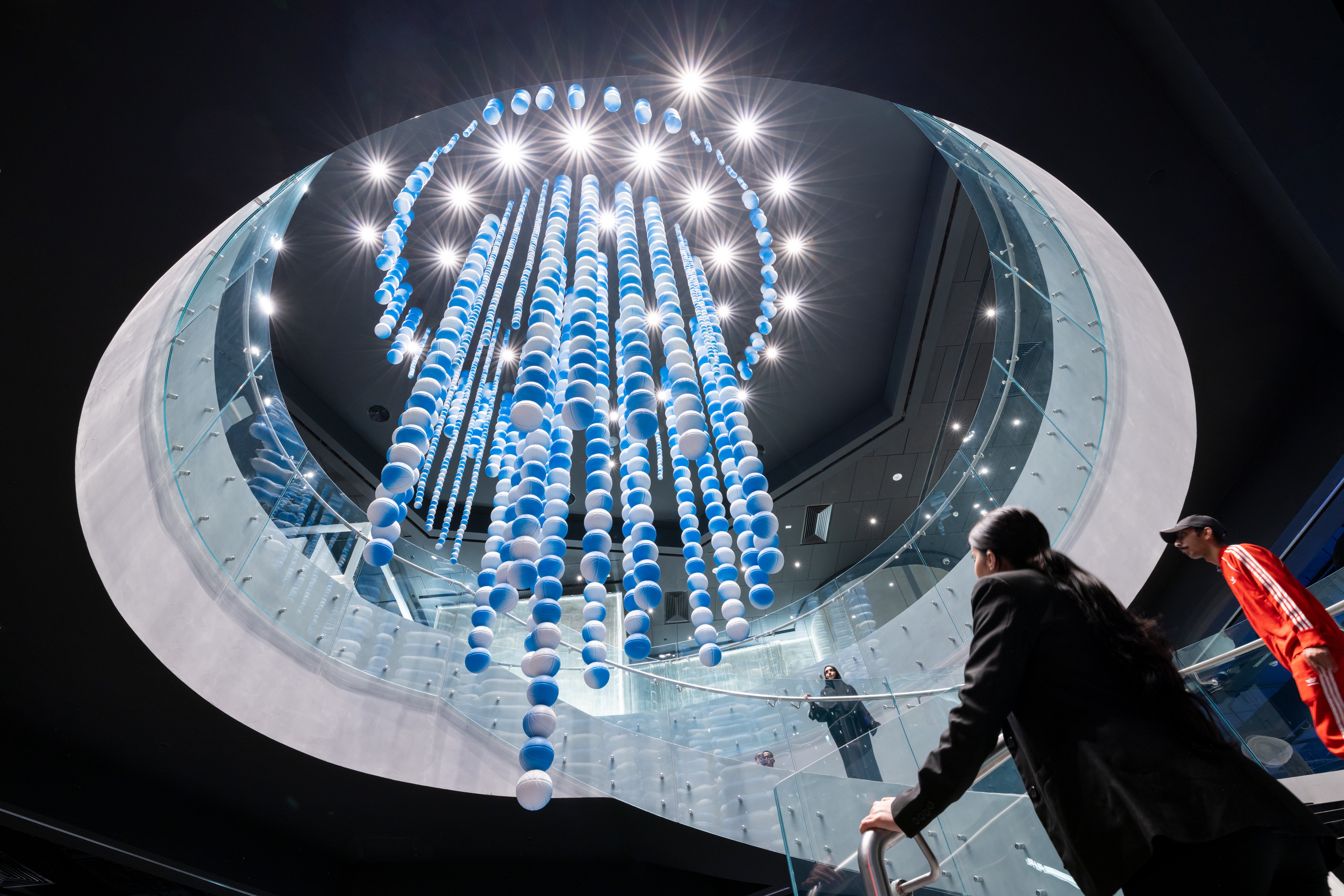
Must see: Sports Ball Galaxy, an aerially-suspended installation made with balls used in different sports, coloured in blue and white, by American artist Daniel Arsham.
Must do: Map your “physical literacy” at The Activation Zone that has 18 interactive stations with activities to measure abilities like endurance, strength and balance.
With an eye on empowering creatives from all backgrounds and across disciplines, Qatar has refurbished historic sites into design labs and studios. Liwan Design Studios and Labs in downtown Msheireb, with its calming colour scheme of pistachio green and limestone white and roomy corridors, is a multidisciplinary space imaginatively repurposed in what used to be the first girls’ school in Qatar. Also in Msheireb is M7, an incubator and innovation hub for design, fashion and tech, that gets its nomenclature from its locality and the seven principles which underscore inspiration, empowerment and connection among other virtues.
Must see: Welcome to the Dollhouse Zwara Kids, a fashion exhibition curated by teenagers and co-designed by young girls at M7.
Must Do: Leave a piece of fabric of your native land on the pin-up board that depicts stories of fabrics from the world over.
Must Eat: Profiles Café and Restaurant is a contemporary restaurant with a global menu.
Qatar is straddling two worlds – a world as ancient as the Bedouins, preserving a lived memory seeped in a religious value system and a second one that is vying for a coveted cosmopolitan spot in a fast-emerging global village. After tasting the tomorrow, it was time I went back in time and experienced the traditional way of life by visiting Souq Waqif. A short walk along the tram tracks from downtown Msheireb leads to Souq Waqif that dates back 250 years. As the colours, sights and sounds hit me in a well-choreographed medley, I am reminded of bazaars back home. Carpets and rugs, ittars and incenses, dry fruits and exotic animals, the souq is an alchemist’s lucid vision. Al fresco restaurants, live grills and quaint cafes line the souq. Close by is the Falcon Souq dedicated to the National bird of Qatar. Get pictures clicked with it, see it in flight or have it perch upon your arm.
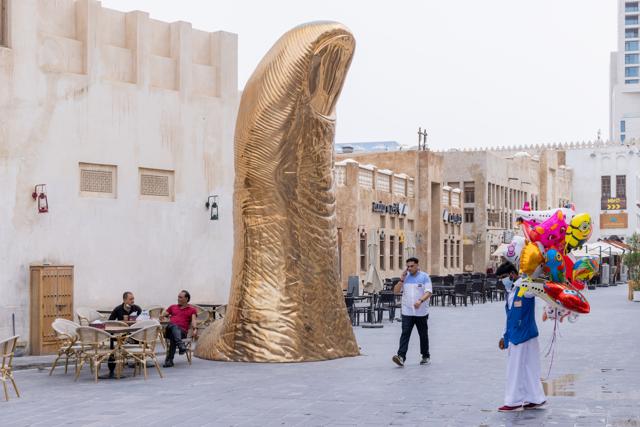
Must See: Le Pouce, a giant thumb sculpture by late French artist César Baldaccini, which also acts as a landmark in case you get lost in the serpentine alleyways of the souq.
Must Eat: Damasca One offers traditional Syrian delicacies with a side of live folk music and dance performances.
Must do: Get henna on your palms from the vendor who sits right outside Damasca One while her neighbour, a wooden wares and handicrafts vendor, sings to lure customers.
The Desert is Not Far
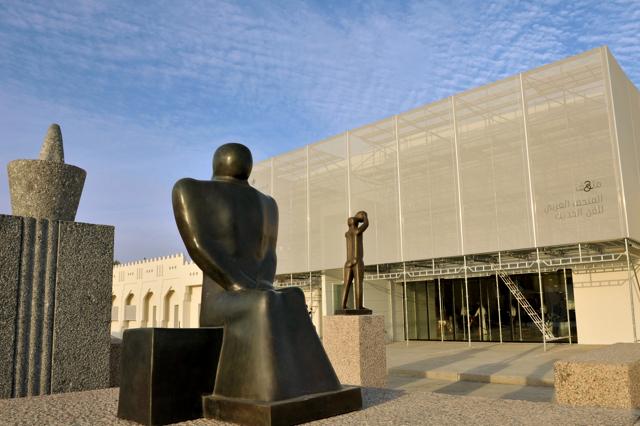
At the outset, Mathaf: Arab Museum of Modern Art in Education City is an unassuming block flanked by quarters architecturally resembling vernacular villas – limestone facades and flat roofs with crenellated walls bearing sawtooth designs. Inside, it is a carefully laid out world of contemporary art from North Africa and the Middle East comprising more than 9,000 artworks. A guided tour with Palestinian-French artist Taysir Batniji for his exhibition “No Condition is Permanent” reflected upon Palestinian identity. Among other galleries in the museum, one exhibited the Tiger of Mysore, Tipu Sultan through wall-mounted comic book panels, detailing the incident that gave him his famous moniker. In an adjoining quarter, the Majaz: Contemporary Art Qatar presents works by 36 artists in three domains of storytelling: a main character(s), a distinctive place and an intriguing narrative or folklore.
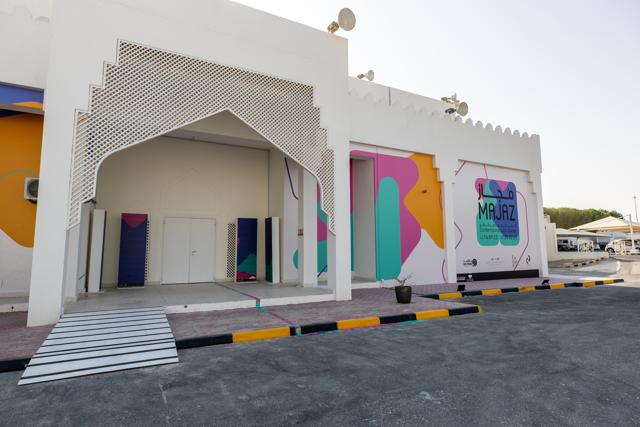
Must Do: An immersive VR (Virtual Reality) experience in Majaz where players can experience pearl diving and fish for pearls.
In Arabic, “Iqra” means to read and is regarded as the first lesson imparted through the Revelation. The emphasis on reading and learning is evident in not just the museums, but also the Qatar National Library (QNL) that houses over 10 million physical books in addition to digitised books. One of the highlights of public places, museums and libraries in Qatar is the importance on accessibility. From text in Braille for the visually-challenged to ramps for mobility-impaired, Qatar ensures safety and inclusivity.
Must See: Some of the oldest manuscripts of the Quran written in the Kufic school of calligraphy.
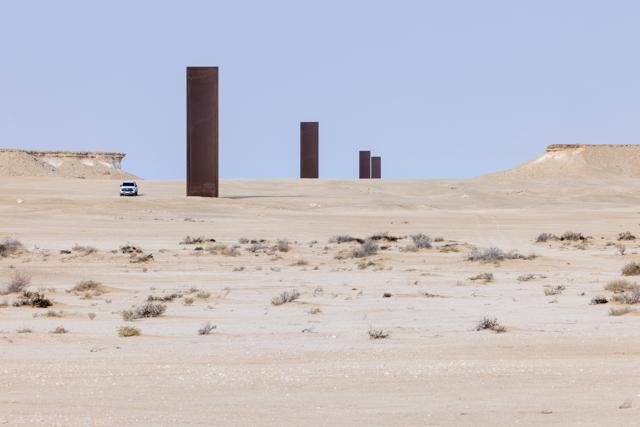
The desert, which holds a central place in the narratives of the Arabs, has been utilised as a public art place by Qatar. Zekreet Desert, engulfed by the Bay of Zekreet, gypsum plateaus and limestone cliffs, is a 70km drive from QNL. The drive gets a bit rocky as the desert nears, but the winds cool down and the views are worth it. In the middle of this sparse landscape stand four metal monoliths, rising 16.7 metres into the void that is the cloudless desert sky. The artwork, East-West/West-East by American artist Richard Serra spans more than a kilometre in length and crosses the peninsula of the Brouq Nature Reserve connecting the waters of the Gulf.
Must see: The desert is home to the rare and magnificent wildlife of Qatar that includes the Oryx (the National animal) and migratory birds.
Coming back to the city after witnessing the majestic sunset in the desert, I realised how art can manifest itself in everyday experiences. I was humbled by the stories of immigrants who found flourishing avenues in Qatar, I was touched by the hospitality of the Qatari women who took time to explain the culture to me, and in one last gesture of generosity, Qatar didn’t let me go back empty-handed. Three days of breaking khubz and an assortment of kebabs, walking around downtown admiring the cityscape, scaling the unforgiving desert and exchanging stories of homes with culturally, linguistically and racially diverse people gave me perspective that when you put love in everything you do, borders blur. Qatar, for all its youthful energy, remains for me a centuries-old sandalwood-perfumed parchment that a wayward chronicler forgot, only to be re-discovered in a re-organised, re-furbished Arab Peninsula.
Basics:
1. Qatar offers Visa on Arrival for Indian Nationals.
2. There are direct flights to Qatar from New Delhi, Mumbai, Hyderabad, Kochi, Kozhikode.
3. Download the Ehteraz App for entry into Qatar.
4. Keep copies of your COVID-19 vaccination certificates, or copies of RT-PCR Test valid for 48 hours before boarding.
5. To learn more about bookings, visit https://www.discoverqatar.qa/
6. To learn more about Qatar Museums, visit https://qm.org.qa/en/
(The author’s trip was sponsored by Qatar Museums, Qatar.)
Interact with Etti Bali at @TheBalinian
Follow @htcity for more


