
 E-Paper



Goodbye railway guard box, modern lockers are here
END OF AN ERA NR and NER changing the over 150-year-old system of allotting heavy iron trunks to guards. Now tamper-proof safes will be installed in their coaches to carry all emergency essentials


Guard boxes, the heavy iron trunks allotted to railway guards will no longer be seen on platforms at railway stations in Uttar Pradesh. The Northern Railways (NR) and North-Eastern Railways (NER) that broadly cover UP’s rail network are set to end the colonial era system which made it mandatory for a guard to carry a nearly 42 kg box containing emergency essentials on board trains.
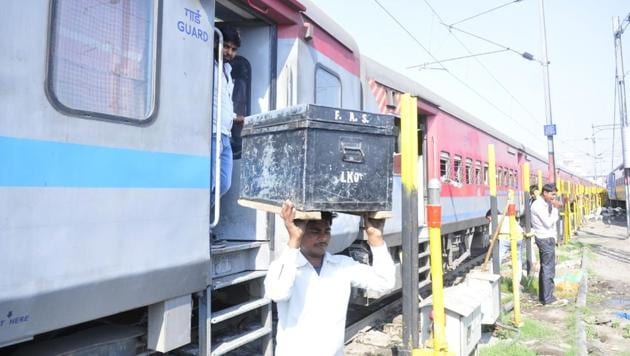
In place of the guard box, now a tamper-proof safe would be installed in the guard’s coach to carry all emergency essentials. Officials say the change would save guards from inconveniences caused while handling these heavy boxes. However, while most of the guards and railway staffers have given the thumbs up to the initiative, terming it need of the hour, some senior railway officials call it the end of an era.
Though there is no proper record of the time when the ‘guard box’ or ‘guard line box’ system came into existence, some senior officials say the practice has been continuing since the 1850s or since the Railways came into existence. “We believe the system is as old as the Railways. We are seeing it from the day we entered the profession,” said a senior guard at Charbagh railway station.
Under the system, a trunk is allotted to the guard, who puts his name and other information on it. It is mandatory to carry the box on board. Though a porter is deputed to carry the heavy boxes, handling them is tough. “At times you don’t find a porter, as this service is privatised. In such situations, you have to ensure the box’s safety and see that it box reaches a safe place,” the senior guard added.
But what does this box contain?
The guard said the box usually contained a medical kit, a green and two red flags, manuals on train operations, torch and hand signal lamp, blade box, detonators in a tin case, whistle and chain with a suitable lock for securing the box, besides many other items.
He also recollected an incident in which he helped a mother deliver a baby while the train was going from Jhansi to Kanpur. He said he gave the first aid kit from the guard’s box to some nurses who were luckily travelling on the same train. The nurses ensured safe delivery and saved the passenger’s life.
Sanjay Yadav, chief public relations officer (CPRO), North -Eastern Railways (NER), said the change would save manpower and keep inconveniences at bay.
Yadav said, “NER’s Lucknow division leads in taking the initiative forward. This division was perhaps the first to replace this guard box with tamper-proof safe in guard’s coach of the trains plying on its Bahraich-Mailani section in UP.”
He said other divisions too were looking forward to ending this old system and installing safes in guards’ coaches.
The Northern Railways (NR), that covers most of UP’s rail network, is also going to install the safes. In some train, it is also going to reduce the total weight of the emergency essentials and replace the heavy trunks with smart trolley bags. CPRO NR Deepak Kumar said the replacement had already started in Delhi and it was planned to extend it to other divisions also.
IN BOX:
Cash chests too on their way out
The Railways recently replaced its British era cash collection system. Under the system a bright red chest, weighing around 3 tonnes, was loaded on passenger trains. On the stations en route, the day’s earnings from ticket booking, goods loading and other sources of income were dropped in the chest.
Prior to putting the earnings in the chest, the cash (including coins) was packed in a leather pouch, said to be made from camel intestine (as it could withstand the heavy weight of coins) and then it was sealed and put inside the chest on its arrival at the station or halt.
On return journey, the heavy chests were taken off the trains and deposited in the cash department.
However, under the new system, the Railways has entered into an agreement with banks that will ensure cash collection form the station itself.
Officials said under the new system, the cash would be credited into the Railways’ account on the same day whereas in the old system it took 4 days.


