
 E-Paper



Gudi Padwa 2019: History, significance, rituals of the Hindu New Year


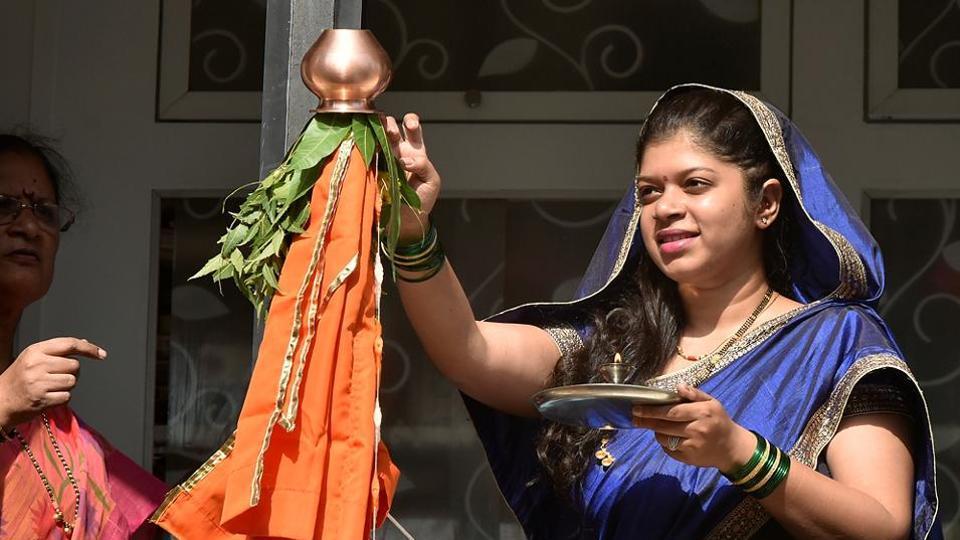
Marathi Pandits will ring in the Hindu New Year with festivities of Gudi Padwa which falls on the 6th of April this year.
The upcoming weekend is auspicious for various Indian communities. Three Indian communities including Marathis, Kashmiri Pandits and Sindhis will welcome the Hindu New Year according to lunisolar Hindu calendar on the first day of the Hindu month of Chaitra. Kashmiri Pandits will celebrate Navrez, Sindhis will welcome New Year with a grand celebration known as Cheti Chand while Marathi Pandits will ring in the Hindu New Year with festivities of Gudi Padwa.
Gudi Padwa will fall on 6th April this year and will be ushered in with spring cleaning, decorations around the house and festive food in Maharashtrian households. The main highlight of this festival is the arrangement of Gudis which literally means flags erected around the household. Gudi Padwa is also associated with the arrival of spring and the reaping of Rabi crops.
The Gudi arrangement is a silk cloth or scarf tied at the top of a long bamboo stick and decorated with garlands and boughs of neem and mango leaves. The structure is then capped with a kalash of copper, silver or gold. The hoisting of Gudi historically signifies the victory and happiness of Lord Ram over Ravana. It also signifies the Brahmadhvaj, as mentioned in the Brahma Purana because it is believed that Lord Brahma created the universe on this day. Gudi is also believed to bring prosperity and good luck into a household besides warding off evil.
Gudi Padwa is celebrated with people cleaning their houses and decorating it with rangolis. Both men and women wear new clothes to celebrate this auspicious day while women also wear traditional jewellery called ‘dejhor’. Maharashtrians also make a number of dishes to celebrate this festival including Shrikhand, Poori and Pooran Poli.


