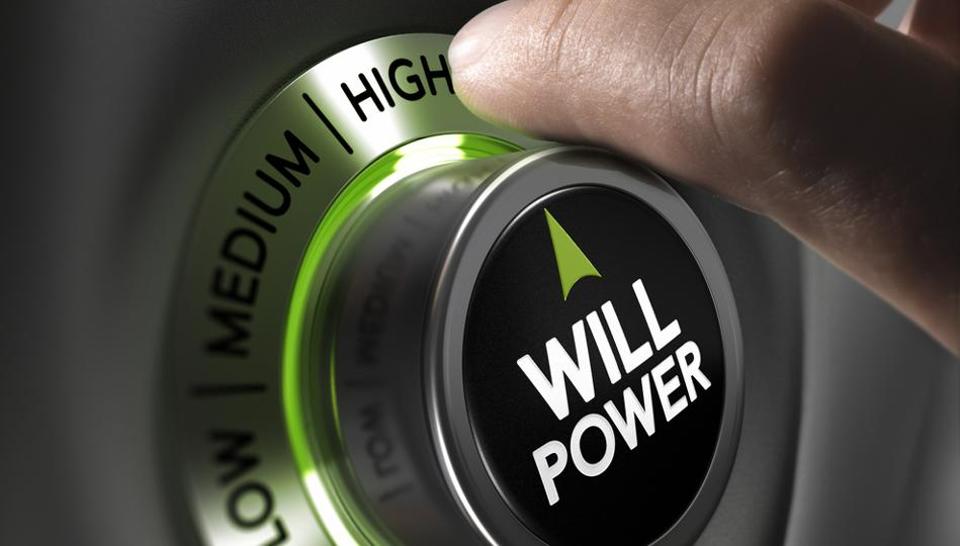
Ever wondered, why do some people seem locked in a lifelong battle for self-control while others are so self-disciplined - impervious to overeating, overspending or binge-watching TV shows when they feel pressured? Researchers from the University of Illinois at Urbana-Champaign, U.S. explained that the secret to having an ironclad willpower lies in believing that you have an unlimited supply of it. Lead author Christopher Napolitano said, “What matters most is what we think about our willpower”.
“When we view our willpower as limited, it’s similar to a muscle that gets tired and needs rest. If we believe it is a finite resource, we act that way, feeling exhausted and needing breaks between demanding mental tasks, while people who view their willpower as a limitless resource get energized instead,” Napolitano added. The findings indicated that Americans believe they have less stamina for strenuous mental activity than their European counterparts - an indication that people in the U.S. perceive their willpower or self-control as being in limited supply.
The team analysed more than 1,100 Americans and 1,600 Europeans - including 775 Swiss and 871 German-speaking adults to test the validity of a widely used psychological assessment tool called the Implicit Theory of Willpower for Strenuous Mental Activities Scale. Napolitano and co-author Veronika Job of the University of Zurich sought to test whether the ITW-M measured the concept of willpower consistently across sexes and different cultures. The participants taking the assessment were asked to rate their level of agreement with statements such as, “After a strenuous mental activity, your energy is depleted, and you must rest to get it refueled again.”
The results suggested that the Americans were more likely to indicate that they needed breaks to rest and recover after performing mentally taxing activities, while their European counterparts reported feeling more invigorated and ready to jump into the next challenging task immediately. The participants’ scores were compared with their scores on similar assessments that explored their beliefs about intelligence, life satisfaction and trait self-control, which relates to their ability to rein in their impulses. The data indicated that the ITW-M had strong invariance between men and women. “Your feelings about your willpower affect the way you behave - but these feelings are changeable,” Napolitano said.
Follow @htlifeandstyle for more
 E-Paper