
 E-Paper



Development and environment safety needn’t be in conflict
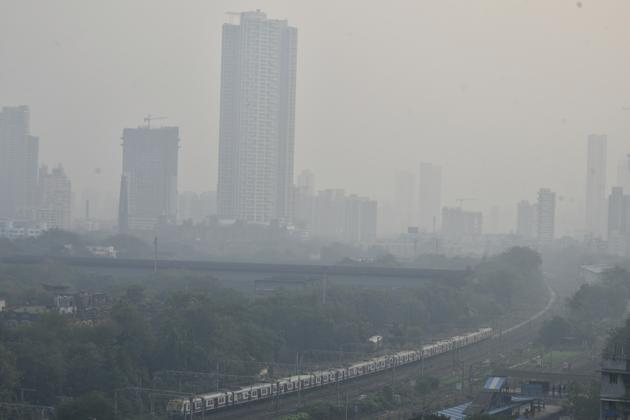
Reports in Thursday’s newspapers highlighting serious pollution levels in Mazagaon — as recorded by the System of Air Quality Forecasting and Research (SAFAR) — had a few of us old school friends calling each other in nostalgia-laden concern. We had all studied at St Peter’s High School, adjoining the bus depot, and bang opposite the Sales Tax office.


Reports in Thursday’s newspapers highlighting serious pollution levels in Mazagaon — as recorded by the System of Air Quality Forecasting and Research (SAFAR) — had a few of us old school friends calling each other in nostalgia-laden concern.
We had all studied at St Peter’s High School, adjoining the bus depot, and bang opposite the Sales Tax office. Not far behind the school was Mazagaon Hill from where, on a good day, one could see the Ferry Wharf (Bhaucha Dhakka now), leading into the sea.
Not far from the alma mater was Matherpacady Village, one of the designated heritage precincts of Mumbai where Roman Catholic East Indians lived almost cheek by jowl in houses of distinctive and quaint architecture.
Beyond Matherpacady, the road leading to Mustafa (or Lakda/Timber) Bazar, was dotted with buildings housing Ismaili Khojas, with a Masjid as the community hub.
On the left of St Peter’s, the road led towards Dongri, with settlements of Maharashtrians gradually blurring into the Muslim-dominated area that then extends all the way to Crawford Market.
My favourite stretch was from school towards Byculla, past the Mazagaon Court, St Mary’s School and the Aga Khan residential conclave and hospital opposite it. The promenade used to be thick with trees, leafy and shady, with colonies of Christians interspersing the residences of other mixed communities, defining Mazagaon’s cosmopolitan ethos.
These made for wonderful reminisces for the old schoolboys club as it were, but soon led to the agonising present, which had provoked the phone calls — the fall in air quality at Mazagaon.
According to SAFAR, the Air Quality Index (AQI) in this area on Wednesday morning was a severely bad at 432, improving to 401 by evening, but still desperately higher than normal, which is less than 100.
While it’s been 45 years since we passed out, could things have gone so bad in this part of the city that people had to be warned about outdoor physical activity?
The thing about trips down memory lane is that the past is always seen with rose-tinted glasses. Everything about Mazagaon in the 1960s till the early 70s (when we were in school) seemed perfect, which perhaps is not quite as it was.
Even then, the trucks plying on P D’Mellow Road, which runs from Chhatrapati Shivaji Terminus (CSMT) all the way to Wadala and onwards to the eastern suburbs, would spew noxious fumes that one could smell sitting in the classrooms.
By the time we finished school, Mazagaon, like much of the city, was being transformed by the development of land. This has only increased in the past four decades, changing not just the topography of the city, but also the quality of air, compounded by the rise in vehicular traffic.
On careful scrutiny of the SAFAR report, one learns that while Mazagaon was under duress currently, it was largely due to construction activity. The quality of air would improve once this stops or at least dust and other particles that can cause harm are better managed.
But here’s the rub. While Mazagaon’s air quality will get better with precautions, it is still symptomatic of the overall poor air that we breathe in Mumbai. For instance, going by SAFAR’s findings, the AQI in Andheri-Malad on Wednesday evening was between 3001-400 (very poor) and in South Mumbai 237 (poor).
SAFAR also put Navi Mumbai’s AQI at 93, which is still not `good’, but at least the satellite city is the least polluted, showing what proper planning and planting abundant trees can achieve.
The good thing today, unlike in the past, is that there are agencies that use scientific methods to capture and process data, which can highlight problems. The unfortunate thing is that such information is still not given the importance it deserves.
There is no conflict, as widely imagined, between development and the safe keep of the environment, if an intelligent balance is maintained. But there will be if the latter is ignored, as seems to be the unfortunate pattern.
Modern-day sociologists/scientists/culturalists/philosophers et al, see fake news and environmental degradation as the two biggest threats to modern civilisation. I venture the latter is more serious.
We may still survive the former but the latter could wipe out the planet itself.

Stay updated with all the Breaking News and Latest News from Mumbai. Click here for comprehensive coverage of top Cities including Bengaluru, Delhi, Hyderabad, and more across India along with Stay informed on the latest happenings in World News.


