
 E-Paper



Entire Aarey needs protection, not just the trees in the Metro car-shed area
The tribunal has asked the petitioners to go to higher judicial authority, either Bombay high court or the Supreme Court.


Last month, an environment group opposing a Metro car shed inside Aarey Milk Colony was allowed to withdraw their petition in the National Green Tribunal (NGT) after the tribunal said that it did not have the authority to declare the area as a forest.
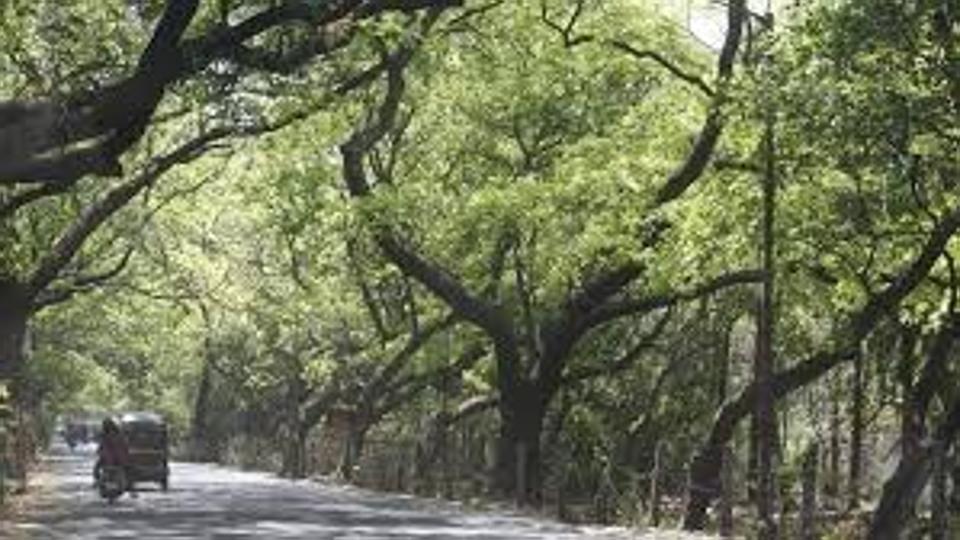
The petitioners, Vanashakti, and Aarey Conservation Group, had approached the tribunal in 2015, opposing plans to clear some of the wooded area for the car shed. The project is to come up on 33 hectares (ha) in the southern part of Aarey. The tribunal has asked the petitioners to go to higher judicial authority, either Bombay high court or the Supreme Court.
Aarey Milk Colony, located in the north-western suburbs of the city, is one of the last natural areas in the city outside the Sanjay Gandhi National park, which itself is one of the few wild forests located within the boundaries of a metropolitan area.
Aarey is the remnant of a large semi-wooded and hilly area that stretched along the spine of the city, from the southern boundaries of the national park to Powai and Ghakopar in the south. Much of this green area has been lost; while vast slums cover the fringes of the hills, the campuses of the Indian Institute of Technology, Bombay, National Institute of Industrial Engineering have hived off large parcels.
In the south, the high-rise residential buildings of Powai are located on what were mango orchards and forest groves. Along its western boundary, land has been taken away for a residential colony built by the Mumbai Housing and Area Development Board (MHADB), a police training camp and cemeteries. There are 27 adivasi padas, or tribal hamlets that predate the city. Environment groups estimate that more than 30,000 people live in the slums that ring Aarey.
Citizens’ groups trying to conserve the area estimate that the slums have encroached into a tenth of Aarey’s area, but Maharashtra’s dairy development board, which administers Aarey, has no data on the number of encroachers.
“Slum dwellers have moved into the tribal villages and are claiming forest rights,” said Godfrey Pimenta of Watchdog Foundation, a citizens group. “The municipal corporation and the dairy department are ignoring the encroachments and the city is losing valuable open land.”
There are other plans that could destroy Aarey, including the proposal to use its land for rehabilitating slums. If approved, this project could bring nearly 300,000 people into the area.
There is no reliable data on the boundaries of Aarey. According to the dairy department, it covers an area of 3,160 acres (1,281 ha) of which over 1,400 ha have been leased or transferred to various government departments and institutions, including MHADB, State Reserve Police, Film City and a bakery.
Forests, pastures, water bodies and gardens cover around 1,740 ha. There is no data on land encroached by slums.
There was a proposal in 2013 to create an Eco-Sensitive Areas (ESA) on the boundaries of the national park. The plan, which was subsequently changed to increase the extent of the ESA, includes parts of Aarey. Except for this plan, the area has no legal protection from construction, putting it under constant threat of construction.
Earlier this month, Vanashakti moved the high court alleged documents sourced from the forest department proved that 2,076 ha of Aarey land, marked as “unclassed forest in the Sanjay Gandhi National Park (SGNP), was transferred to the state’s forest department in 1969. Of this, 575 ha are to be kept aside for a recreational zone while the rest of the land was to remain a part of the national park. This means that 1,500 ha of forest land is under threat of being lost. The petition will be heard this week.
Aarey hosts over 70 species of birds, 86 species of butterflies, reptiles and wild flowers.
Animals from the national park, including leopards, deer, rusty spotted cat, jungle cat, civets, monkeys, sambar deer and barking deer, are still residents of this colony, which acts as a buffer zone to the adjoining Sanjay Gandhi National Park (SGNP).
“On one hand we are tom-toming ‘Save Aarey’ while the area is being eaten away by slums,” said Pimenta.

Stay updated with all the Breaking News and Latest News from Mumbai. Click here for comprehensive coverage of top Cities including Bengaluru, Delhi, Hyderabad, and more across India along with Stay informed on the latest happenings in World News.


