
 E-Paper



From The Boys to men on the internet
The Boys is remarkable for the way it shows violence and machismo without glorifying it.


As timing goes, you couldn’t do it better than Amazon Prime has with The Boys. Months after Avengers: Endgame became the highest-grossing film of all time, here’s a series that takes a hammer to superheroes. Based on a comic book written in the mid-2000s, The Boys is set in a world where superheroes – or supes – are real and minting money. The supes are modelled on existing characters. From Wonder Woman to Captain America, they’re all there in The Seven, which is The Boys’ version of the Avengers or Justice League (depending on whether you lean towards Marvel or DC Comics). However, there are twists to these heroes’ tales. The Deep, with his charm and twinkly eyes, is a sexual predator. Translucent, whose skin can turn invisible, is a voyeur. Homelander, the indestructible all-American hero, is a megalomaniac. The saviours of the Earth are unethical, morally-bankrupt, millionaire junkies. And the ones fighting them aren’t much better. Led by Billy Butcher, the (relatively) good guys indulge in deceit, blackmail and murder.
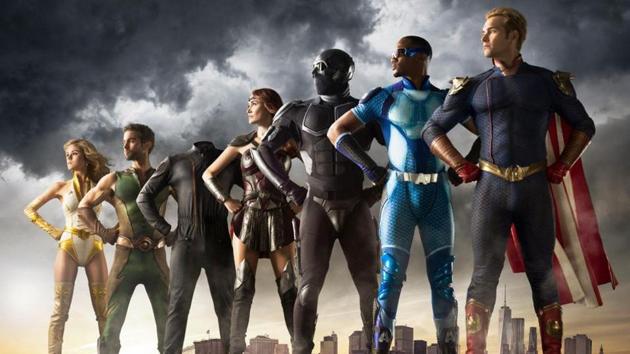
The Boys is remarkable for the way it shows violence and machismo without glorifying it. Under all the abuse and blood splatter is a keen critique of not just the superhero genre, but also conventional notions of manliness. Within a few episodes, The Boys succeeds in making practically every heroic quality feel vaguely distasteful. For instance, square-jawed determination – among the hallmarks of every male saviour – isn’t particularly attractive on either Homelander or Billy Butcher. The momma’s-boy quality that has been held up as the linchpin of Superman’s humanity is twisted into something tragic and disturbing in Homelander. Even as it unfolds at a frenzied pace, there’s a thoughtfulness evident in the way The Boys constructs nuanced male characters who turn masculine virtues into weaknesses.
Meanwhile in India, Kabir Singh (who declares the girl he likes to be his possession) is making audiences swoon and Vicky Kaushal has got a National Award for his roaring performance as the alpha male Major Vihaan Singh Shergill in Uri: The Surgical Strike.
That said, for all their raging testosterone, fictional Indian men are still a darn sight more palatable than the online, non-fiction variety. For days after August 5, when the Jammu and Kashmir Reorganisation Act was passed in Rajya Sabha and Section 144 was imposed on Jammu and Kashmir (J&K), “Kashmiri girls” was among the most popular searches in India according to Google Trends. In Indian pop culture, particularly Hindi films, two tropes have traditionally been associated with Kashmir – the (male) militant and the (usually nubile) innocent. Last week, the latter manifested as “Kashmiri girls” and entered popular discourse as the narrative that Kashmir had been ‘saved’ (whether or not it wanted saving) gained currency. Nationalism, meet sexism.
On social media, a sizeable chunk of Indian men rejoiced because they were under the misconception that J&K becoming a Union Territory meant a more literal, selective and personal union. Numerous status updates joyfully declared happy days because it was now “easier for Indian men to marry Kashmiri women”. Bharatiya Janata Party’s legislator from Muzaffarnagar, Vikram Saini, and chief minister of Haryana ML Khattar joined in this chorus by making what they described as “jokes” about being able to freely acquire Kashmiri brides for Indian men. Some people try Tinder; these gents turned to legislation by Parliament (the legality of which has since been challenged in the Supreme Court).
Some decided that the best way to display their patriotic pride at Article 370 being abrogated was by declaring their intentions to marry Kashmiri women. To quote one such patriot: “To integrate #JammuAndKashmir with India marital relationship with Kashmir Ki Kali is must.” How such specimens have outlived dodos is a question for the ages.
Incidentally, under Article 370, there were restrictions upon ownership of property, not marriage. Apparently, Indian men can’t distinguish between buying a plot and marrying a woman.
Fun fact: “Kashmiri men” did not appear in Google Trends.
Stay updated with all the Breaking News and Latest News from Mumbai. Click here for comprehensive coverage of top Cities including Bengaluru, Delhi, Hyderabad, and more across India along with Stay informed on the latest happenings in World News.


