
 E-Paper



Maharashtra chief minister’s post bone of contention among allies since 1995
The party with more Assembly seats would get chief ministership and with that influence, would dominate politically


On Monday, chief minister Devendra Fadnavis and Shiv Sena chief Uddhav Thackeray jointly addressed a meeting of BJP-Shiv Sena legislators and asked them to get ready for the assembly poll battle.
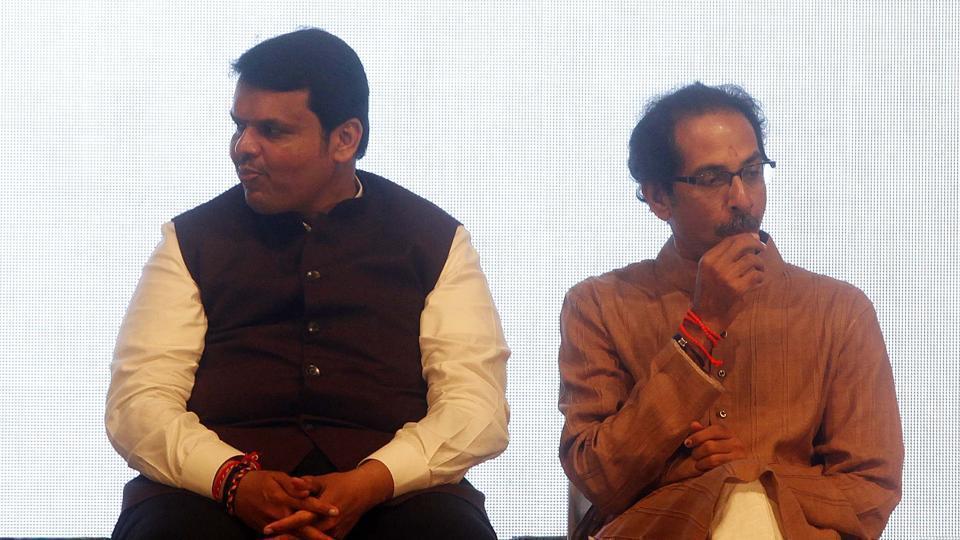
More importantly, the duo told the legislators not to bicker over the issue of chief ministership —whether the BJP would continue to have it or whether the Shiv Sena will get it. This comes after BJP ministers such as Girish Mahajan reportedly spoke at a party meeting on Saturday insisting that the chief ministership would remain with the BJP after the Assembly elections.
Earlier, a few Sena leaders had made similar statements saying their party would get the top post. As the issue of chief ministership is becoming a sticking point between the saffron allies who are confident of returning to power in the Assembly elections that are likely to be held in September-October this year, both Fadnavis and Thackeray are now preventing any bitter tussle over the issue.
But then, will the rank and file of both parties accept this? Chief ministership is not only about getting the top office in the state. It surely is the biggest power centre in the state. The party that has chief ministership is in complete control of the state politically. The chief minister can bypass any minister and take decisions. His nod is needed for appointment of IAS and IPS officers. In a state like Maharashtra, which houses India’s financial capital, the CM has tremendous influence over corporate world.
Moreover, in an alliance government, the ally that has chief ministership is regarded as the big brother between the allies. This has been an unwritten rule in Maharashtra which has seen alliance government since 1995. The party with more Assembly seats would get chief ministership and with that influence, would dominate politically.
The Shiv Sena-BJP alliance came to power by defeating the Congress in 1995. Its four-and-a-half year rule saw constant tussle between then chief minister Manohar Joshi (Sena) and deputy chief minister Gopinath Munde (BJP). The latter used to complain that power was mostly centered in Joshi’s hands. Ally BJP’s unhappiness was one of the reasons why Sena chief late Balasaheb Thackeray chose to replace Joshi with Narayan Rane in 1999.
The saffron combine lost power in 1999 and the Congress-NCP alliance formed the government. Their alliance remained in power for three consecutive terms. Most of these 15 years saw tussle between the allies as Congress retained the chief minister’s post.
The exception was 2004 election in which NCP won 71 but conceded chief ministership to Congress that had won 69 seats in exchange of more cabinet berths. Then it was said that NCP chief Sharad Pawar did not want a power struggle between top leaders of his party such as Ajit Pawar, Chhagan Bhujbal and R R Patil. The tussle between the two parties became intense during the tenure of Prithviraj Chavan who was chief minister between 2010 and 2014.
In 2014 Assembly elections, the BJP won 122 assembly seats on its own and became a dominant partner. Since it fell short of just 23 seats to attain simple majority in the house of 288, its alliance partner Shiv Sena could not bargain for anything. But then the two parties had contested separately in 2014. This time, there will again be a pre-poll alliance between the two parties.
In 2014, the BJP contested 288 seats with its smaller allies and won 122.This time, it will have to contest roughly half the seats--around 140 if it concedes some to its smaller allies--and win more seats than Sena. It is looking at winning 100-125 seats and expects Sena would be in the range of 60-80.
Both the parties are anticipating that they will win the mandate to retain the power. Both the parties are on friendly terms but at one level, there is this silent tussle to retain the position of big brother. Realising that the race to win more seats (and thus, the chief ministership) could affect their chances, both Fadnavis and Thackeray are now taking efforts to ensure that their rank and file works together in the assembly elections. Can they prevent the tussle between their workers and leaders? In past four and a half years, the Sena leadership has continuously hammered the point that the party needs to regain its position of big brother of saffron alliance in Maharashtra.


Stay updated with all the Breaking News and Latest News from Mumbai. Click here for comprehensive coverage of top Cities including Bengaluru, Delhi, Hyderabad, and more across India along with Stay informed on the latest happenings in World News.


