
 E-Paper



Mumbai Metro 3 project: Realigned priorities, but at what cost?
The impact of this decision to shift the car shed to Kanjurmarg along with the Metro-6 car shed will have multiple ramifications. Such major alignment changes are unacceptable even during the final planning stages, leave alone when the project is nearing completion


Sunday’s announcement by the Maharashtra chief minister (CM) to relocate the car shed of the upcoming Metro-3 line from Aarey Colony to Kanjurmarg has evoked mixed responses. While many see this as an environmental victory, there are others who view it as a pure economic blunder. As in any other case, each incident can be and should be, viewed from various facets before we condemn or praise it.
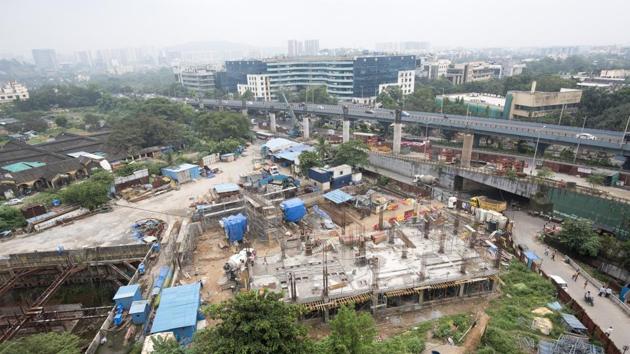
The impact of this decision to shift the car shed to Kanjurmarg along with the Metro-6 car shed will have multiple ramifications. Such major alignment changes are unacceptable even during the final planning stages, leave alone when the project is nearing completion.
The Union cabinet had granted clearance to Metro-3 line on June 27, 2013, and the Mumbai Metropolitan Region Development Authority (MMRDA) presented its plan for the corridor to Brihanmumbai Municipal Corporation on February 13, 2014. After the technicalities were resolved, the project execution began around 2015. Earlier this year, 80% of the entire tunnelling work and 57% of the overall works were completed. Till the Covid-19 lockdown halted its progress, Mumbai Metro-3 project was cruising at a speed that is usually unheard of in such huge infrastructural government projects.
While the lockdown has impacted the timelines of all ongoing global projects, Metro-3 car shed’s controversy added to the delays. The Aarey car shed was soon becoming a bitter pill, which the government had to take sooner or later.
By the time work was halted last year in November at Aarey, the Mumbai Metro Rail Corporation Limited (MMRC) had spent over ₹100 crore on the car shed. Also, it was incurring a daily loss of ₹4.3 crore, of which the loan interest component alone was ₹1.5 crore.
Given the above backdrop, how fair is the decision to shift the Metro-3 car shed to Kanjurmarg from Aarey Colony?
In his announcement on Sunday, the honourable CM said: “The land will be available at a zero rate. The building which has come up at Aarey forest will be utilised for some other public purpose. About ₹100-crore expenditure was incurred for the purpose and it won’t go waste.”
If the government is serious about its ‘environment-friendly’ image, the whole area should have been reconverted into a forest as it was before the trees were hacked down on October 7, 2019.
The announcement doesn’t reveal any details about how the decision would affect the mega public transportation Metro-3 project, either cost-wise or time-wise, or even in terms of technical feasibility.
The cost of such an extension and delay in terms of money is one of the direct implications that we need to understand from this decision. The approximate 9-kilometre (km) extension will have huge cost over-runs for this project. This 32.5-km project started with an estimate of ₹23,136 crore and was revised in last year in March to ₹30,000 crore. Sunday’s announcement talked about the “zero rate land” but didn’t mention anything regarding the revised cost estimation of the project due to the change in car shed alignment. Also, the statement is highly misleading, as there is no such thing as ‘zero rate land’ in any classical or neo-classical economics. And especially in terms of Mumbai, how can there be any piece of land which comes for free? The increase in the timeline for which the government has to bear the burden of interest on the loan taken for this project should also be considered before considering “zero rate land”.
Also, one fails to understand as to what good use can you put a ₹100-crore infrastructure, specifically designed to serve the purpose of a metro rail terminal, so that the money “won’t go waste”.
Another major direct impact of this decision is that it will further push the deadline of this project by several months. This extension can be translated in terms of prolonged troubles for the commuters. The tagline of Metro-3 is Connecting the unconnected. The irony is that this decision will ensure that they stay unconnected a bit longer. The opportunity cost of not getting Metro-3 implemented will be huge and should be worked out by economists. Commuters in Metro-3 (Colaba-Seepz) zone heavily depend on private vehicles and this decision would force them to continue doing so for some more time. The environment benefit of public transportation over private vehicles needs no evidence, and the lost opportunity cost in terms of environmental benefits should also be calculated by environmentalists.
Metro-6 line, with which this line plans to merge, has barely completed 20% work and hasn’t even finished the phase of soil investigation yet. Already, there have been objections raised on the technical feasibility of Metro-6 line, and the merger of Metro-3 line with it will further implicate the completion of the Metro-3 project.
The economic and environmental trade-offs are done and have to evaluated on a case-to-case basis. One fine example of such a trade-off can be the coastal road, which raises far more serious environmental concerns than one small car-shed at Aarey.
In my view, the alternative arrangements to mitigate the environmental impact of Aarey car shed should have been explored, instead of an alternative site.
To conclude, I would say that Sunday’s announcement would spell disaster for the already over-burdened public transportation system in the city. The need for a robust public transportation alternative to the highly over-burdened suburban system will take a backseat due to this decision.
(Paresh Rawal is a transportation and public policy expert)
Stay updated with all the Breaking News and Latest News from Mumbai. Click here for comprehensive coverage of top Cities including Bengaluru, Delhi, Hyderabad, and more across India along with Stay informed on the latest happenings in World News.


