
 E-Paper



Mumbai needs the Metro 3 and trees too
Mumbai city news: Mumbai’s suburban railway lines and roads are saturated; the city needs the Metro, but trees cut should be replaced with new ones

 Prefer HTon Google


Last week, the Bombay high court, which is hearing petitions by south Mumbai residents against cutting of trees for the SEEPZ-Colaba underground Metro, asked the complainants to be ‘pragmatic’. Mumbai should have developed a metro network “30 years ago”, the court said, adding that the opposition to the project was further delaying the work.
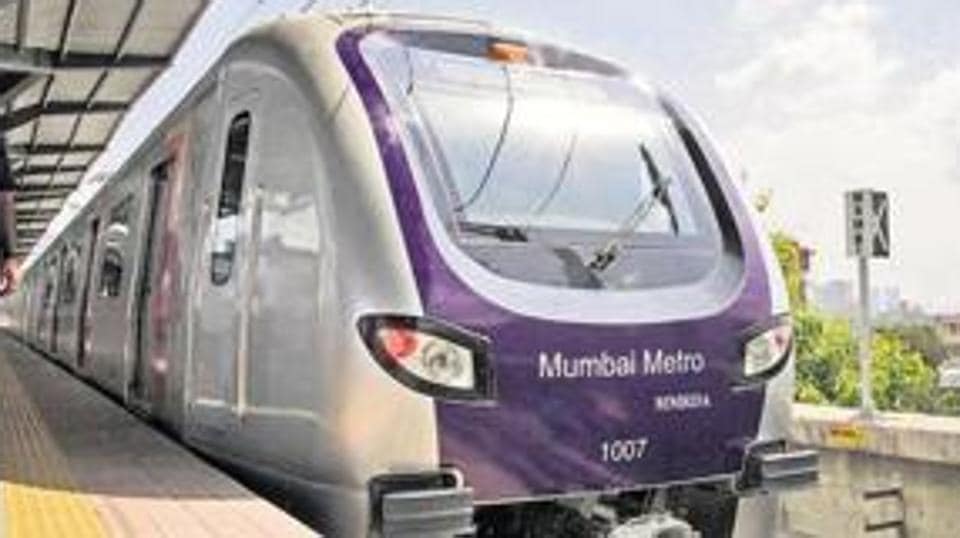
In February, when residents of Cuffe Parade complained about the extra trees that would be felled because of changes in the construction plans for the Metro, this column had debated the issue.
Mumbai’s existing suburban railway lines and roads are saturated and cannot transport more passengers; the city needs the Metro.
The latest order from the courts does not end the stalemate. An environment tribunal is hearing complaints that the Metro’s car yard in Aarey Milk Colony is being built on 33 hectares of forests. Stalin Dayanand of Vanashakti, the group which has objected to the car yard inside Aarey, said there were other options available.
“The car shed can be built at Back Bay (at the southern terminus of the Metro), but Coastal Regulation Zone rules will allow only a public utility project. The Aarey site can also be used for commercial purpose,” said Dayanand.
Tree cutting is tolerable if they are replaced. One theory says that cutting trees helps the environment — if the axed trees are replaced by new saplings. Plants absorb carbon dioxide through the process of photosynthesis which uses sunlight to convert the gas into carbon that is stored in the wood. This process is called carbon sequestration where the heat-trapping gas is permanently taken out of the air, remaining there till the wood rots or is burnt. A growing plant absorbs more carbon than a mature tree.
The high court has said that the agency building the project — the Mumbai Metro Rail Corporation Limited (MMRCL) — and the municipal corporation — which gives permits to cut trees — should plant trees to compensate for the loss of green cover. Environment groups are sceptical whether this will be done.
In the Metro dispute, the petitioners have said permissions to cut trees were given in a reckless manner, with fully-grown giants falsely shown as young trees. The government agencies have also modified construction plans which will need the felling of more trees. MMRCL plans to compensate for the lost trees by planting saplings in Wadala though residents of south Mumbai would like the replanting or relocation in the same area.
“Trees are allowed to be cut at every building site by the municipal corporation after the construction company gives an undertaking to plant saplings at another site. This is a scam; the companies rarely plant new trees,” said a south Mumbai resident.
Biju Augustine of Aarey Conservation Group, which has been campaigning to preserve the 1,200 hectare Aarey as a forest, said that government agencies were yet to fulfill their commitments in infrastructure projects that have been completed.
Augustine said that about 500 trees were to be planted along the Jogeshwari-Vikhroli Link Road – a 10 km route connecting Mumbai western and eastern suburbs — to make up for those cut for the project. The road was completed in 2012, but most of the trees are yet to be planted. “Most of the (tree) boxes are empty even today; that is our experience,” said Augustine.
Even when trees are planted as compensation, it is not done in the right way. “Saplings planted in 2009 for the (Chembur-Wadala) monorail have only reached a height of three feet today because they were placed under the canopies of large trees,” said Augustine.
Godfrey Pimenta of the NGO Watchdog Foundation, which filed objections to the cutting of over 500 trees for four Metro stations around SEEPZ, Marol and the airport, said that the municipal tree authority asked MMRCL to use technology that did not require the removal of too many trees. “But there has been no response from MMRCL,” said Pimenta.


