
 E-Paper



Mumbai’s story: Vicious riot and elusive justice
In Delhi, policemen were either mute spectators or predators as mobs wreaked havoc and violence on innocent citizens.

 Prefer HTon Google


A 47-year-old man took the stand in a trial court earlier this week to narrate what he had witnessed 27 years ago. Policemen, he told the court, had barged into the Suleman Usman Bakery on Mohammed Ali Road on January 9, 1993, hit the workers there with lathis and rifle butts, arrested many, singled out a few and shot these men at point blank range. He was one of the workers when Mumbai Police conducted this operation in the middle of the second phase of communal riots, about a month after the riots that followed the demolition of Babri Masjid. Nine men had been shot dead that morning, their blood subsequently mixed with the flour stored there.
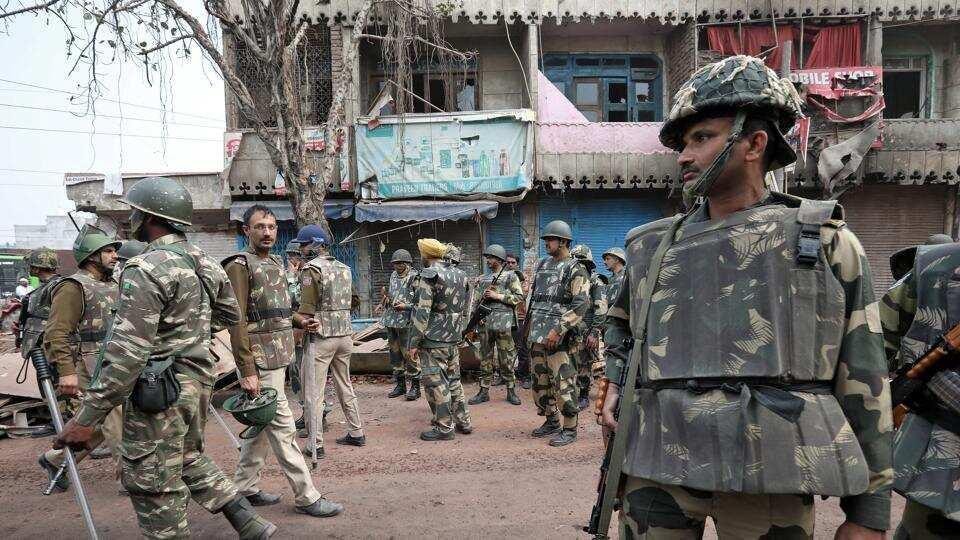
This testimony, within days of gruesome riots in northeast Delhi, underlined the harsh truth that justice and closure for survivors of communal riots and pogroms are a mirage they chase for decades after their lives were torn asunder, loved ones killed in propaganda-fed rage, properties looted and burned. In all, 18 policemen were implicated in the Suleman Usman Bakery case, one of the top-lined cases of that horrific time in Bombay. Of them, nine were discharged, two died of natural causes and seven now face trial. The cop who had led this operation was later promoted as the commissioner of police in the city.
“This is one incident where the police appeared to be trigger-happy…the responsibility for this incident must fall squarely on Joint Commissioner of Police RD Tyagi who was overall in-charge of the operation,” remarked the Justice Srikrishna Commission inquiry report.
“The police were very much influenced by the floating exaggerated rumours of attacks from sophisticated firearms and the consequent fear psychosis which caused them to shoot to kill…The evidence on record in no way bears out the police story that there were terrorists, much less with deadly arms nor does the evidence suggest it was necessary for the police to carry out such extensive firing as they did,” it added.
The police had claimed that nearly 100 “terrorists with sten guns” were holed up on the roof of the Bakery. As many as 78 men from and near the Bakery, migrant Muslims from Uttar Pradesh making a living in Bombay, were arrested. All of them were discharged in 2011 – 18 long years later – by the Bombay High Court with this observation: “Nothing can be more frightening than…when the protector becomes the predator”.
Some lessons, it seems, are not learned, only repeated. In Delhi, policemen were either mute spectators or predators as mobs wreaked havoc and violence on innocent citizens. The toll, 46 dead and more than 200 injured so far, is nowhere comparable to Bombay’s nearly 900 killed and more than 2000 injured, but the questions of justice and closure are no less important. Neither the Prime Minister nor the union Home Minister who directly commands the Delhi Police have visited the areas or offered commiserations.
There’s no saying when the trial in the Suleman Usman Bakery case will end or whether it will result in the conviction of the cops. This is only one of the thousands of cases then filed. Of the 2,267 cases taken on record, as many as 1,371 were tagged Summary A (true but closed). Under pressure, a high-level committee headed by a former Director General of Police scrutinised these and recommended 112 to be reinvestigated. Of these re-opened cases, charge sheets were filed in less than ten and the accused were acquitted in five.
In the Suleman Bakery case, investigations were still being done in 2001. What evidence would lie around so many years? It was the pivot around which survivors and activists doggedly pursued campaigns for justice in Bombay riots. However, adjournments have worn down survivors, made witnesses turn hostile, and the next generation disillusioned. Now, few in the area are even willing to talk to journalists.
There’s no point in fighting the case, say some of the survivors. They see a system had unfairly targeted them and then was miserly with justice. What closure can they even hope for?
This leit motif of betrayal by the system and abdication of responsibility by political leaders settles into a deep distrust, alienation and ghettoization, simmering rage or sullen resignation among victims.
This leit motif is repeated after every riot or pogrom. In it, lie the seeds of unrest.


