
 E-Paper



Mumbai sees light rain, air quality remains poor: IMD
Light spells of rain were reported overnight across the city and its neighbouring areas on Monday and early Tuesday. Cloudy skies continued to reduce visibility


Light spells of rain were reported overnight across the city and its neighbouring areas on Monday and early Tuesday. Cloudy skies continued to reduce visibility owing to a cyclonic circulation spreading from Punjab to the Arabian Sea.
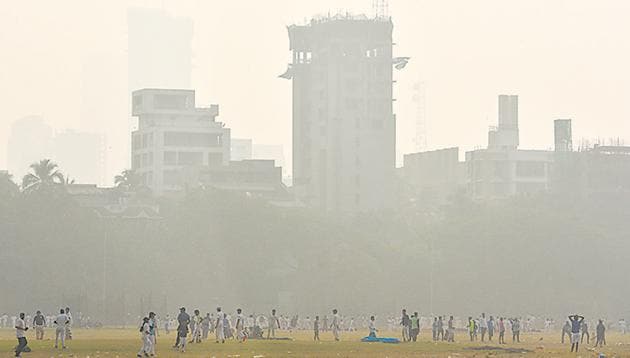
Parts of Mulund, Vikhroli and Thane experienced drizzles on Tuesday morning.
The India Meteorological Department (IMD) has predicted that south Konkan, south-central Maharashtra and some areas of Marathwada are likely to experience thunderstorms and light rainfall for the next four to five days. Mumbai is expected to see cloudy skies, but no significant rainfall is predicted over this period.
“An active western disturbance lies as a middle and upper-level cyclonic circulation over central Pakistan and neighbouring areas, with its induced cyclonic circulation over southwest Rajasthan and its neighbourhood at lower levels. A north-south zone of wind confluence continues to exist from north Punjab to the northeast Arabian Sea, with strong interaction between south-westerly winds in association with the above western disturbance and lower-level moist southeasterlies,” said KS Hosalikar, deputy director-general of western region, IMD.
The Santacruz weather observatory, representative of the suburbs and Mumbai, recorded a minimum temperature of 20.5 degrees Celsius, 3.4 degrees above normal. Colaba recorded a minimum temperature of 21.5 degree Celsius, 2.2 degrees above normal. The maximum temperature at Santacruz was 29.5 degree Celsius, 1.5 degrees below normal, while Colaba recorded a maximum temperature of 27.7 degrees Celsius, 2.8 degrees below normal.
Air quality continued to remain poor on Tuesday, with a marginal improvement. The overall air quality index (AQI) — a pollutant measuring indicator— of 242 (poor) was recorded. AQI is calculated by the System of Air Quality Weather Forecasting and Research (SAFAR) as the average of indices recorded at 10 locations in the city and suburbs. SAFAR categorises AQI levels for PM2.5 in the 0-50 range as good; 51-100 as satisfactory; 101-200 as moderate; 201-300 as poor; 301-400 as very poor, and above 400 as severe.
Of the 10 stations at which the air quality was measured, both Mazgaon and Navi Mumbai breathed the worst air with AQI of 309 (very poor).
“AQI of Mumbai for Monday was poor because of low dispersion. The air quality will remain poor for the next two days because of local emissions,” said a spokesperson from SAFAR.
Stay updated with all the Breaking News and Latest News from Mumbai. Click here for comprehensive coverage of top Cities including Bengaluru, Delhi, Hyderabad, and more across India along with Stay informed on the latest happenings in World News.


