
 E-Paper



Kamat signifies the deeper malaise in Mumbai Congress
Without a cohesive party unit led by a unifying and visionary leader, the congress cannot even respond adequately to a single issue


In the city of its birth and the home of some of its most illustrious leaders beginning with the formidable Dadabhai Naoroji, the Congress is struggling to remain relevant. This mirrors the party’s condition elsewhere in the country too but it is particularly poignant in Mumbai. In the last few years, when the fortunes of the Congress were discussed here, it was not for the vision or programmes it offered as a cohesive political organisation but for the shenanigans of its leaders or their telling absence.
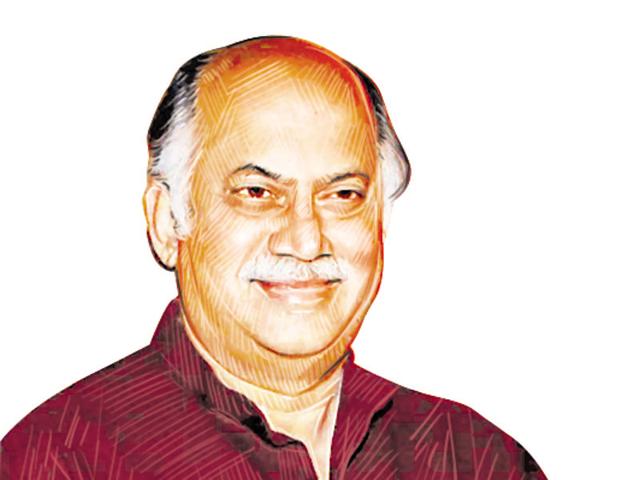
The latest to stoke the embers is the 61-year-old Gurudas Kamat. The leader, who held an array of posts during his four-decades-long political career including that of a junior minister in Dr Manmohan Singh’s cabinet, announced that he would resign from the party. Kamat was general secretary of the All India Congress Committee, most recently in charge of Gujarat and Rajasthan. He served as the vice president of the party in Maharashtra, and was president of the powerful Mumbai Regional Congress Committee intermittently since 2003.
He represented Mumbai in the Lok Sabha five times, mostly from the Mumbai North East constituency. His last outing in Mumbai was during the 2014 general election when he contested from Mumbai North West and lost to Shiv Sena’s Gajanan Kirtikar by a staggering margin of 1.83 lakh votes. In the Mumbai Congress, Kamat has been known for his organisational skills, secularist tendencies, straight talk and easy anger.
Of late, he was upset at being marginalised by city president Sanjay Nirupam. When Nirupam committed the gaffe of overlooking a disparaging reference to Sonia Gandhi in a party publication, he would be shown the door, Kamat believed. Instead, Rahul Gandhi backed Nirupam and now relies on him to deliver good results in the 2017 civic elections.
Gandhi’s think-tank believes that Nirupam’s aggression, energy and knowledge of rival parties like Shiv Sena – where he got his political schooling – will stand the Congress in good stead.
Mutual distrust between key leaders and intra-party intrigues have been the hallmarks of the Congress in Mumbai since the era of veterans such as SK Patil. Through the 1980s, 90s and early 2000s, the late Murli Deora led the city unit as a benign and shrewd patriarch, brooking no dissent. Kamat drew his authority from the Gandhis.
Over the years, he barely got along with other city leaders like Kripa Shankar Singh and Nirupam. None of them is a pan-Mumbai leader.
The internecine battles meant that the Congress was never in a position to take on the opposition Shiv Sena or the BJP with the single-minded sense of purpose needed to win hearts, minds and votes in Mumbai. Indeed, what issues is the Congress identified with in the city anymore? Which voter base in Mumbai does it appeal to in the changing city?
Since it lost majority in the Brihanmumbai Municipal Corporation two decades ago, the Congress has appeared more like an ensemble of leaders each nursing his or her own pocket borough.
When it led the state government for 15 years from 1999, there was a yawning gap of ideas between chief ministers and city leaders. Over the years, local leaders have either turned into self-serving units or are ready to jump ship to other parties. It polls a few lakhs of votes but it is not enough.
There were issues galore that the Congress as the local opposition party could have painted Mumbai red with, given the abysmal urban governance of the Sena-led BMC. But without a cohesive party unit led by a unifying and visionary leader, it cannot even respond adequately to a single issue.
Kamat’s resignation or drama of resignation will not help resurrect the party.
He is only the signifier of a much deeper malaise. It has to do with the Mumbai unit culture that discourages social engagement and farsighted political strategies, and encourages intra-party conflicts.
What a disaster for a party that was formed here in December 1885.

Stay updated with all the Breaking News and Latest News from Mumbai. Click here for comprehensive coverage of top Cities including Bengaluru, Delhi, Hyderabad, and more across India along with Stay informed on the latest happenings in World News.


