
 E-Paper



Private vehicles major cause of traffic jams, says BMC study
Experts call for strengthening city’s public transport systems


The Brihanmumbai Municipal Corporation (BMC) is in the final stages of formulating a holistic transport plan for the city. At this juncture, transport experts are calling for more emphasis on public transport in the city, which in recent years has witnessed a lot of infrastructure development, such as highways and flyovers, geared towards private transport.
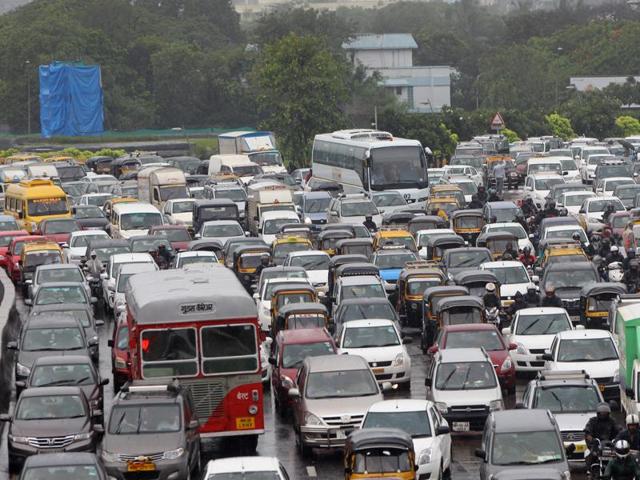
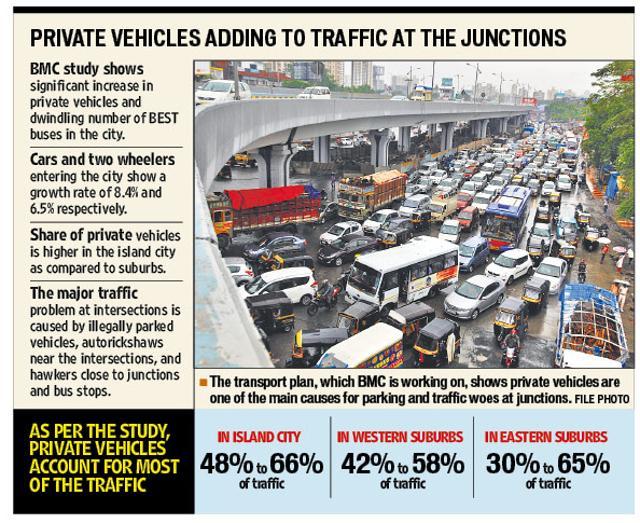
The transport plan, which the civic body is working on, shows that private vehicles are one of the main causes for parking problems and traffic at junctions and intersections of major arterial roads. Cars and two-wheelers entering the city have increased by 8.4% and 6.5% respectively in the past seven years, as per the study.
In the island city, the share of private vehicles in traffic is in the range of 48% to 66%, the highest in comparison with the eastern and western suburbs. “Parking is a land issue and in a city like Mumbai, it’s a subsidy that is provided to citizens when we already do not have enough land,” said Madhav Pai, director, EMBARQ India, an initiative for sustainable transport and urban development.
As per a report by the Mumbai Environmental Social Network, an NGO working for road traffic management, 50 flyovers were built at a cost of Rs5,000 crore, although only 5% of the traffic on these flyovers comprises buses.
The recent entrant in the list is the much-touted and debated Rs12,000 crore 35-km coastal road project. This road will channel cars into south Mumbai, which already faces road congestion. This decision comes despite the fact that an estimated 85-90% trips (as per a 2011 study by the London school of Economics and Political Science) in the city are made by train, on foot and by bus. Though Mumbai has aspirations of emulating world class cities, it has none of the traffic innovations applied elsewhere. While the West has worked to remove its network of highways within the city, introduce car-free days, strengthened networks of public transport, and introduced congestion charges, Mumbai is adding more highways.

Stay updated with all the Breaking News and Latest News from Mumbai. Click here for comprehensive coverage of top Cities including Bengaluru, Delhi, Hyderabad, and more across India along with Stay informed on the latest happenings in World News.


