
 E-Paper



A case for appraising House’s penal powers
House ethics committee’s recommendation to expel Mahua Moitra from Parliament turns the focus on the mandates of various panels

 Prefer HTon Google


The ethics committee of the Lok Sabha has recommended that Mahua Moitra, the Trinamool Congress Member of Parliament (MP) from West Bengal, be expelled from Parliament for what it describes as a serious misdemeanour on her part and contempt of the House. The main charge against her is that she shared her log-in details and password given to her to raise questions in Parliament with a Dubai-based businessman, who used these to send questions to the Lok Sabha in her name. The crux of the charge is that Moitra allowed the businessman to misuse her access for the potential promotion of his business interests. The ethics committee met for two days, found her guilty and called for her expulsion.
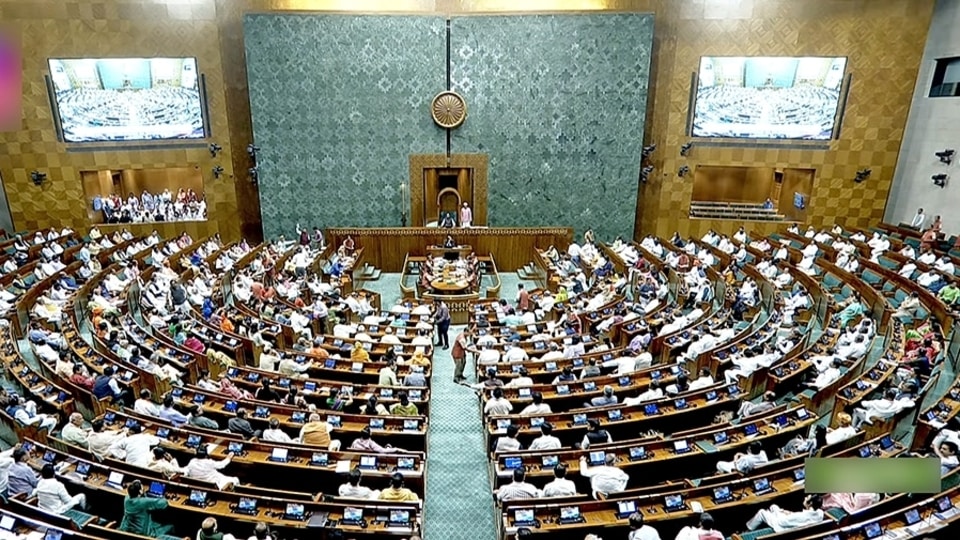
The ethics committee of the Lok Sabha, as the name suggests, is mandated to deal with the unethical conduct of MPs and recommend punishment. As of today, no definition of “unethical conduct” exists. The committee looks into the nature of the conduct and decides whether it is unethical or not. The cases examined by the ethics committee so far – they are not many – show that it has dealt with minor deviations from general norms of conduct. Punishments have varied depending on the seriousness of such deviations: Admonition, reprimand and suspension from the sittings of the House for a certain period are usually recommended. In the history of the ethics committee of the Lok Sabha, it has never recommended the expulsion of an MP from the House.
Expulsion from Parliament is a very serious punishment since it deprives the people of the constituency of the expelled MP the right and opportunity to represent themselves in the House. Hence, it is rarely recommended. In 1951, HD Mudgal, a member of the provisional Parliament was expelled from the House on being found to be promoting the interest of a business association and receiving financial benefits for it. A special committee of the House investigated the case and recommended his expulsion. Similarly, in 2005, as many as 10 MPs were expelled from the Lok Sabha when a sting operation found them accepting money for putting up questions in Parliament. This time too, a special committee investigated the case. Accepting money for doing parliamentary work to promote someone’s personal interest is treated as a serious breach of privilege. So, expulsion is an accepted punishment for such misconduct.
The Supreme Court in Raja Ram Pal v. Hon’ble Speaker, Lok Sabha (2007) acknowledged the power of the House to expel a member for breach of privilege. The only caveat is the Court will ascertain whether such a privilege exists. If it finds there is no privilege in existence, then the expulsion will be struck down. The significance of Raja Ram Pal is that the power of the House to expel an MP is directly linked to the existence of a privilege, the breach of which brings about the expulsion.
This leads to a vital question, whether a committee other than the privileges committee has the mandate to recommend the expulsion. (The committees that recommended expulsions of MPs in 1951 and 2005 were not ethical or privileged committees but special committees set up by the House to probe the specific issues). If the logic in the Raja Ram Pal judgment is to be followed, no other regular committee of Parliament can recommend the expulsion of an MP as a breach of privilege can be dealt with only by the privileges committee or a special committee appointed by the House for that purpose. The ethics committee deals with issues that cannot be brought before the privileges committee. The logic of setting up an ethics committee is that there is a range of misdemeanours that do not qualify to be dealt with by the privileges committee, but at the same time, a disciplinary mechanism of the House should be available to deal suitably with such conduct. This difference in the role of different committees demands the attention of Parliament so that greater clarity is brought into the operationalisation of Parliament’s penal powers.
It also calls attention to the scope, utility and nature of investigation done by parliamentary committees. Parliament investigates matters relating to financial mismanagement resulting in scams and other serious cases. Such investigations are comprehensive enough to unearth systemic deficiencies that lead to massive financial frauds. The Joint Parliamentary Committee (JPC) performs this function, which an investigative agency like the Central Bureau of Investigation (CBI) is unable to do. While there is no dispute over the power of the House to expel a member, there are certain disquieting aspects about the mode of investigation. The procedure normally followed by the committee is to take evidence from the witnesses including the complainant, the defendant MP and other interested persons. They may submit written documents as well as make oral depositions. After the evidence is collected, the officials of the secretariat sift through such evidence and prepare a draft report containing the findings and recommendations. The report is discussed in the committee and adopted. Thereafter, it is presented in the House that takes the final decision on the matter. The most disquieting aspect of this kind of investigation is that the truth of a matter is decided based on the majority. The ruling party has a majority in all the committees, as in the House. According to the time-honoured tradition, parliamentary committees function on a non-party basis. But that tradition has almost disappeared. Now, truth and justice are voted upon and the minority gives dissenting notes. So, the expulsion, which is the most serious punishment given to an MP, is decided based on the majority. Relevant issues like the capabilities of the officials who appraise the evidence, their expertise in the realm of investigation, and the application of mind by the members of the committee, who are mostly non-experts and not judicially trained, need to be looked into when we consider the nature of the parliamentary investigation.
Justice and truth can be ensured only if procedural integrity is maintained by investigative mechanisms. While Parliament has the power to investigate and punish its members for any wrongdoing, a correct appraisal of the adequacy and soundness of the procedure to get at the truth and do justice is long pending. The Mahua Moitra case reminds us of the urgency of this task.
PDT Achary retired as secretary general, Lok Sabha. The views expressed are personal


