
 E-Paper



A year on, why Afghanistan remains a critical global issue
Zawahiri’s killing in Kabul is a reminder that, with Taliban at the helm, Afghanistan’s wars aren’t over. And with Russian and Chinese revanchism, it cannot credibly be bracketed as a regional issue.

 Prefer HTon Google


The secret presence and targeted killing of al-Qaeda’s deputy chief, Ayman al-Zawahiri, by a United States (US) drone strike in Kabul, just before the first anniversary of the Taliban’s rise to power, is a reminder that Afghanistan’s wars aren’t over. Fears of the Taliban harbouring transnational jihadis, forging a social contract undergirded by fear and lubricated by force, limiting women’s rights, failing to contain a famine but squabbling over meagre spoils, and promising the moon of geopolitical pragmatism but effectively bolstering fringe Islamists, have all come true.
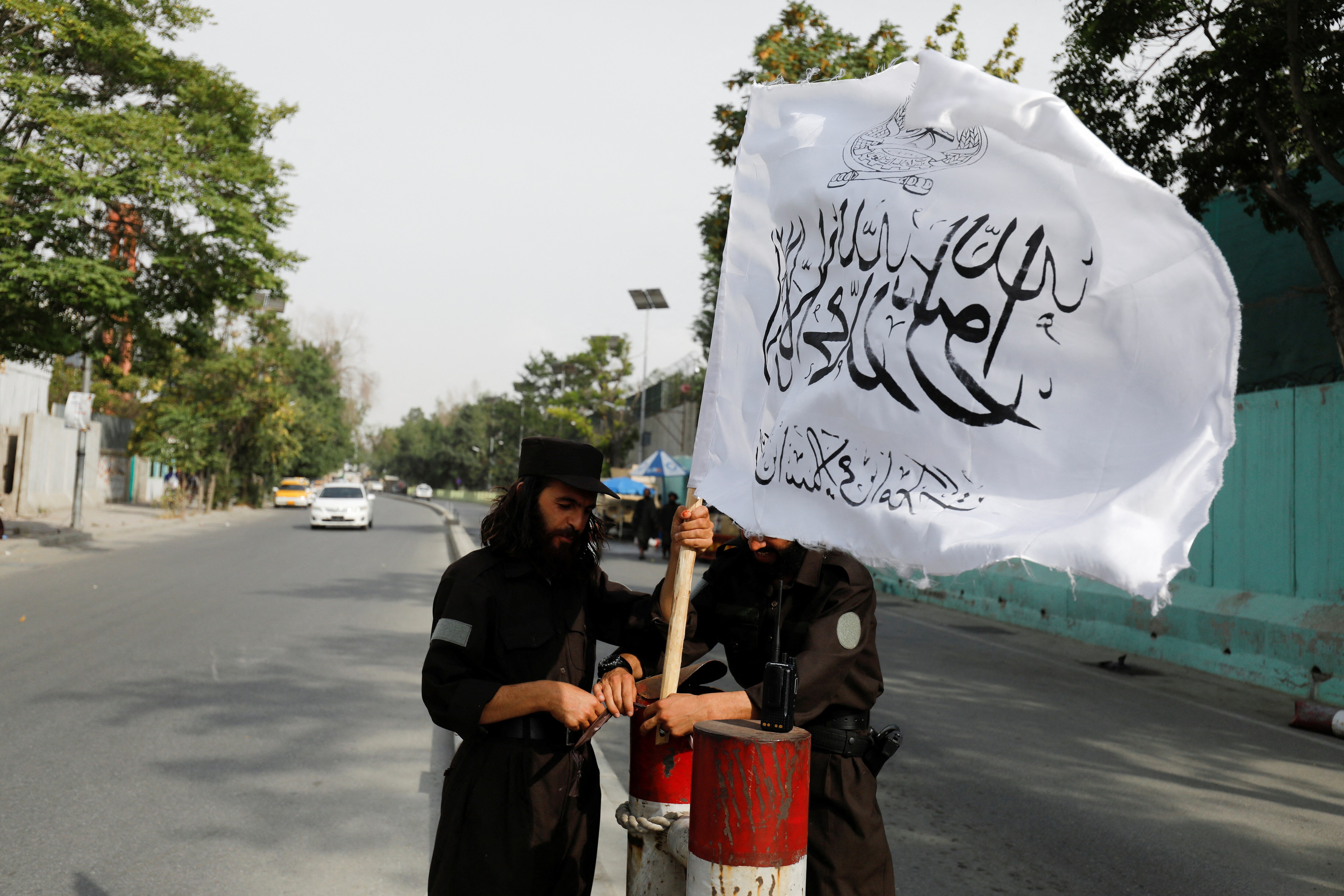
Al-Qaeda’s presence in downtown Kabul underscores another uncomfortable truth: The US lost the war, botched its exit by signing the Doha agreement, and left the Afghans in a lurch. Celebrations around the US’s over-the-horizon counterterrorism prowess, and the alleged foresightedness of the withdrawal in the context of heightened tensions with Russia and China, mask the fact that global Islamists, parallel to Right-wing extremism, have strengthened over the last year and remain a serious disruptive force in global geopolitics.
For the so-called global war on terror that was fought on the premise of advancing liberal democracies, and the democracy versus authoritarianism binary of the current great power rivalries, al-Qaeda’s unceasing links with the Taliban raise a question: Can Afghanistan credibly be bracketed as a regional problem in the face of Russian and Chinese revanchism? It is tempting to think yes, it can be. But this is unlikely to be the case given Afghanistan’s acute economic and political distress and the structures of global insecurities.
To understand why this is the case, let’s first rid ourselves of two red herrings. One, can one trust the Taliban’s counterterrorism promises? No. Such a religion-inspired insurgent movement now governing one of the poorest countries can’t — and won’t — deliver on transnational co-Islamists. The internal political and physical costs of that are prohibitive. But then must one engage with it? Yes. Not because it’ll offer it legitimacy, but because that’s the only way to support the Afghans and, for the security-minded, keep an intelligence pipeline open.
Afghanistan’s explosive situation is of global consequence because of the shrinking and deepening of its conflict economy. External aid, the financial backbone of the Islamic republican State, has largely dried up, and alternative sources of revenue remain limited. The Taliban’s cross-border State sponsor, Pakistan, is polarised and collapsing economically. The resulting desperation, apart from fueling illicit trade, puts a premium on protecting high-value targets such as Zawahiri to charge strategic rent.
In the subcontinent, it is an article of faith that delivering such figures (who are of limited operational but high political value) on a cyclical basis convinces the US that Pakistan, and now the Taliban, are serious about counterterrorism. The reward, it is assumed, correctly or otherwise, comes in the form of easing economic pain by the Financial Action Task Force and more aid. To that effect, both Pakistan and the Taliban need to be on the right side of economics, even if their politics is framed in opposition to the US and its allies.
Then, it won’t be surprising if Zawahiri’s location was tipped off by someone from within the Taliban — if not from the Haqqani camp, then that of his detractors — with or without Rawalpindi’s approval. The combination of Mullah Yaqoob’s (Sirajuddin Haqqani’s competitor) interview to the National Public Radio in direct outreach to the US public hours after the drone strike, and Haqqani’s incredulous denial about prior knowledge of Zawahiri’s whereabouts signals that the Taliban insiders are not unduly perturbed by the strike (yet).
Optimists could see this as the Taliban letting the US take out a key adversary to normalise bilateral ties. But this could also mean that Zawahiri was past his due date as a leader, and his successor(s) could be younger, savvier, adept at exploiting intra-Taliban rivalries, and focused on delivering violence across the subcontinent, where communal fault lines are ripe for exploitation. For instance, a well-timed attack on an Indian city that is traced back to Afghanistan, will not just frustrate India’s outreach to the Taliban and complicate relations with Pakistan, but could also divert Indian attention away from China during critical conflict junctures (if not in a long-term sense). Reports of al-Qaeda-linked militants active in Assam are already coming in.
But can, and will, such Islamists, attack the US homeland or mainland Europe? Perhaps not soon. But to generate a global strategic effect, they don’t need to do that. If al-Qaeda and its franchises, or groups such as the Lashkar-e-Taiba, the Jaish-e-Mohammad, the Turkistan Islamic Party, the Tehrik-e-Taliban Pakistan, and the Islamic Movement of Uzbekistan —all of which remain active in Afghanistan — can exploit social fissures in their primary target States to complicate regional and global rivalries, that’s a success — and it is highly feasible.
India’s diplomacy on Afghanistan is unceasing. From hosting conferences and Afghanistan-centric meetings amid the Russia-Ukraine war, to deepening engagement with the Taliban that is domestically unpopular (among liberals and Hindu nationalists alike) but geopolitically unavoidable, New Delhi wants to obviate Zawahiri’s India-centric propaganda turning into reality. In a majoritarian political environment where Islamophobia has taken such deep root that distilling fact from fiction of Islamist radicalism is becoming onerous for practitioners (who are unable, or unwilling, to act on extremes coming from the Hindu Right), the Afghan situation is more serious than meets the eye.
There are no straightforward solutions. Just like the Cold War was a multi-dimensional competition between uneasy ideological categories ranging from liberalism, democracy, and communism, to political Islam, all with their diversities and tensions attempting to trespass a nation-State-dominated international system riddled with racial and ethnic politics, the situation today is not much different in its fissiparousness.
The perilous condition of the Afghans and Zawahiri’s killing — done from a distance and, without irony, hailed as tactical genius because the US withdrawal lured al-Qaeda back to Kabul — is a reminder that the broad brush of democracy that the US is offering as an operating principle to contain Russia and China remains ideologically compromised. But it also demonstrates how Chinese and Russian advocacy for multipolarity, driven by majoritarian insecurities, is totally bereft of social justice and economic equality. Neither Moscow nor Beijing has done much to improve the condition of the Afghans, despite keeping their missions open.
One year on, the true historical value and global strategic significance of Afghanistan is that it is as much an end of the road for failed geopolitical experiments, as it is an incubator of new political struggles. To forget about Afghanistan, or the plight of its people, must be done at one’s own peril.
Avinash Paliwal teaches at SOAS, University of London and is the author of My Enemy’s Enemy: India in Afghanistan from the Soviet Invasion to the US Withdrawal (New York: Oxford University Press, 2017)
The views expressed are personal


