
 E-Paper



A celebration of Sita in the world of Urdu literature
There are said to be over 300 versions of Ram Kathan in Urdu in the Awadh region alone. Of these, a great many are in verse

 Prefer HTon Google


Diwali celebrates the return of Lord Ram, the God-king, to his kingdom, Ayodhya, after years of exile and war. It follows Dussehra, which, across much of northern and western India, celebrates Ram slaying Ravan, the ten-headed king of Lanka, as the victory of good over evil and righteousness over immorality. But what of Sita, who was abducted by Ravan (disguised as a mendicant) when she stepped past the Lakshman rekha of protection drawn on the earth by Lakshman, to give him alms?
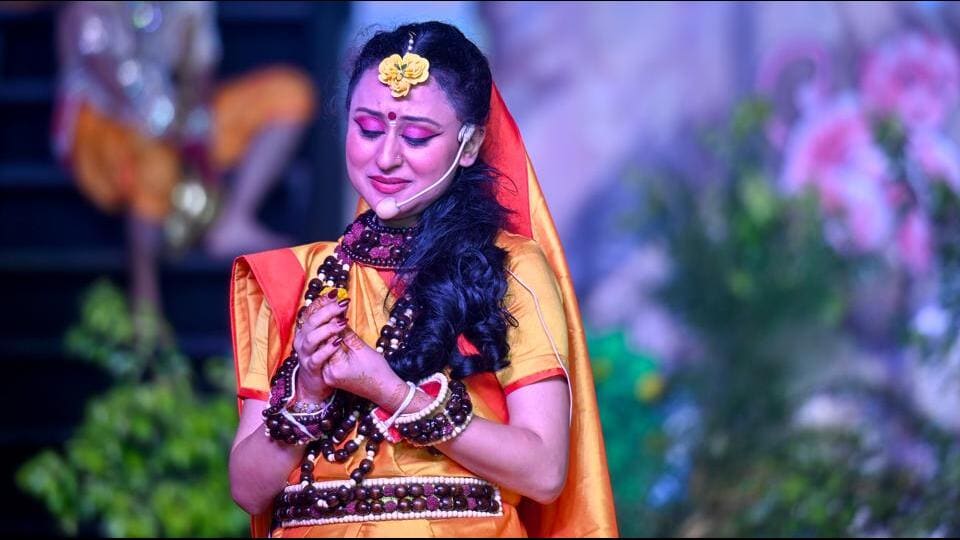
The Urdu poet, forever in search of the under-represented, often picks Sita to eulogise. While the charismatic figure of Ram — the mard-e-kaamil (perfect man) — whom Allama Iqbal memorably described as Imam-e-Hind (the spiritual leader of Hindustan) — remains the subject of a great deal of Urdu poetry, there exists a large corpus, including several versions of the manzum (verse) Ramayana, which paint an evocative picture in words of the daughter of Janaka, her willing embrace of banwas (forest-exile) by forsaking the luxuries of her palatial home, her heart-wrenching abduction, and her pining for her husband.
There are said to be over 300 versions of Ram Kathan in Urdu in the Awadh region alone. Of these, a great many are in verse; some use the daunting yak-qafiya format, which maintains the same rhyme scheme throughout the long poem, with every verse ending in the same sound. Almost all of these speak in hushed reverence of the pakeezgi (purity) and masumiyat (innocence) of the princess for whom even the fragrance of flowers weighed heavy (nikhat-e-gul ka bojh bhi bhaari), yet who willingly endured the hardships of exile. Agha Hashar Kashmiri, the prolific playwright and screenwriter, wrote an entire play called Sita Banwas entirely from Sita’s perspective.
In fact, the banwas of Ram and Sita has been viewed both in a political and metaphorical sense. There’s Kaifi Azmi’s poignant Doosra Banwas, referring to Ram leaving Ayodhya when the domes of the Babri Masjid fell on December 6, 1992. There is also the banwas that is a spiritual exile that falls to the lot of Everyman, the one that Nasir Shahzad alludes to: Ek kaata Ram ne Sita ke saath, doosra ban-bas mere naam par (There was the exile that Ram endured with Sita, the second was the exile he endured in my name).
The Urdu poet and creative writer has seized upon Ravan’s abduction of Sita for its allegorical import. In Qurratulain Hyder’s novella, Sita Haran, Sita Mirchandani, a Hindu refugee from Sindh (now in Pakistan), is traumatised by the forced separation from her homeland. Translated into English as Sita Betrayed, it speaks of the loss of home and family and links Mirchandani’s post-Partition tragedy to the travails of Sita in exile.
Of the several depictions of Sita sighting the golden deer, crossing the Lakshman rekha, going out of the sanctuary of her home to give alms to Ravan, and the terrible consequences of that act of innocent kindness, one of the most evocative is Munshi Banwari Lal Shola’s long poem, Sita-Haran: Baahar jo kundli se chaliin to dhoka khaa gayiin, Ravan ke chhal mein haii maharani aa gayiin (Stepping out of the hut, she was entrapped. Alas, the queen was caught in the deceit of Ravan).
While several poets take a simplistic position of Sita crossing the boundary that demarcates the safe haven of the marital home from the wicked world outside, some poets play on the notion of good versus evil, such as this verse by Wajid Chughtai: Kis se poochhun kho gai Sita kahan, Ban ka har saaya hii Ravan ho gaya (Who shall I ask where Sita has gone? Every shadow in the forest has turned into Ravan).
Or this by Pratap Somvanshi: Lakshman rekha bhi akhir kya kar legii, saare Ravan ghar ke andar nikleinge (What will the Lakshman rekha achieve? All the Ravans will be found inside the home).
There is a woman’s perspective on Sita crossing the line, holding a bowl of alms, signifying her heedless goodness that puts her in danger in Aziz Bano Darab Wafa’s retelling: Ab bhi kharhi hai soch mein duubi ujyalon ka daan liye, aaj bhi rekha paar hai Ravan Sita ko samjhai kaun (Even today she stands lost in thought holding the alms of light; even today Ravan is across the line, who can make Sita understand?)
Nasir Shahzad refers to the separation of Ram and Sita that creates a sterile, barren emotional landscape: Ravan ne phir juda kiya Sita ko Ram se, Phir kalpana bujhaii gaii qayaas chhiin kar (Once again Ravan has separated Sita from Ram, once again imagination has been stifled by snatching assumption).
Considering the suffering that Sita endured, after her abduction and then again when her purity was put to the test, Sahir Ludhianvi puts her ordeal on a par with the ignominy and injustice of life: Zindagi ka naseeb kya kahiye, ek Sita thii jo sataii gayii (What can one say of fate in life, it was a Sita who was tormented).
Kaifi Azmi too views Sita’s dilemma in much the same way: Chand rekhaon mein, simaon mein, zindagi qaid hai Sita ki tarah (In a few lines and boundaries, life is imprisoned like Sita).
Giving Sita her rightful place beside Ram and Lakshman as the embodiment of the culture of Hinduism, Zafar Ali Khan declares: Naqsh-e tehzeeb-e hunood ab bhi numaaya hain agar, to woh Sita se hain, Lachman se hain, aur Ram se hain (If there are signs of the culture of Hinduism still visible, then they are because of Sita, Lakshman, and Ram).
However, it was left to Bilquis Zafirul Hasan, a modern woman poet, to put an end to the valourisation of sabr (patience): Khud pe ye zulm gavara nahiin hoga hum se, hum to sholon se na guzreinge, na Sita samjhein (I shall not tolerate this cruelty upon myself, I shall not pass through flames; don’t take me for Sita). For us mere mortals, it is nearly impossible to emulate Sita, the perfect match to mard-e-kamil.
Rakhshanda Jalil is a writer, translator, and literary historian. She’s also the author of The Aunts of Gangapur, a novel. The views expressed are personal


