Concerns and questions on the accidental missile fire
The statement released by the defence ministry adds questions and doubts to the prevailing confusion. If we mishandle our response, concerns this situation has created could start to haunt us
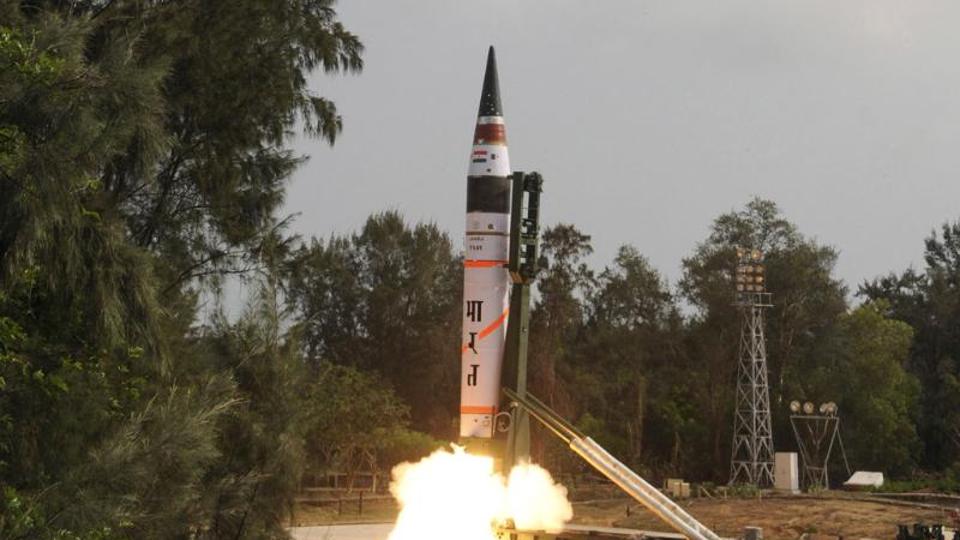
Accidents, of course, will happen but there are some we must do everything to ensure never do. If they still occur, how we respond becomes the test not just of our strength but also of our credibility. The accidental firing of a supersonic missile by India, a nuclear-weapon State, at Pakistan, another nuclear-weapon State but also a neighbour and rival, is a precise, if frightening, illustration of my point.
For 48 hours, there was silence from the Indian authorities. Only after Pakistan went public with the news did our government confirm what had happened. (Representative Image)
For 48 hours, there was silence from the Indian authorities. Only after Pakistan went public with the news did our government confirm what had happened. Surely, it was our duty to have immediately alerted Pakistan? Their National Security Adviser (NSA), Moeed Yousuf, claims we did not and we have not denied that. So, if we did, we need to emphatically say so. But if we did not, we need to explain why.
The explanation we have so far offered — to ourselves and the world — raises a further set of concerns. This is because the statement released by the defence ministry not only fails to reassure but adds questions and doubts to the prevailing confusion. It says: “In the course of a routine maintenance, a technical malfunction led to the accidental firing of a missile.”
Now, if a missile can be inadvertently fired during maintenance, doesn’t this raise disturbing questions about the measures and procedures India adopts and how that maintenance is done? It might have been better to acknowledge what happened and apologise for the error and leave explanations till after an inquiry has established the cause of the accident.
However, in the interim, there are other issues that need urgent answers. Did this missile have a self-destruct mechanism? If it did, was it activated? If it was, did it fail? Also, what was the intended flight path? I’m told all missiles have a pre-programmed one. And even if it’s too early to be authoritative, what is our initial sense of why, or if, it veered away from that path?
These questions need to be quickly answered because, if they are not, that will affect our image and credibility as a responsible nuclear-power State. Remember, that was the basis on which critical waivers were granted when the Indo-US nuclear deal was negotiated. The current silence can only cause concern and fuel doubts.
Pakistan will, of course, do everything to spread those concerns and undermine India’s standing. Its NSA has already said the incident “indicates many loopholes and technical lapses of a serious nature in Indian handling of strategic weapons.” We must act expeditiously to reassure the world he’s mistaken. The question is how?
I fear the easy and mistaken response will be to engage in a Twitter-war with Moeed Yousuf. That may get cheered by bhakts and trolls, but the international community, who want thoughtful and responsible answers, will see it only as immature deflection and, possibly, not understanding what is actually required.
What the world wants is the truth of what happened and a credible guarantee it cannot occur again. Maybe the full truth cannot be told in public but that doesn’t mean near silence will be acceptable. We need a well thought out balance that is convincing. And, remember, others have to be the judges of that.
Meanwhile the guarantee there will not be any repetition has to be more than a verbal statement. Meaningful steps must be taken which satisfy our friends and are difficult for our critics to deny or question. Again, other countries will judge if they’re meaningful. Not us.
On both of these issues, we need to act now. We must not believe that, as time passes, concerns will die down. At the moment, the world’s attention is firmly fixed on the Ukraine crisis. This is why the western press has ignored our mishap. However, the accidental firing of a missile by one nuclear power at another may be overlooked for now but it certainly won’t be forgotten. If we mishandle our response, the concerns this situation has created could start to haunt us.
Karan Thapar is the author of Devil’s Advocate: The Untold Story

 E-Paper