
 E-Paper



Covid-19 lockdown could be a good time for MSMEs to log-in | Opinion
Given the liquidity crunch and salaries taking a hit across sectors, the dwindling financial capacity of buyers and consumers will most likely result in low demand, writes Raman Sobti, Partner and National Leader at KPMG Enterprise


As a sector, micro, small and medium enterprises (MSMEs), which form a large and critical part of India’s economic landscape, have been severely hit by the coronavirus pandemic not just in India, but across the world including China, USA, and the UK. There exist more than 63 million MSMEs in India that provide employment to over 114 million people and contribute close to 30% of the GDP. The sector is reported to have contributed 33% to industrial production in the country. These are big numbers and there is a lot riding on MSMEs. If this lockdown continues beyond the stipulated four weeks, close to a quarter of the firms could face closure and 43% would have to, most likely, shut shops if the Covid-19 panic extends beyond eight weeks.
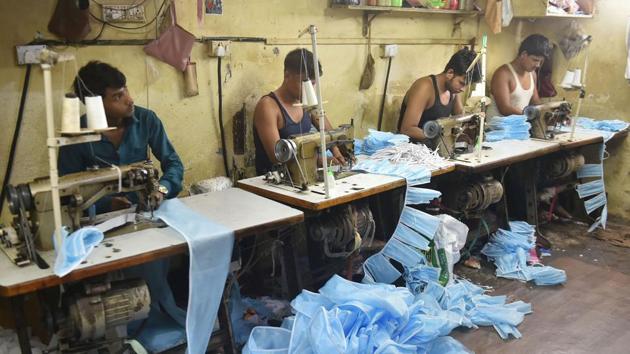
The lockdown that followed the travel bans has witnessed the closure of many establishments and has led to disruption in most business activities. But this is not to say that when the lockdown is lifted, the situation will start easing out immediately. This disruption is going to impact the economy for several reasons.
Given the liquidity crunch and salaries taking a hit across sectors, the dwindling financial capacity of buyers and consumers will most likely result in low demand. It is a real possibility that larger production firms may likely bring down production and buying of raw materials, till demand starts rising. In addition, people are likely to refrain from frequenting crowded places to avoid any exposure to the virus, thus making markets and shopping destinations unpopular, albeit briefly, and this may not be a bad idea.
While MSMEs are hopeful the government will bring into force emergency measures such as extension of bank loans, special funds, simplification of taxes, availability of working capital, and improving welfare of workers, one cannot but consider the expansion of e-commerce channels, to enable online shopping of goods from these MSMEs.
Even as people are coping with being confined to their homes, certain e-commerce companies are undertaking the delivery of essential items, maintaining proper hygiene and sanitation of the last-mile delivery personnel, kitchen, parking areas, and delivery vehicles. If these portals are enabled to deliver non-essential products supplied by MSMEs, it would immediately address two issues facing manufacturers. First, many manufacturers already have stockpiles that are ready to be shipped, and e-commerce can help move these products to consumers. Stock-clearing is essential in the face of accumulated stocks at the onset of a disruptive period, as it could result in liquidity crunch or revenue loss for manufacturers. Second, and directly linked to stock clearing, is the fact that this model of business can keep the economy afloat with continued transactions. It can keep the consumption engine running. This arrangement can thus build resiliency for the vulnerable business communities who are likely to be hit hardest during a crisis.
Almost half of India’s MSMEs are based in rural areas and they often need exposure to large markets and expertise to scale up and enhance capabilities. They can do so by integrating into global value chains. Already MSMEs contribute close to 50% of India’s total exports valuing $ 331 billion (2018-19). As a platform, e-commerce could enable this shift. The significant growth of e-commerce in India has provided MSMEs opportunities to access global markets, reap benefits by getting better value for their products and go up the value chain. In 2019, India’s e-commerce sector recorded the second highest year-on-year growth at 31.9% across countries. Over the last few months, MSMEs, entrepreneurs and the rural handicraft artisans have learnt how to use e-commerce and have onboarded with several portals. This move will give a chance to these small players to keep selling their goods in times of distress.
Just as e-commerce provides a platform for MSMEs to connect with a much larger potential customer base, it also enables them to source raw materials from a large supplier base active online. Thus, not only will the local and regional supply bottlenecks be mitigated, the MSMEs will also fetch raw materials at more competitive pricing.
In this emerging trend, logistic players also have a huge role as they are pivotal in moving goods from one place to the other post the online transaction. The government too was quick to make amends to the lockdown guidelines with the Ministry of Home Affairs (MHA) allowing movement of all goods without distinction of essential or non-essential during the lockdown period. Some MSMEs which supply to large manufacturing firms have benefitted with these measures.
When boundaries open up in a post-Covid world, e-commerce will play an integral role in re-establishing global value chains. MSMEs adopting e-commerce will gain access to a larger customer base and be able to tap a wider supplier base.
In the face of the pandemic, e-commerce deliveries are providing continued livelihood and economic support to several gig economy workers. In the longer term, e-commerce can pave the way for the array of items that people will need once the lock down is over and aid us in jumping back to normalcy.
(Raman Sobti is Partner and National Leader, KPMG Enterprise, KPMG in India)


