
 E-Paper



When resignation cleanses and restores lost stature
The impulse to resign has to be seen as the dictate of conscience and needs to be acted upon in obedience to that inner goad.

 Prefer HTon Google


Dharmendra Pradhan should have resigned as Union education minister earlier. Perhaps — who knows? — he wanted to and was prepared to but was not allowed to. I regret the fact that he did not leave earlier, not just because that would have saved the country the enervations seen over the last three weeks but for another reason as well: Resignations, when they are real, are intensely personal decisions. They come from inner resolve. They are non-negotiable. Pradhan’s resignation, partly for the reason of its delayed arrival, but more for what could seem like a lack of a clear inner conviction, would stop short of being such a relinquishment.
When resignations are demanded by the public through protests, and are then offered, they become less of a self-denial and more of a punishment inflicted. I cannot get myself to admire demands for an individual’s resignation. Democratic demands for leaders of governments and of governments as a whole to resign, like Jayaprakash Narayan’s in 1974, are another matter. Expectations for resignations that follow due process and come after responsibility, direct or vicarious, if a public wrong is established are also another matter. Two Union finance ministers left Prime Minister (PM) Jawaharlal Nehru’s Cabinet in such circumstances — RK Shanmukham Chetty and TT Krishnamachari. When I refer to “real” resignations by individuals, I am referring to resignations which are true and inwardly driven, in response to something which will not let them continue in office — when continuing is to lose one’s self-respect.
The individual concerned in a democracy must see and feel public opinion, and when he does, that realisation contributes to his personal decision, Two impulses are at work then: one’s inner voice and the external voice, the voice of one’s conscience and the voice of the people. Both heeded, in good time, make for resignations of the kind PM Nehru’s Cabinet saw in the very dawn of Independence, resignations of such stature.
First Cabinet minister who offered to resign
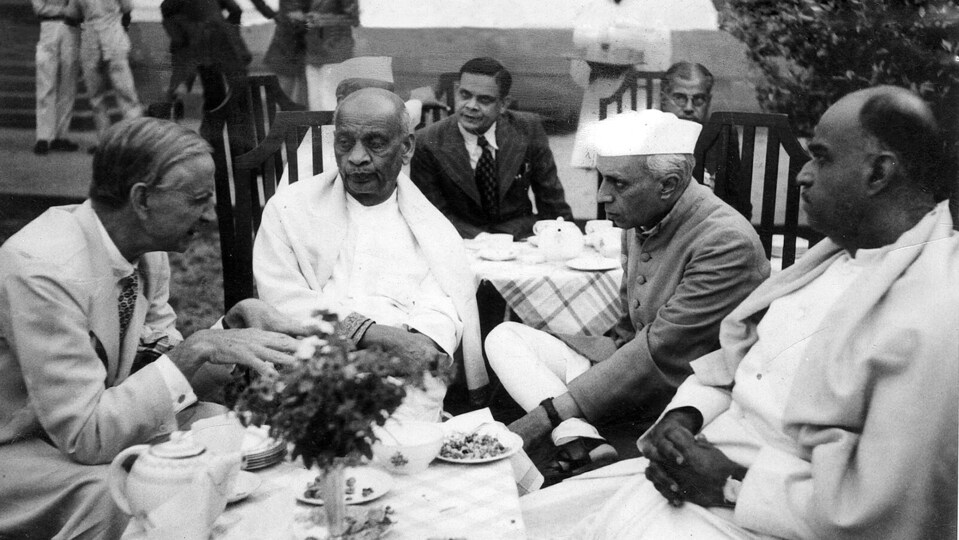
The very first Cabinet minister to send a letter of resignation to Nehru was — it may surprise the reader to know — none other than India’s first deputy PM and home minister, Sardar Vallabhbhai Patel. Crushed in his innermost being by the assassination of his leader, Mahatma Gandhi, on January 30, 1948, he sent in his resignation. Without being aware of this, a correspondent wrote a letter to The Statesman dated February 3, 1948, which said, “Sardar Patel should resign for the failure of his security department to protect Mahatma Gandhi.” Jayaprakash Narayan and other socialists asked for a new home minister. Was Patel stung? He was. Reminding Nehru of his earlier letter, he wrote another to him, “The Statesman’s correspondent takes a constitutional stand. And I think he is right. This is an additional reason for my resignation. I do not wish to do anything to embarrass you at this critical juncture, but when there is a public demand, a challenge which is obviously justified, I feel I must once again request you to help me.”
Patel asked his daughter Maniben to give it to his private secretary, V Shankar for being sent to its addressee. Rajmohan Gandhi tells us in his masterly biography of the great man (Patel: A Life, Navajivan, 1990) that Shankar said to Patel that the ministry could not be held responsible for destiny’s role and “persuaded the Sardar to withhold it.”
Nehru was not going to let the Sardar go. The same day as The Statesman carried the letter, he wrote to his senior colleague, “…in the crisis that we have to face now after Bapu’s death, I think it is my duty, and if I may venture to say, yours also, for us to face it together as friends and colleagues...” The country was thereby enabled to have the indomitable leader’s services for another two years before death took him.
Should resignations be voluntary or sought?
But 78 years on, the fact of Patel’s reflexive act of statesmanship in seeking to leave office sends a powerful message: Resignations are meant to be given, not extorted. They are meant to be treated as something beyond office-holding or office-leaving. They are to be seen as a moral, not political step. And in a democracy, as a covenanted step. Consider Patel’s line “…but when there is a public demand…”
Nehru — who was not going to, and did not, accept Patel’s resignation — did not stop these other resignations (all conscience-driven) that followed in the months after India became a Republic. India’s second finance minister John Matthai, industries minister Syama Prasad Mookerjee, C Rajagopalachari (Rajaji), who had joined the ministry in 1950, and accepted the home ministry that had fallen vacant after Patel’s death, exited. As did — with strong words spoken and written — memorably, BR Ambedkar.
In November 1956, after a railway accident occurred in Ariyalur, Madras state, killing 144 passengers, Lal Bahadur Shastri, who had helmed the railway ministry with understated confidence, tendered his resignation. Nehru reluctantly accepted it. “It will be good”, Shastri wrote in his letter of resignation, “... and the government as a whole, if I quietly quit the office I hold.” The Hindustan Times’ special correspondent wrote, “More than the Government supporters, those in the opposition were flabbergasted…”
Eight years later, in 1962, after the Sino- Indian war, the country wanted defence minister VK Krishna Menon to go. The clamour became a crescendo. Menon had to go, and did. And as a teenager, I too celebrated his departure as a kind of cathartic relief and saw it as a victory of public opinion. It was only years later, reading Jairam Ramesh’s biography of the man (A Chequered Brilliance, Penguin/Viking, 2019) that I came to know that Menon had, in fact, sent in his resignation much before the clamour for it grew. And that he cited public opinion while doing so.
The impulse to resign has to be seen as the dictate of conscience and needs to be acted upon in obedience to that inner goad. And the conscience of a minister in a democracy cannot but regard public opinion when justified as, to use Patel’s telling phrase, “an additional challenge”, a second goad.
What happens when resignations come under pressure
Resignations are self-cleansing. They go beyond political action to political reflection. To demand them can be natural, even necessary. But when given under that pressure, they become a succumbing.
Let those who clamoured for Pradhan to go, not celebrate his going for the manner of his going does not belong to the scroll of resignations as much as it does to the score of a chase. When they were chasing a policy and a programme, they were a great force chasing a wrong. When they started chasing a person, they began to resemble a pack chasing a prey. But let Pradhan also know that had he acted earlier, his resignation would have given him a moral stature that would have replaced his political status. In the end, no one can claim laurels. Except perhaps Sonam Wangchuk whose demands, towards the end of his fast, did not include a call for Pradhan’s resignation.
Now the admittedly impressive movement started for education and examination reform must, after it has had a moment to recover from its protest-mode, show an altogether different aspect: An intense, chessboard-like focus on achieving goals that must transcend any single individual’s departure from the scene. It is now time for the protest movement to retrieve the voice of the cause from the din of the chase.
(Gopalkrishna Gandhi is a student of modern Indian history and the author of The Undying Light: A Personal History of Independent India. The views expressed are personal)


