
 E-Paper



Eradicating caste-based discrimination in India's prisons: A step toward substantive equality
SC's judgment touches on aspects such as addressing constitutional violations in caste-based assignments and judiciary’s role in advancing substantive equality

 Prefer HTon Google


The Supreme Court of India’s October 3 judgment declaring caste-based discrimination in prisons "unconstitutional" marks a historic step in dismantling institutional biases entrenched in India’s correctional system.
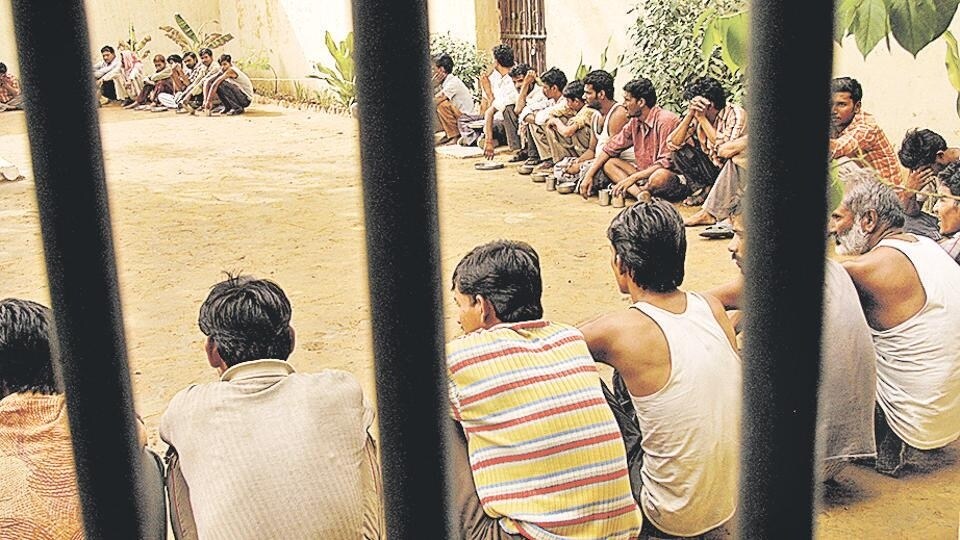
For decades, the structure of caste-based assignments of labour and segregation in prisons has reflected the larger social inequalities that persist outside prison walls. The top court ruling not only addresses these immediate concerns, but also opens the door to a broader conversation about substantive equality and the need to tackle institutional discrimination in its entirety.
At the heart of the judgment, the bench, led by Chief Justice of India (CJI) Dhananjaya Y Chandrachud, struck down provisions in state prison manuals that mandated caste-based assignments of menial tasks like cleaning and cooking to marginalised communities, including Scheduled Castes (SC), Scheduled Tribes (ST) and Denotified Tribes (DNTs). These provisions were held to be in violation of Articles 14, 15 and 21 of the Indian Constitution, which guarantee the right to equality, prohibit discrimination based on caste and ensures dignity.
The judgment touches on multiple critical aspects — from addressing the constitutional violations inherent in caste-based labour assignments to emphasising the judiciary’s role in advancing substantive equality over mere formal equality. It challenges deeply embedded institutional biases and calls for systemic reform beyond immediate corrective measures.
While the court’s verdict is undeniably a positive step, it also serves as a reminder that Dr BR Ambedkar’s warnings during the Constituent Assembly debates continue to hold true. Ambedkar famously lamented that while political democracy had been achieved, social democracy remained elusive. The caste system, he argued, was one of the most significant obstacles to achieving true equality in India. In its judgment, the court echoed this sentiment, expressing regret that caste-based discrimination continues to pervade Indian institutions more than seven decades after independence.
The division of labour and the treatment of marginalised communities in prisons are emblematic of the larger issue of institutionalised casteism that exists in various forms across the country. The ruling goes beyond the immediate concern of prison reforms and reflects the judiciary’s broader aspiration to dismantle caste hierarchies embedded in the fabric of Indian society.
Understanding these nuanced facets of the judgment is crucial to fully appreciate the remit and significance of this pathbreaking verdict, besides comprehending the long-term impact of this judgment on India’s journey toward true equality.
The future of substantive equality and institutional reform
The Supreme Court’s emphasis on the need for substantive equality — as opposed to mere formal equality — is particularly noteworthy. While formal equality ensures that laws do not overtly discriminate, substantive equality seeks to address the root causes of inequality, including the social, economic and institutional factors that perpetuate discrimination. The court’s directive to revise prison manuals, delete caste columns in prisoner registers, and enforce safeguards for marginalised communities are steps toward achieving this goal.
However, the court’s reflection on the future of substantive equality also presents a cautionary note. The persistence of institutional discrimination, even in spaces where individuals are supposed to be rehabilitated and reformed, speaks to the deep-rooted nature of casteism in India. As the court acknowledged, caste-based discrimination in prisons not only violates individual dignity but also perpetuates a cycle of marginalisation that impedes the personal growth and development of inmates from marginalised communities.
The court’s judgment thus calls for a comprehensive overhaul of the prison system — not just in terms of eliminating discriminatory practices but also in fostering an environment that promotes equality and dignity for all. The verdict mandates regular inspections by district legal services authorities and boards of visitors to ensure that these reforms are implemented and sustained. These inspections, along with compliance reports from state governments, are essential in ensuring that the judgment leads to lasting change.
Dr Ambedkar’s vision: Unfulfilled yet relevant
The Supreme Court’s lament that Dr Ambedkar’s vision of a casteless society remains unfulfilled serves as a stark reminder of the limitations of legal reforms. While the judiciary can strike down unconstitutional practices, the larger battle to eradicate caste-based discrimination must be fought at the societal level. Laws and court rulings, no matter how progressive, cannot succeed without societal transformation.
In his last address to the Constituent Assembly, Ambedkar warned that without social and economic democracy, political democracy would remain fragile. This judgment, which reinforces the need for substantive equality in prisons, is a step in the right direction. Yet, as the court acknowledged, the real challenge lies in uprooting the deep-seated biases that continue to govern the lives of millions of marginalised Indians, both inside and outside of prison walls. “More than 75 years since independence, we have not been able to eradicate the evil of caste discrimination. We need to have a national vision for justice and equality, which involves all citizens,” it flagged.
Calling for an institutional approach where people from marginalised communities could share their pain and anguish about their future collectively, the top court held that real and quick steps are required to identify the instances of existing inequalities and injustices in our society.
“Words, without action, would mean nothing for the oppressed. We need to identify systemic discrimination in all spaces by observing patterns of exclusion. After all, the ‘bounds of caste are made of steel’– ‘Sometimes invisible but almost always inextricable’. But not so strong that they cannot be broken with the power of the Constitution,” it underscored.
The role of the press and civil society
One of the pivotal moments leading to this landmark judgment was the recognition of the role played by Sukanya Shantha, a journalist whose article, “From Segregation to Labour, Manu’s Caste Law Governs the Indian Prison System,” brought to light the ongoing caste-based discrimination in India's prisons. Published in December 2020, Shantha’s work was commended by the court for shedding light on the grim realities faced by marginalised communities within the prison system. Her reporting and a subsequent petition in the top court demonstrated how these practices were not only relics of colonial rule but were actively perpetuated by contemporary prison policies, further entrenching the marginalisation of scheduled castes, scheduled tribes and denotified tribes.
“This petition highlighted an instance of institutional systemic discrimination,” said the judgment. After pronouncing the verdict, CJI Chandrachud specifically acknowledged Shantha’s work. This highlights the critical role that journalism and civil society play in advancing social justice. By drawing public attention to injustices that often go unnoticed, investigative journalists can catalyse legal reforms that challenge systemic inequalities. In this case, Shantha’s efforts were instrumental in bringing the issue of caste-based discrimination within prisons into the judicial and national spotlight.
A dissection of the court’s observations and directions uncovers the broader legal, social, and human rights implications of this verdict, offering insight into how it seeks to transform not just prison systems but society's approach to marginalised communities at large. As India moves forward, it is essential that these legal reforms are accompanied by broader societal efforts. The judiciary, civil society and government must work in tandem to ensure that the principles of equality and non-discrimination enshrined in the Constitution are fully realised — not just in prisons, but across all institutions.



