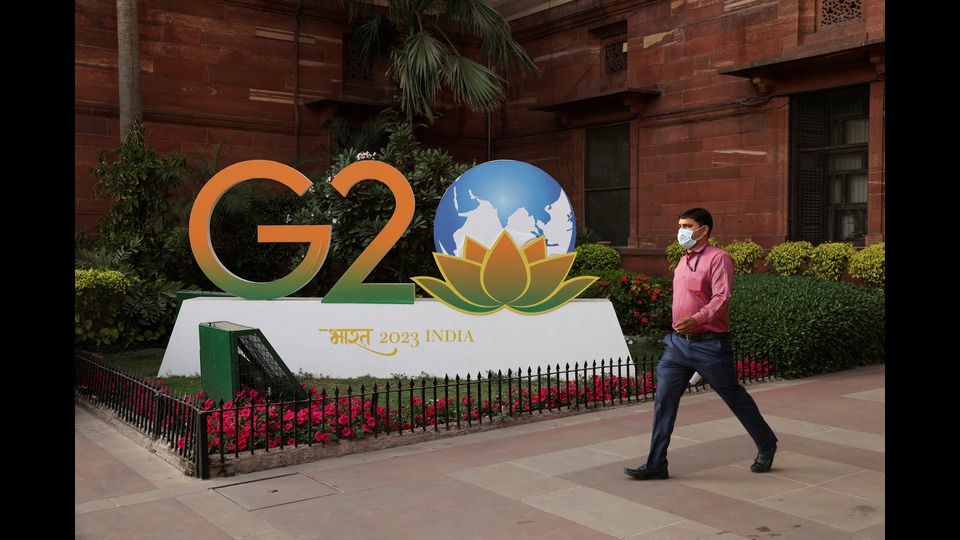
When India took over the presidency of the G20 in 2022, it vowed to raise the voice of the Global South and foster South-South cooperation. In the coming years, two countries from the Global South with a similar priority will succeed India in the presidency: Brazil and South Africa. This points to the winds of change already blowing across the international order.
As the world grapples with several challenges, the G20 must set the ball rolling for coordination again — this time among countries of the Global South. (REUTERS)
First, at a time when the availability of development capital to implement the Sustainable Development Goals (SDGs) is falling short, Global South-led banks are becoming the largest sources of finance in some regions, dwarfing traditional multilateral lenders. According to some estimates, South-led and South-oriented banks amount to more than $1 trillion in financing projects. South-led banks are also strengthening mechanisms to meet liquidity needs. During Covid-19, three South-led development banks were able to put together an equal amount to what the World Bank was pumping in.
Second, India and Brazil’s response to the Ukraine war showed a new way. While the two condemned the violation of international law by Russia, they stopped short of using provocative means, such as unilateral sanctions or participating in western efforts to isolate Russia. Despite strong pressures from the West, Brazil and India refused to sell weapons to fuel the conflict and were able to maintain an independent position.
While some may argue that these are early indications and must be viewed with caution, others see this as a sign of hope. Countries of the Global South do not want to lead alone but promote a more participatory approach, bringing the voices of other developing countries to global forums. For instance, Brazil has invited Paraguay and Uruguay to participate in the G20 during its presidency in 2024, while India has invited Bangladesh, Egypt, Nigeria and Oman as guest countries during its term. Coincidentally, the incoming G20 troika will also match the membership of the India-Brazil-South Africa Dialogue Forum (IBSA). By gathering three big democratic developing countries from three different continents, IBSA shows great potential for coordinated action among countries that share similar values and have the credentials to increase their say in global affairs. After 11 years of the Indian IBSA presidency, Brazil is ready to take over. Also, the Conference of the Parties, the most important annual climate conference, may next be chaired by Brazil and then South Africa.
The South-South cooperation has informed India’s international relations from the pre-Independence era, fuelled initially by anti-colonialism but later growing more apolitical. Over the last four years, Brazil refrained from its role as a leader of the Global South, but now, it is ready to fight for the reform of the multilateral systems, placing the interests of developing countries above others, and strengthening collaboration within the Global South.
It is important to acknowledge that voices from the South still tend to struggle to be heard on the global stage. It is well known that the UN Security Council no longer mirrors the global reality, with no permanent members such as India or from Africa or Latin America and the Caribbean. Amid what seems like a never-ending wait for reform at the UN and other global forums, such as the G20, CoP or IBSA, are proving to be alternative spaces for the Global South. If there is one thing that came out from G20’s response to the great recession of 2008-09, it is that it showed the value of persuading the world’s biggest economies to coordinate their fiscal and monetary policies. As the world grapples with several challenges, the G20 must set the ball rolling for coordination again — this time among countries of the Global South.
Candice Vianna is a Brazilian diplomat, and adviser to the secretary-general, ministry of foreign affairs of Brazil. Neha Bansal is policy specialist-G20 India, and a UN consultant The views expressed are personal

 E-Paper