
 E-Paper



Grand Strategy: Multi-alignment works during peace, falls short in times of war
Having a few strong, reliable strategic partners may prove more beneficial during conflicts than maintaining many partners during peacetime

 Prefer HTon Google


One takeaway from the recent India-Pakistan military confrontation following the Pahalgam terrorist attack is that the policy of multi-alignment has inherent limitations during conflicts and wars. The more I think about the utility of multi-alignment, I am convinced that while multi-alignment offers several benefits and serves as an excellent strategy during peacetime, its usefulness is inherently limited in times of conflict or war. Put differently, and somewhat bluntly, does multi-alignment or the absence of specific, strong and committed strategic partnerships compromise our ability to respond effectively to externally induced national security challenges?
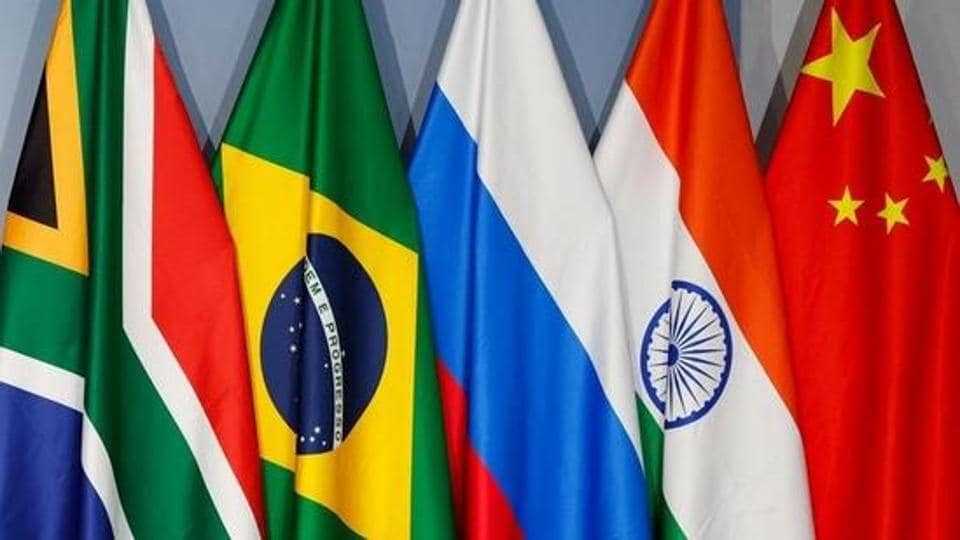
In an unstable and chaotic international system, states tend to hedge and avoid firm commitments, choosing to keep their options open—unless there are mutual, long-term, and clearly defined strategic interests at play. This is where multi-alignment faces challenges, especially during national security crises like the present one: there aren’t many countries that are willing to stand with us unconditionally, unequivocally and regardless of the circumstances.
While the outcome of this conflict is most definitely independent of whether India’s strategic partners pitch in with any assistance, this conflict must, however, make us consider whether multi-alignment is effective in times of national security contingencies.
Part of the reason why multi-alignment is ineffective during crisis periods is because global geopolitics is in deep flux and is undergoing major changes. In case you doubt the vagaries and complexities of global geopolitics today, consider this. As the India-Pakistan conflict was raging on, leaders of China (Pakistan’s strategic ally) and Russia (India’s strategic partner), whose weapons India and Pakistan rely on heavily to fight each other, were meeting in Moscow and criticising another key partner of India, the USA: “The United States and its allies are trying to promote Nato’s eastward expansion into the Asia-Pacific region, build ‘small circles’ in the Asia-Pacific region, and win over countries in the region to promote their ‘Indo-Pacific strategy’, undermining regional peace, stability and prosperity”.
Clearly, India is implicitly targeted in the statement. While Russia is not part of an anti-India coalition, Moscow’s relations with Beijing, primarily a function of Russia’s war with Ukraine, complicate India’s broader regional strategies. Adding to this complexity, at a time when Indians are closer than ever to the US and its NATO allies, one of the NATO countries (Turkey) is providing weapons to Pakistan in its fight against India.
So, has the policy of multi-alignment worked for India during this conflict? One could argue that India is using weapon systems produced by several countries across geopolitical divides in this war, and so multi-alignment has, in that sense, worked. But as country that is able to spend $80 billion on defense is likely to be able to source weapons from multiple countries even without multi-alignment. In a limited conflict with Pakistan, India’s key requirement is to get clear political and diplomatic support from its friends.
This involves securing diplomatic backing during the conflict, with friendly countries explicitly naming and condemning the aggressor instead of issuing neutral statements. This is where, I think, we may be witnessing the limits of multi-alignment as a strategy during conflicts and crises.
India may not need external military assistance to win this limited standoff, but the fact that no one has offered it should make us reflect on the utility of multi-alignment as a strategic orientation. This conflict provides a basis for us to speculate how our strategic partners might behave in future, potentially during more serious conflicts.
This alone is reason enough for us to ask whether the policy of non-alignment comes with its costs. Moreover, India’s real challenge is not a militarily and technologically weaker Pakistan, but rather the increasingly superior Chinese military equipment used by Pakistan. The more China bridges its military-technological gap with the US, the more Pakistan might be in a position to bridge the military-technological gap with India.
The conclusion is then obvious: While multi-alignment is a great peacetime strategy, it may well be ill-suited for times of wars and conflicts. Is our policy of multi-alignment creating a situation wherein nobody is a true friend of ours since, as they say, everyone’s friend no one’s friend?
If many of our strategic partners are unwilling to offer us unambiguous support in a war with a conventionally inferior Pakistan whom the international community doesn’t hold in great esteem or favour and with which it has little trading relationship, what will it do should there be a conflict between India and China with whom pretty much every country has deep economic linkages? I believe the message is clear: Although our wars are ours alone to fight, having a few strong, reliable strategic partners may prove more beneficial during conflicts than maintaining many partners during peacetime.
Not that we must abandon our strategy of multi-alignment which is effective during peacetime, but we must remember that an unstable, unstructured and transitioning order might require a strategy of multi-alignment in which some partners are more important than others. We must therefore choose our partners carefully, and our strategic partners even more carefully.
(Happymon Jacob teaches India’s foreign policy at JNU, and is editor, INDIA’S WORLD. The views expressed are personal.)


