
 E-Paper



Hutong Cat | China's space sector is fuelling the Communist party's legitimacy
China’s space industry is a critical element of its national strategy, and the launch of the Chinese space station will be the culmination of a project China envisioned in 1992.


If China’s “great rejuvenation”, or return to former glory, is central to President Xi Jinping’s “Chinese Dream”, then the country’s space programme is a key strategic component in its path to revitalisation: To become dominant, once again, in international influence and to become a world leader in cutting-edge technology by 2049.
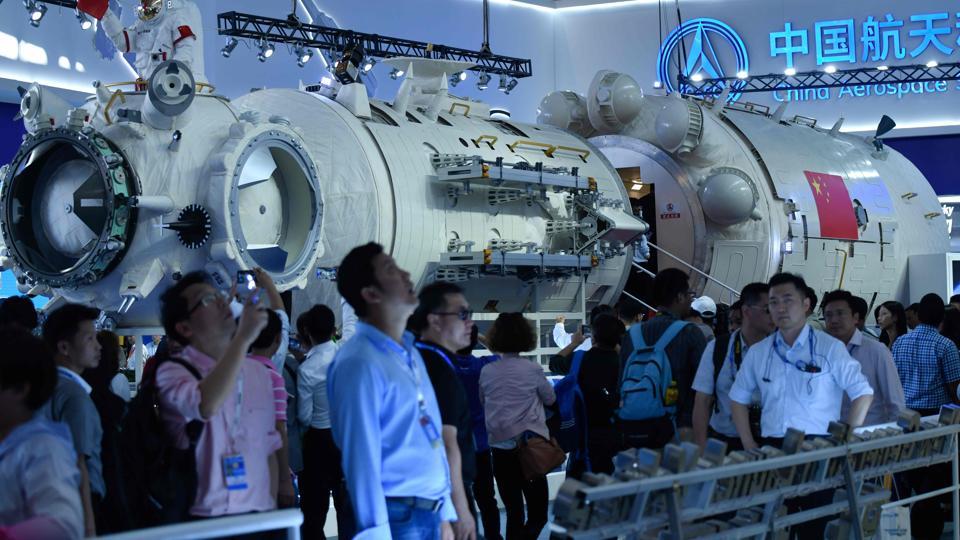
On June 5, China launched the Shenzhou-14 crewed mission to the low Earth orbiting Tiangong space station – Chinese space station (CSS) — where three Chinese astronauts will stay for six months to complete its construction. As of 2022, 14 Chinese astronauts have been to space.
Once completed, the CSS, along with the International Space Station (ISS), will be the two only fully operational space stations in orbit.
Once the CSS is functional, it will be the culmination of a project China envisioned in 1992.
Over the years, China’s space industry has become a critical element of its overall national strategy, a policy paper pointed out earlier this year, and indicated its importance not only in national development but also its criticality to “…raise the scientific and cultural levels of the Chinese people, protect China’s national rights and interests, and build up its overall strength.”
Space is integrated into Xi’s vision of the “Chinese dream of the great rejuvenation of the Chinese nation”, to make China the number one “technological great power” over the coming decades.
There are two strands to China’s “spacecraft”: One, the politics, and the second, the science. The communist party projects the two as the same, combing both as a source of legitimacy and prestige for the Communist Party of China (CPC).
That's clear from what Xi said in a letter on April 29, 2021, to the team involved in the launch of Tianhe, the core module of the space station.
"I hope you will vigorously carry forward the spirit of 'Two Bombs and One Satellite' and the spirit of manned spaceflight, be self-dependent and innovative to win the victory of space station construction, and contribute to the construction of a modern socialist country!"
The phrase “Two Bombs and One Satellite” refers to China testing its first atomic bomb in 1964, the first hydrogen in 1967, then deploying the nuclear bomb to a surface-to-surface missile in 1966, and, finally, successfully launching its first satellite in 1970.
Xi has presided over the rapid strides Beijing has made in the space sector in the past five-six years.
Between 2016 and 2021, China has launched over 400 space missions, 207 of them successfully, boosting the country’s national strength and confidence and — for its citizens — seemingly projecting increasing national power globally.
Its space missions tally and achievements are impressive.
Specifically, China has collected soil samples from the Moon and brought them back to Earth in 2017, dispatched an unmanned spacecraft to the Moon's dark side in 2019, deployed a Rover to Mars in 2020, and is pretty much on schedule to complete the space station — all by itself — by the end of 2022.
In 2019, it grew potatoes on the Moon during the Chang’e-4 mission according to the China National Space Administration (CNSA).
The Chang'e-5 lunar probe brought back 1,731 g of samples from the moon, marking China's first successful extraterrestrial sampling and return, and the completion of its three-step lunar exploration program of orbiting, landing and return, a state media report pointed out recently.
As a result, and as part of its carefully calibrated plan, China is not only showcasing its achievements in space to its domestic audience but also internationally — attempting to project itself as a model and technological leader to developing countries.
“In the last few years, the Chinese Space program has made very significant strides indeed as massive investment in infrastructure and research begin to pay major dividends. In 2021 China broke the world record for the total number of launches by a nation in one year with 55 launches and this year they will break it again with another 60 or so launches,” Quentin A Parker, director, Laboratory for Space Research at the University of Hong Kong said.
There is, no doubt, appreciation for the science behind China’s space endeavours but there’s also deep suspicion about the politics, and whether the politics will weaponise the science.
China, for example, was not able to join the ISS because, in 2011, US Republican Senator Frank Wolf banned space cooperation between the United States and China by passing the “Wolf Amendment.”
“As a result, it was effectively forced to develop its own in-house capabilities if it wanted to participate in peaceful space exploration and exploitation and it has certainly done so to very impressive effect with their ‘Tiangong” space station that has had some impressive achievements already,” Parker added.
Experts say that though the Chinese space programme can be considered the second most advanced in the world — after the US space programme — it will take Beijing decades to close the gap with Washington’s space capabilities.
For one, China is not yet engaged in a direct space race with the US.
“Naturally, China keeps an eye on US space technology development and tries to close technology gaps, but ultimately China follows its own needs and sets its own pace in advancing its space capabilities,” said Christoph Beischl, Associate Deputy Director at London Institute of Space Policy and Law.
“US interest in and investment into civil and military space capabilities has remained and will likely remain high for the foreseeable future, making it unlikely that the US will have to give up its leading position any time soon,” Beischl said, adding, also, that the US private space industry has so far been more innovative than its Chinese counterparts.
Space programmes of India and China
India, as Parker from the University of Hong Kong, said has developed a significant home-grown launch capability and deep space mission capacity as exemplified by their successful Mars orbiter mission, only the 4th country to achieve a Mars orbit after the US, Russia and China.
But India would need considerable investments over many years to close the gap with China, Beischl said.
The overall Chinese space programme is more advanced than the Indian space programme, not least because India is a late-comer in the use of space for national security purposes, he said, adding: “That being said, India has notable satellite and launch capabilities and needs to be counted among the most sophisticated and dedicated Asian spacefaring nations.”
Namrata Goswami, an independent scholar on space policy and co-author of the book, Scramble for the Skies: The Great Power Competition to Control the Resources of Outer Space, explained the asymmetry between the two countries.
“India has a strong record of building indigenously its rockets like PSLV and GSLV MkIII specifically its indigenously built cryogenic engines. India has been able to use these rocket systems to achieve some of the highest launch rates cost-effectively,” Goswami said.
As a word of caution, she said that to argue that India’s space programme is more advanced because it has developed technologies independently which adds to a sense of national pride.
“Whether it advances India’s goal to become one of the leading space powers within a specified timeframe is another matter altogether,” she said.
Well, India better push the pedal before China crowds it out from space: If the frequently absurdist Chinese state media is to be believed, some netizens last year floated the idea of establishing a CPC branch in space.
Sutirtho Patranobis, HT’s experienced China hand, writes a weekly column from Beijing, exclusively for HT Premium readers. He was previously posted in Colombo, Sri Lanka, where he covered the final phase of the civil war and its aftermath, and was based in Delhi for several years before that
The views expressed are personal


