
 E-Paper



Hutong Cat | Taiwan's chip industry is a core component in the China-US tussle
Accommodated strategically in Pelosi's packed and globally tracked schedule was a meeting with Mark Liu, chairperson of the Taiwan Semiconductor Manufacturing Company. There was a reason for that: TSMC, in brief, makes the world run.

 Prefer HTon Google


United States (US) House Speaker Nancy Pelosi's high-stakes and controversial visit to Taiwan lasted less than a full day between the night of August 2 and August 3.
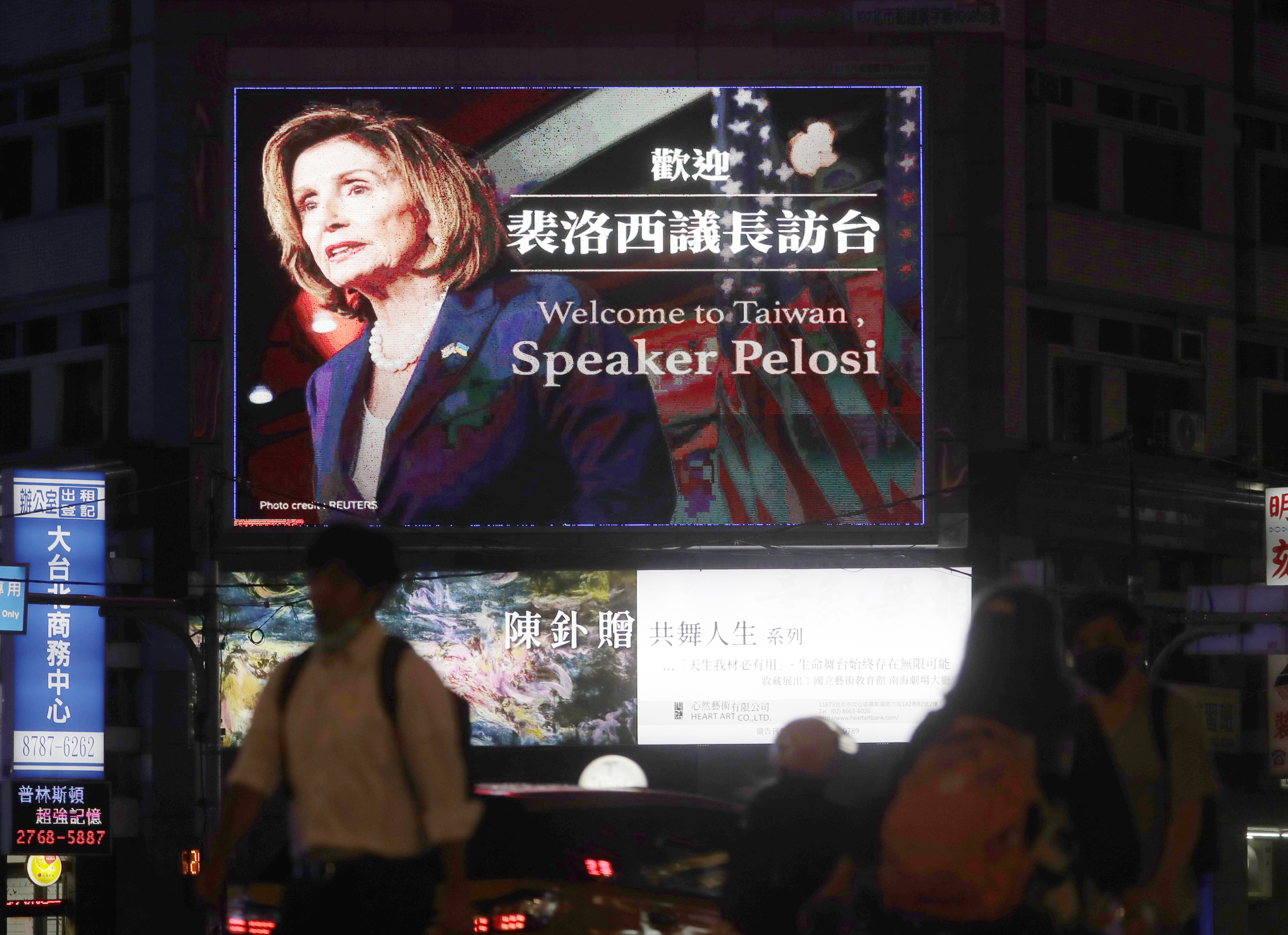
Accommodated strategically in Pelosi's packed and globally tracked schedule — possibly during the lunch hosted in her honour by President Tsai Ing-wen on August 3 — was a meeting with Mark Liu, chairperson of the Taiwan Semiconductor Manufacturing Company (TSMC).
There was a reason for that: TSMC, in brief, makes the world run.
It is the largest manufacturer of semiconductor chips required to run the core of machines — mobile phones to fighter aircraft and everything in between.
Which makes Taiwan indispensable to the world — including the two countries loudly and aggressively sparring over it, China and the US.
Control of the semiconductor industry is at the entangled core of the hostility involving the three countries besides the fact that merging Taiwan with the mainland – which Beijing calls reunification — is part of the ultimate “rejuvenation” goal for the Communist Party of China (CPC).
Taiwan’s position as the leader in the semiconductor industry globally has made it both strategic and vulnerable in the geopolitical tussle between the two countries
In the last few years, the Chinese People's Liberation Army (PLA) has frequently — and at this post-Pelosi moment continuously — crossed the 177 km-wide Taiwan Strait to make a show of its military might, adding a threat that taking over the island by force is a matter of when not if.
Beijing regards Taiwan as a renegade province and its final “return to the motherland” is President Xi Jinping’s key goal for historical and ideological reasons — part of his legacy-building — as he gears up for his unprecedented third term as the country’s leader later this year.
It was in the face of escalating aggression from China that in an interview with Reuters last September, Taiwan economy minister Wang Mei-hua said the semiconductor industry is deeply intertwined with the island’s future.
“This isn’t just about our economic safety,” Wang said. “It appears to be connected to our national security, too.”
There’s little doubt about it.
A Chinese military invasion will impact the industry and cripple the global supply chain. And that existential threat ensures a US security cover over the island. Or at least the promise of it: Washington doesn't want the cutting-edge industry to fall like a ripe fruit in Beijing's hand.
A self-ruled democracy of around 23 million people — a population that’s less than neighbouring China’s, Shanghai — Taiwan has a unique hold over the world: Taiwan’s share of the global semiconductor manufacturing sector was over 60% in 2021 with the top Taiwanese chip foundries being TSMC, UMC, Powerchip and Vanguard. TSMC contributes around 50% of that.
The chip industry in Taiwan accounted for 15% of its Gross Domestic Product (GDP) in 2018 and the percentage may further reach over 20% in 2022, the Taipei-based Isaiah Group, which calls itself a boutique research firm focused on the tech industry including semiconductors, told Hindustan Times.
It has taken decades for Taiwan to develop the critical — and highly paying — industry as it painfully transitioned from a military dictatorship to a vibrant democracy with individual rights and press freedom.
Unlike China, which has grown exponentially in the past few decades but has increasingly clamped down rights, taking no time to stamp out dissent, and is diplomatically more aggressive than ever: More so in the last few years under Xi.
(The 2021 GDP per capita in China was $12,259; Taiwan’s is at $33,775, according to the International Monetary Fund.)
It took decades for the semiconductor sector to grow in Taiwan.
“The very first manufacturing unit was set up by UMC (United Microelectronics Corporation) in Hsinchu, Taiwan in 1980. During the period from the 1970s to 1980s, the Taiwan government aggressively supported the semiconductor industry and — in turn — the returns of the technology-driven industry helped to (further) build the semiconductor sector in Taiwan,” Lucy Chen, vice president of Isaiah Research, said.
In the event of an invasion and disruption of the semiconductor supply chain, the impact will be felt globally.
“If there is a risk of Chinese invasion in Taiwan, we believe it may be quite tough for the global economy and technology. Viewed from this angle, the semiconductor capacity of TSMC and UMC accounts for more than 60% in the world, which means any invasion or risk to Taiwan may have a global impact rather than a regional one, unless the technology and capacity can be well transferred to other countries in advance,” the Isaiah group said in a report shared with HT.
“Secondly, (companies like) Apple, AMD, MediaTek, Broadcom, Nvidia, and Qualcomm all have high percentages of wafer input in TSMC. If the above IC design houses have no sufficient capacity to manufacture their chips, numbers of downstream EMS (electronics manufacturing service) providers in China for Apple/Android smartphones and notebooks may also suffer the brunt due to the lack of IC chips. It will lead to ripple effects on the technology industry,” the report said.
China is well aware of the situation in the chip sector, and its own dependency.
That’s why as a response to Pelosi’s visit Chinese authorities suspended imports of Taiwanese citrus fruits and fish, and exports of sand but left out the semiconductor industry though its official media said the ban on exporting sand (from China to Taiwan) will impact it.
In 2016, President Xi Jinping, in a speech on cybersecurity and informatisation, said that "the fact that core technology is controlled by others is our greatest hidden danger..."
Frankly, it’s not very hidden but China can do little about it for several years ahead. Beijing knows that.
“Taiwan is a vital supplier of advanced semiconductors to countries in the West but also to China, which means that it is highly unlikely that Beijing will target Taiwan-made chips with economic coercion. Cutting access to these and cutting this link with Taiwan would make no sense to China from a strategic standpoint,” Zsuzsa Anna Ferenczy, from National Dong Hwa University in Hualien, Taiwan, and former political advisor in the European Parliament, said.
Ferenczy argued that in the backdrop of Covid-19-triggered disruption, the strategic value of cutting-edge semiconductors for economies around the world has increased.
“As tension in the Strait grows, it is not in the interest of China to cause disruption of global proportions that would impose harm on its own economy. Instead, Beijing will seek to target its coercion to areas where there is an asymmetric dependence, such as in fruit trade with Taiwan,” she said.
China, however, is working hard to become self-sufficient in the sector.
“China's integrated circuit (IC) industry registered stable growth in 2021 with its sales exceeding 1 trillion yuan (about $158 billion) for the first time,” official news agency Xinhua reported, quoting data from the China Semiconductor Industry Association. China remains the world’s largest market for semiconductors as well.
It's also pumping billions into the tech sector under the “Made in China” programme.
“Actually, we see China’s semiconductor industry growing slowly in developing advanced technology as it is limited by US sanctions. However, we also see the recent escalation of the US-China trade war accelerates the process of semiconductor localisation in China,” Isaiah Group’s Lucy Chen said.
The US is trying to localise the critical industry as well.
The “Chips and Science Act”, passed by the US Senate in late July, is a legislation to subsidise the domestic semiconductor industry.
The Act, according to a Reuters report from Washington, provides about $52 billion in government subsidies for US semiconductor production and an investment tax credit for chip plants estimated to be worth $24 billion.
Sutirtho Patranobis, HT’s experienced China hand, writes a weekly column from Beijing, exclusively for HT Premium readers. He was previously posted in Colombo, Sri Lanka, where he covered the final phase of the civil war and its aftermath, and was based in Delhi for several years before that
The views expressed are personal


