
 E-Paper



Indefinite state control of temples is unjust
A comprehensive legislation may not be an instant panacea, but will go a long way in ensuring an independent administration of Hindu religious institutions.

 Prefer HTon Google


Prime Minister Narendra Modi’s recent remarks about the government's capture and control of temples in South India, especially Tamil Nadu (TN) drew national attention. Temples have symbolised Bharat’s civilisational ethos and syncretic sanatan sanskriti. When our Constitution bestows the fundamental right for every religious denomination to establish and administer institutions, how did only Hindu places of worship come under such state superintendence?
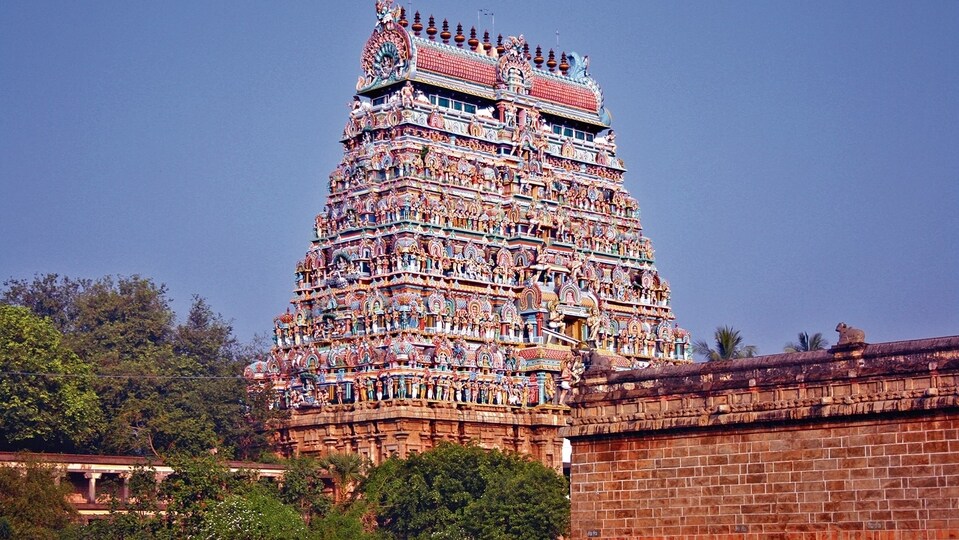
Before Independence, TN was part of the Madras Presidency comprising parts of Kerala, Karnataka, Andhra and Odisha. The British enacted the Madras Regulation VII Act of 1817, effectively capturing control of Hindu temples and mosques. After 46 years, the imperial legislature enacted the 1863 Religious Endowments Act, divesting the government’s role and handing over the administration to local committees.
The inflection point came when the Justice Party government in 1925 introduced the Madras Religious and Charitable Endowments Act. Amidst protests from Muslims and Christians, the legislation was redrafted as the Madras Hindu Religious and Endowments Act 1927, applicable only to Hindu places of worship. After Independence, in 1951, the Madras Hindu Religious and Charitable Endowments Act created a department headed by a commissioner and a hierarchy of officials. The Act’s provisions were challenged, resulting in many sections being struck down by the Supreme Court (SC) in the 1954 Shirur Mutt judgment. With revisions, the TN Hindu Religious and Charitable Endowments (HR&CE) Act was passed in 1959, through which the state government still controls temple administration.
The Constituent Assembly which did not decide on a complete separation between state and religion would have hardly envisaged the manner in which the state has arrogated Hindu places of worship. TN, the only state to have a temple gopuram in its official emblem, probably holds the dubious distinction of having nationalised a majority of temples.
The TN HR&CE 2023-24 note states that 45,809 Hindu religious and Jain institutions comprising temples, mutts and endowments are under the department. The note also mentions that Trust Boards have been constituted for only 780 temples. The Madras High Court in June 2021 asked the government to explain the status of 47,000 acres of temple land reportedly missing from government records since the policy note for 1984-85 stated that there were 5.25 lakh acres whereas the note for 2019-20 referred to availability of only 4.78 lakh acres.
The SC, in a 2014 ruling, giving back control of the Chidambaram Natarajar temple to the Dikshitars, made important observations. It said that if a temple management had been taken over, it should only be done for a limited period till the remedy of the evil. Otherwise, the Court said, it was tantamount to violation of fundamental rights.
In TN, regardless of the political party in power, the number of Hindu religious institutions to come under state superintendence has only increased manifold since Independence. This raises a valid question: Why has the HR&CE department not remedied problems and returned the control of these Hindu temples? Why should Hindu temples be subject to leviathan state control when churches and mosques are not? Though the subject comes under item 28 of the concurrent list, presently there is no central law governing Hindu Religious and Charitable Endowments. In 2022, the SC impleaded the central government in Swami Dayananda Saraswati’s writ petition (2012) challenging government control of Hindu temples.
A Parliament Act could be considered to redress various state laws administering Hindu religious institutions. While this may entail a nuanced legal exercise, robust provisions can be incorporated to effectively remedy misappropriation of temple lands, mismanagement and misapplication of properties and finances, unfettered state takeover of temples, non-adherence to sampradaya (tradition), idol theft, etc. Indefinite state control of Hindu temples may not be unconstitutional but it is an undeniably unfair and indefensible colonial aberration.
Should the integrity of Hindus alone be doubted in the context of running religious institutions? A comprehensive central legislation may not be an instant panacea, but it will undoubtedly go a long way in ensuring an independent and impartial administration of Hindu religious institutions.
CR Kesavan, a former member of the Prasar Bharati Board, is with the BJP. The views expressed are personal


