
 E-Paper


India and ASEAN share strategic trust
Translating trust into shared prosperity — through safer seas, more resilient supply chains, digital connectivity, and more — is the central objective

 Prefer HTon Google


Every autumn, the leaders of ASEAN member states convene with their key regional partners — India, the US, China, Russia, Japan, South Korea, Australia, and New Zealand. This year, Prime Minister (PM) Narendra Modi will travel to Manila, Philippines, to co-chair the 23rd ASEAN-India Summit and participate in the 21st East Asia Summit on November 17. This will mark his thirteenth participation in these summits, reflecting the continuity, stability, and strategic direction of India’s engagement with a vital region.
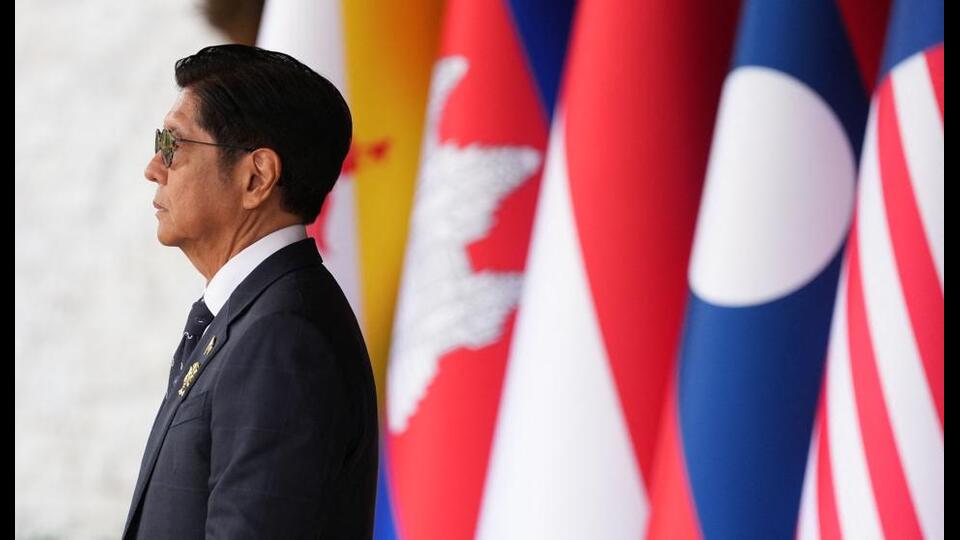
The back-to-back summits come at a significant moment, when the Indo-Pacific is being reshaped by strategic rivalry, supply-chain uncertainty, maritime tensions, technological competition, and pressure on the rules-based order. The East Asia Summit is particularly significant as the principal leaders-led mechanism for strategic dialogue in the Indo-Pacific and a vital platform for confidence-building.
As ASEAN Chair for 2026, the Philippines has adopted the theme “Navigating Our Future, Together.” India, a Comprehensive Strategic Partner of ASEAN since 2022, holds a special place in the grouping’s external relations. PM Modi and the Philippine President Ferdinand Marcos Jr. share a strong personal rapport, strengthened by President Marcos’s State visit to India last year. India also deeply appreciates his attendance at the recent BRICS Summit in New Delhi. Although the Philippines is not a BRICS member, it was invited in its capacity as the current ASEAN Chair. As India’s country coordinator within ASEAN, the Philippines also plays a particularly important role in advancing India–ASEAN relations.
A central message of PM Modi’s visit to Manila is that ASEAN remains the anchor of India’s Indo-Pacific strategy. Under the Act East Policy, India regards Southeast Asia as a strategic and economic priority. ASEAN connects India to critical sea lanes, dynamic markets, digital economies, and the broader Indo-Pacific security architecture.
India’s support for ASEAN centrality also serves a wider purpose: It counters the notion that the Indo-Pacific should be defined solely by great-power competition. Instead, India advocates a region in which ASEAN retains its convening role, smaller States preserve their agency, and international law applies equally to all.
This approach is particularly relevant to Manila. The Philippines has placed maritime cooperation, regional connectivity, economic integration, digital transformation, and resilient development at the core of its ASEAN chairmanship. India and ASEAN are observing 2026 as the Year of Maritime Cooperation, giving the partnership a clear operational focus: safer seas, enhanced maritime domain awareness, sustainable ocean governance, disaster response, fisheries protection, and resilient sea lines of communication. The second ASEAN-India Maritime Exercise was held this year off the coast of the Philippines.
India is also deepening digitalcooperation with several ASEANcountries, particularly in paymentsystems and digital governance. ASEAN is expected to unveil its Digital Economy Framework Agreement (DEFA) at the summit, creating further opportunities for collaboration with India in digital trade, innovation, digital public infrastructure, and fintech. These initiatives can help promote inclusive, democratic, and open digital ecosystems.
On the trade front, India and ASEAN have an unfinished agenda. India-ASEAN trade reached $128.38 billion in 2025-26, with ASEAN accounting for 10.55% of India’s total global trade. However, even as India concludesfree trade agreements with agrowing number of countries and regional groupings, the review and upgrading of the ASEAN-India Trade in Goods Agreement have lagged.Appropriate signals at the leaders’ level during the summit could provide fresh impetus to this process.
Strengthening people-to-peopleties and civilisational links with the region through youth engagement, academic and cultural exchanges remains a priority. In this regard, PM Modi announced the establishmentof the Centre for Southeast Asian Studies in Nalanda University during last year’s Summit. The Centre has since become operational.
The occupation and militarisation of features in the South China Sea, and the resulting threat to freedom ofnavigation, carry implications far greater than those seen in the Strait of Hormuz or the Bab el-Mandeb. Negotiations on a Code of Conduct have made little progress. The Philippines has been the region’s most vocal advocate on this issue and appreciates India’s principled support for adherence to international law. PM Modi has previously emphasised that a Code of Conduct for the South China Sea should be effective, consistent with the United Nations Convention on the Law of the Sea (UNCLOS), and attentive to the interests of countries beyond the immediate claimants. This is particularly significant because more than half of India’s merchandise trade passes through the South China Sea.
Myanmar has been a rare source of division within ASEAN. India was the first country to host Myanmar’s newly elected President, Min Aung Hlaing, in May this year. Since then, several ASEAN members — including Laos, Thailand, Vietnam, Cambodia, and most recently Malaysia — have also hosted him. This represents meaningful progress in Myanmar’s efforts to restore its standing within ASEAN after five years of exclusion following the military coup. However, Myanmar will not be represented at the leadership level in Manila; that will require a formal decision by the summit.
The Quad Summit returns to Manila nine years after the grouping was established in the city in 2017. Its declaration will be closely watched across the region for indications of the grouping’s future direction. As the only country that is a member of both Quad and Brics, India is uniquely positioned to help shape the agenda and to engage the region.
PM Modi’s participation in the ASEAN-India Summit and the East Asia Summit in Manila seeks to bring together India’s strategic, economic, maritime, and normative interests in a single, decisive regional setting. India and ASEAN share a distinctive strategic trust. Translating that trust into shared prosperity — through safer seas, more resilient supply chains, stronger digital connectivity, deeper trade integration, and greater opportunity for their citizens — is the central objective. This is India’s sustained effort to help shape a prosperous, stable, open, and multipolar Indo-Pacific.
Jaideep Mazumdar is director, Centre for Southeast Asian Studies, Nalanda University and former secretary (East), MEA. The views expressed are personal


