
 E-Paper



India needs to douse its many water fires
Clean water access is a stepping stone to economic growth.

 Prefer HTon Google


World Water Day (WWD) is observed on March 22 every year, to spur action on protecting water for future use. WWD 2024 revolves around the theme “Leveraging water for peace”, which deals with water’s role in global harmony. In many countries, communities and families below the poverty level are also without safe and easily accessible water. Clean water access, thus, is a stepping stone to economic growth.
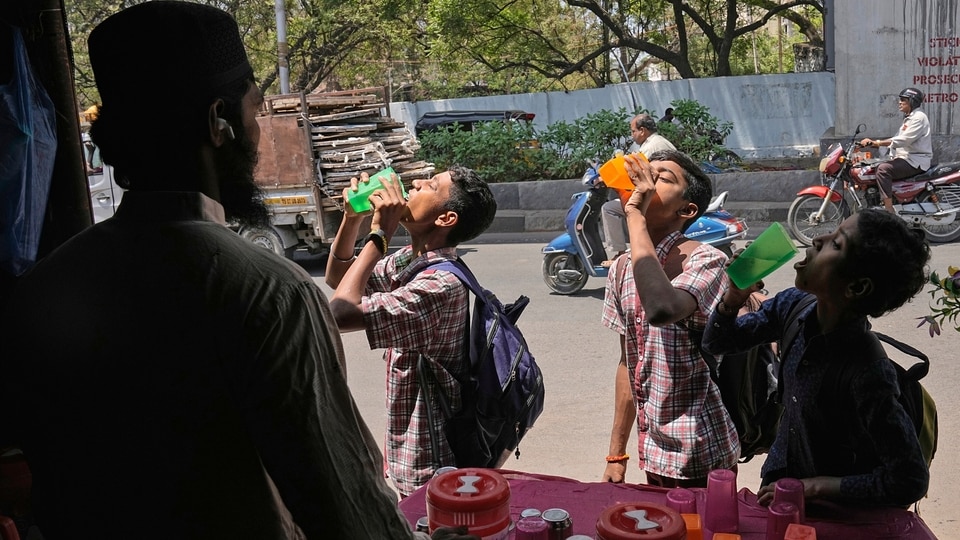
Globally, the water picture is far from rosy. One in three people already live without access to safe drinking water, and by 2050, about 5.7 billion people will be living in areas where there is no access to water for at least one month a year. By 2040, global water demand is expected to increase by more than 50%. Given how extreme weather events impact water availability, if global warming is restricted to 1.5 degree Celsius above the pre-industrial level, related water stress could be halved.
Out of a total of 192.7 million households in India, 144.5 million (March 5, 2024) rural households have received tap water connections. The states/Union Territories (UTs) that achieved 100% connections in rural areas are Haryana, Telangana, Gujarat, Punjab, Himachal Pradesh, Goa, Puducherry, and Arunachal Pradesh. Rajasthan (47%) and West Bengal (45%), on the other hand, haven’t achieved even 50% tap water coverage.
Once access to water is ensured, rural households can use the time spent earlier for water collection on productive engagement. Analysis of Jal Jeevan Mission data shows that the employment generation potential during the construction stage of tap water connections is on average 5.99 million person-years in direct employment, and 22.2 million person-years in indirect employment. The operation and maintenance stage adds another 1.11 million person-years in direct employment annually.
Water can help fight poverty too as it plays a critical role in ensuring food security. Agriculture accounts for more than 70% of water consumed in the country, and the employment of the poor in this sector helps in alleviating poverty. Irrigation helps raise crop intensity and per-hectare yield, which consequently expands the need for labour and contributes to employment generation while raising rural real wages.
Resolving water disputes and conflicts among states over sharing of water from inter-state rivers can ensure peace. Since Independence, conflicts among states in this regard have been on the rise. These have often acquired political overtones, as seen in the case of Cauvery water sharing between Karnataka and Tamil Nadu, and in the case of the Sutlej link canal dispute between Punjab and Haryana. High water demand spurs conflicts between states, and there is little realisation that water resources are finite.
Amicable water sharing will bring peace among the countries too. For instance, the 1960 Indus Water Treaty between India and Pakistan has settled some of the issues, as has the Ganga Water Treaty 1996 between India and Bangladesh.
There is a need to accelerate tap water coverage in states/UT where the progress is not satisfactory. Empowering Nari Shakti for interactive decision-making through paani samitis and water and sanitation committees should be the guiding principle for water access. Agricultural water use has been on the rise over the years, with a low use efficiency of about 40%. Crop diversification, changing the crop calendar, enhancing water use efficiency through the use of drip and sprinkler irrigation, and better agro-economic practices should be adopted extensively to conserve water. The water saved can then be reallocated to other high-demand sectors for spurring employment and poverty reduction.
A basin authority should be set up for every river in India, with its jurisdiction extending across states. Statutory powers should be given to such authorities for sustainable water management.
In the absence of such authority, the Inter-State River Water Disputes (ISRWD) Act, 1956 should be reviewed. A Bill to amend this Act is under the consideration of Parliament, which proposes to empower the Union government to constitute a dispute settlement committee for amicable settlement of disputes among states. The Bill calls for the setting up of an Inter-State Water Dispute Tribunal for adjudication of water disputes with multiple benches and mandates that the tribunal’s order will have the same force as that of a Supreme Court order, which is binding on the parties. The progressive amendment of the ISRWD Act should be given priority in the coming years for peaceful resolution of water disputes.
SK Sarkar is distinguished fellow, The Energy and Resources Institute (TERI), and former secretary, ministry of water resources, Government of India. The views expressed are personal


