
 E-Paper



India steps up to fight inflation, but it’s uphill from here
Asia’s third-largest economy has tightened exports and eased imports to insulate consumers from runaway prices. The measures will cost the govt at least ₹1.3 lakh crore in additional borrowing

 Prefer HTon Google


India is now facing an inflation outbreak due to a global surge in food and fuel prices, prompting the country to temporarily reverse its open-trade policy — a shift from just a month ago when the country was witnessing record overseas sales of wheat, sugar and merchandise goods that touched a record $418 billion in 2021-22.
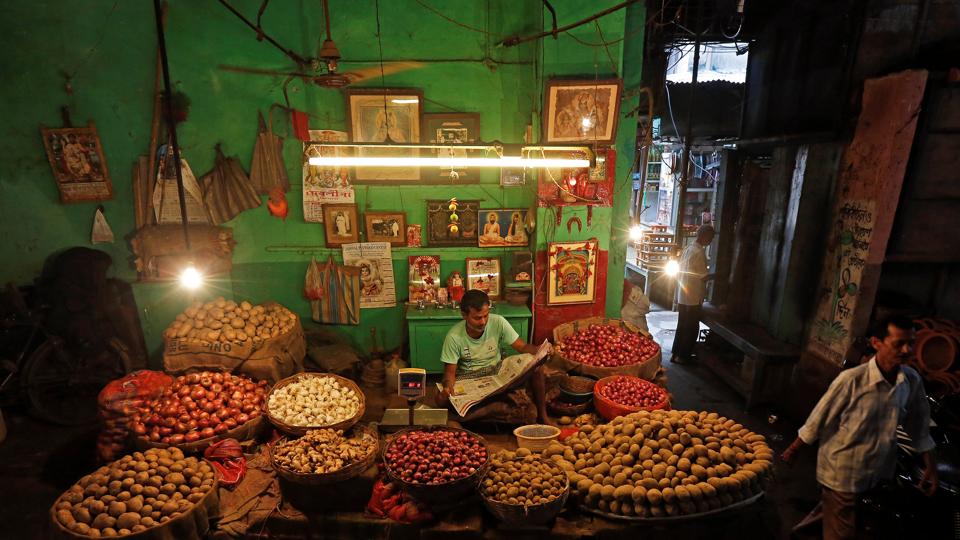
Mounting price pressures have forced India’s policymakers to take a series of precautionary steps, including restricting exports while freeing up imports.
In April, consumer-inflation readings in Asia’s third-largest economy rose to their highest levels in eight years, at 7.79%. Worryingly, food prices climbed 8.38%. High inflation played out even in surplus items, such as wheat, whose prices jumped 20% last month, as traders doubled down on exports. Edible-oil prices have surged over 30% on-year, due to the Black Sea conflict and a ban by Indonesia, a major supplier. Fuel prices climbed 26% since March 2022 following Russia’s invasion of Ukraine, resulting in a painfully high cost of living.
The Ukraine war has slowed the world economy, hobbled a nascent rebound from the pandemic, jammed supply lines and reduced goods trade. The conflict has resulted in “a broader splintering of global commerce”, according to the World Trade Organization’s recent briefing.
Barely insulated from these global trends, India has sprung into action, bringing to bear a whole basket of measures.
On May 13, the world’s second-largest grower banned private wheat exports after a scorching summer cut domestic output by nearly 5%. The world was banking on India to make good a global supply crunch of the staple.
Last week, finance minister Nirmala Sitharaman announced changes to tax structures and levies on several commodities, especially on industrial raw materials, and cut excise duty on petrol by ₹8 a litre and ₹6 a litre on diesel to insulate consumers from rising prices
On Tuesday, the government allowed duty-free import of 2 million tonnes each of crude (unrefined) soyabean oil and crude sunflower oil for an unprecedented two years until 2023-24, according to a notification. India imports up to two-thirds of its cooking oil, the costliest food item among a basket of commodities that makes up the consumer food price index.
India also restricted exports of sugar, another surplus commodity to keep prices stable.
Simultaneously, the government has re-set tax structures on industrial goods and eased imports. It has hiked the duty on exports of iron ore to 50$ from 30%, and imposed a 45% duty on pellets on May 21 to pump up domestic supplies of iron ore. It also removed import duties on coking coal, met coal, coke and ferronickel, essential for steelmaking.
These steps were preceded, on May 4, by the Reserve Bank of India’s surprise move to hike a key lending rate, the repo rate, by 40 basis points to 4.40% to tamp down prices.
India’s measures have been criticised by advanced economies, especially the G7 grouping, for “protectionism”, which refers to restrictions and suspension of overseas sales bound to worsen global inflation.
A top official however rejected the charge. “These measures are more of monitoring, less of regulation and certainly not protectionism. They are about balancing the demand for exports and domestic needs,” said food secretary Sudhanshu Pandey.
Commerce secretary BVR Subrahmanyam too denied India was returning to an era of protectionism because “exports continue”. The country’s exports rose 21.1% between May 1-21 to $23.7 billion, he said.
Pandey said India was only limiting sugar export to 10 million tonnes only as a “precautionary step”, after allowing record free exports of sugar, from slightly less than 1 million tonnes in 2016-17 to an expected 10 million tonnes this year, a 900% increase. He said market forces had been taking care of demand, supply and even exports of most goods. “If these abnormal times go away, so will the restrictions,” he said.
The new measures will cool inflation, analysts say but with a lag. “We estimate inflation trajectory to ease by 24 basis points,” said Upasana Bhardwaj of Kotak Mahindra Bank. One basis point is one-hundredth of a percentage point.
But a cut in duties to cool prices will come with a price. There will be a shortfall in revenue and higher revenue expenditure on account of food, cooking gas and fertilizer subsidies, increasing the fiscal deficit to 6.8% of GDP, compared to the federal Budget’s estimates of 6.4% The additional fiscal deficit is likely to lead to additional ₹1.3 lakh crore of market borrowings.
Overall, the “demand-supply dynamics should further worsen in the second half of the current fiscal” Bhardwaj said. What's more, there’s an exceptionally large gap between wholesale and retail prices, which means that producers are likely to pass on higher prices to consumers.


