
 E-Paper



IndiGo’s transition plan with network carrier has one risk too many: ‘Unrealistic ambitions’
This piece elaborates a few reasons behind the scepticism over IndiGo's plan, some internal to the airline and some external and/or structural factors.

 Prefer HTon Google


In April 2024, IndiGo generated a lot of buzz when it placed an order for 30 A350-900 — a twin-engine, long-range aircraft — to begin transitioning from a no-frills carrier to a network carrier. In October 2025, the airline added another 30 aircraft to its order. Deliveries, as per the latest update, are likely to begin in mid-2028.
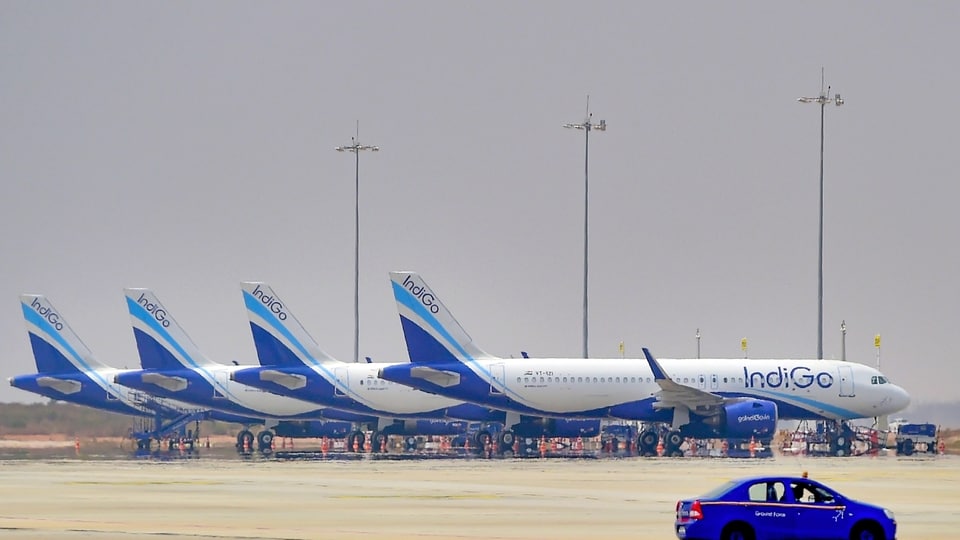
When the airline first announced plans to become a network carrier, the market reacted with caution. As the deadline for the induction of the long range aircraft draws nearer, experts and industry insiders remain sceptical about the plan. This piece will elaborate a few reasons behind the scepticism, some internal to IndiGo and some external and/or structural factors.
Let’s start with the internal constraints. First, IndiGo, with its 430 aircraft in operation, over 500 ordered, and 68,000 employees, is already a large operation that is required to deliver consistently, every day of the year. Airline experts believe keeping it going in present form is challenging enough, without adding new verticals — IndiGo still has plenty of opportunity in its present niche and should not give in to “unrealistic ambitions”, they maintain.
ALSO READ | IndiGo posts ₹238 crore net loss in Q1, cites West Asia conflict and fuel costs
Second, the airline faced a crisis of delays and cancellations in December 2025 — that became a national embarrassment — due to personnel management issues; as a result, the airline had to rebuild its core team. CEO Willie Walsh has only recently assumed charge, as have a new HR chief, chief financial officer, and chief of strategy, among others. A big new challenge at this stage might be biting off more than it can chew.
Moreover, airlines get built with a certain DNA and changing that mid-course doesn’t always work out. Jet Airways was structured and operated as a full-service airline from its inception in 1993. As the environment around it changed, Jet tried to adapt, reinvent, and reboot in every manner possible, but to no avail. In the end, it had to shut shop. As one observer said at the time, selling Oberoi rooms at OYO rates simply wasn’t viable in the long run.
But the bigger hurdles for Indigo’s plans are likely structural or external. Even if it were to surmount internal challenges and smoothly transition from a no-frills airline to a full-service one, there are at least three or four factors outside its control.
ALSO READ | ‘Challenging cost environment’: IndiGo pauses services to Hong Kong, Shanghai and 4 others
One is the existing competition. In one direction, there’s Lufthansa, British Airways, Air France, Emirates, Etihad and Qatar Airways to joust with and, in the other, there’s Singapore Airlines, JAL, Korean Air and a clutch of other Thai and Malaysian carriers. Several have been in the business for the last 50-70 years. None of them are going to concede any traffic. If the competition can make life difficult, it will.
Even if fear of competition will not deter a resolute new entrant, experts point out that Indian airports are not geared to facilitate the kind of hub-and-spoke operations that network carriers are structured around. Many of the metro airports, for instance, require fliers to arrive at one terminal and then make their way — often by road, via connections outside the airport premises — to another terminal to board an international flight, which in all likelihood will not take you to your final destination if it is Buenos Aires or Botswana, for instance.
ALSO READ | From December 2025 crisis: IndiGo revises pilot allowances across duty types after a flight crisis
Compare this with what Emirates — which picks up fliers from nine different Indian cities headed to diverse destinations — offers. Pick-up from the nine cities, arrival at Dubai and, within a 1.5-2 hour window that one can spend shopping and eating in the transit zones, boarding for one’s end-destination.
Moving into long haul also makes the airline lose some of its current cost advantage since the costs of operating an A350 doesn’t vary dramatically between operators — while the unique geography and spread of metropolises and Tier 2 and 3 cities in India allows IndiGo to use its A320s aggressively through the day. This lets it beat the competition by better utilising an expensive asset while reducing ground handling and others costs since the same staff handle multiple flights in a day.
While the industry gives the planned foray the benefit of doubt — well earned, with admiration for its current operations (glitches notwithstanding) — wishes IndiGo luck, the risks continue to weigh on the minds of the aviation-sector watchers.
Anjuli Bhargava writes on governance, infrastructure, and the social sector. The views expressed are personal.


