
 E-Paper



Keeping up with UP | The dilemma of INDIA
The bloc has not yet come up with a plan for joint rallies or a social media plan. Allies in West Bengal, Punjab and Bihar are walking out - what is going on?

 Prefer HTon Google


Imagine the optics the Bharat Jodo Nyay Yatra would have created if three prime members of the Opposition Indian National Developmental Inclusive Alliance (I.N.D.I.A) -- Tejashwi Yadav (Bihar), Mamata Banerjee (West Bengal) and Akhilesh Yadav (Uttar Pradesh) -- had joined the Gandhi scion Rahul Gandhi, who is out on a solo second leg of his countrywide trek.
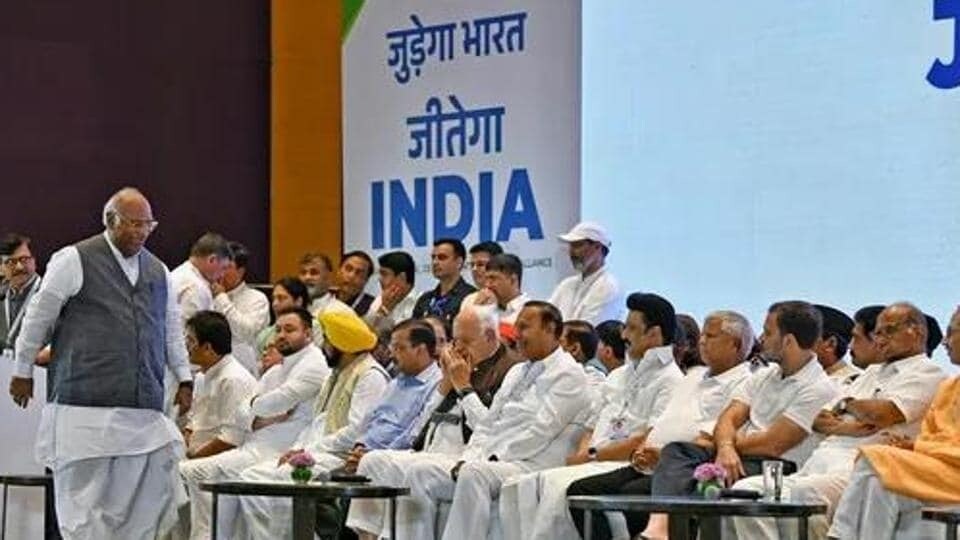
It could have covered the cracks and the crisis in the alliance and changed the public narrative from a divided house to a unified force, out with an ideological arm to defeat the common political rival in the Bharatiya Janata Party.
But the Congress either preferred to swim alone in the turbulent waters or the poll partners grew suspicious about the grand old party’s intent. Its quest for revival in West Bengal clashes with the Trinamool Congress’s (TMC) pursuit for survival in its state. The story is the same in Bihar and Uttar Pradesh, as well as in Maharashtra in Western India.
All three regional parties — Rashtriya Janata Dal (RJD), Samajwadi Party (SP) and Nationalist Congress Party (NCP) — are splinter groups of the Congress, built on its hijacked votes. Thus, the revival of the Congress can only happen at their cost and not that of the Bhartiya Janata Party (BJP), which has constructed its independent vote bank.
According to political experts, it’s a clear clash between the Congress's efforts to revive and their partner's struggle to survive. And in this dilemma, they have lost several opportunities to present themselves as a cohesive force. With less than 100 days left for the elections in the country, they neither have a political narrative, a calendar of joint rallies or a social media campaign.
And seat-sharing for the Lok Sabha election is also stuck in a majority of the states. TMC in West Bengal and AAP in Punjab have already announced their decision to independently contest the elections in their states while the Janata Dal (United) in Bihar has walked out of the alliance.
Interestingly, Akhilesh Yadav, who had initially appeared reluctant for any tie-up with the “untrustworthy” Congress is going ahead with the alliance though his unilateral announcement of candidates for 16 Lok Sabha seats had ruffled some feathers.
A random check of the list reveals that compared to the SP, the Congress had fared badly in a majority of these seats in 2019.
The only seat where the Congress has a keen interest is Farrukhabad, the home district of senior leader Salman Khurshid. In the 2019 Lok Sabha polls, while the BJP had won the seat, polling 5,69,880 votes, the Congress had secured barely 55,258 votes. As a part of the SP-BSP alliance, the seat was contested by the BSP, which polled 3,48,178 votes.
Another seat where the Congress may have interest is Kheri won by the BJP in 2019. Congress candidate Zafar Ali Naqvi polled 8.11% votes as against 34.38 per cent votes polled in favour of the SP.
Besides family seats like Firozabad, Mainpuri, Badaun, Etah and Kannauj, the SP has declared candidates for seats which are considered winning by them.
For instance, in Unnao, the SP has fielded former Congress leader Annu Tandon who ended second runner up or in Dhaurahra, where the 2019 Congress nominee Jitin Prasad is a BJP minister now.
The Congress may want more than 11 seats that the SP has offered.
Where INDIA has failed
Ideology: On Ram Mandir, they could have issued a joint statement as, by and large, they were on the same page on not attending the pran pratishtha ceremony of Ram temple.
Seat-sharing: Apparently, the plan was to give a larger share to the party in command – for instance TMC in West Bengal, SP in UP, Congress in Telangana, DMK in Tamil Nadu, Congress in Himachal, AAP in Punjab and Delhi and so on. Obviously, both the cadre and the candidates get upset. Some leaders say, “The party loses the seat forever by withdrawing its claim.”
Leadership: INDIA’s decision to appoint Mallikarjun Kharge was touted as the best move for two reasons: He is Dalit and has huge experience. But, in the end, while the move alienated Nitish Kumar, INDIA failed to play to the gallery.
Bharat Jodo Yatra: A solo show in the South was fine. But in the North, where the challenge posed by the BJP is enormous and where the Congress is on a sticky wicket, a joint show would have been more impactful on what is considered the BJP turf. The crowds at the yatra may not necessarily convert into votes.
Joint protest: The Opposition alliance could have launched joint protests or campaigns against the hounding of their partners by the Enforcement Directorate like Jharkhand chief minister Hemant Soren.
The dilemma
Most of the partners are either splinter groups of the Congress or are built on its traditional vote banks. Thus, while the fight against the BJP is ideological and helps in consolidating its anti-votes, the alliance with the grand old party, desperate to revive, will create an existential crisis for them. The TMC, RJD and SP would not want to share their vote bank of Muslims, which automatically fall in the kitty of the strongest party against the BJP.
The SP, too, faces the same dilemma but is under pressure from the Muslim community, facing the heat of the Yogi Adityanath rule. It's time I.N.D.I.A should decide if it is fighting election to defeat the BJP in 2024 or to revive or survive.


