
 E-Paper



Making higher education more disability-inclusive
Through collaboration and shared insights, we can collectively advance as a community, ensuring inclusivity and equal opportunities for all students.

 Prefer HTon Google


Despite the promising guidelines and policies of the National Education Policy (NEP) 2020, the ground reality of access to higher education for students with disabilities in India remains disheartening. If you walk around a university campus in India, amongst the thousands of students strolling the corridors, how many are likely to be students with disabilities?
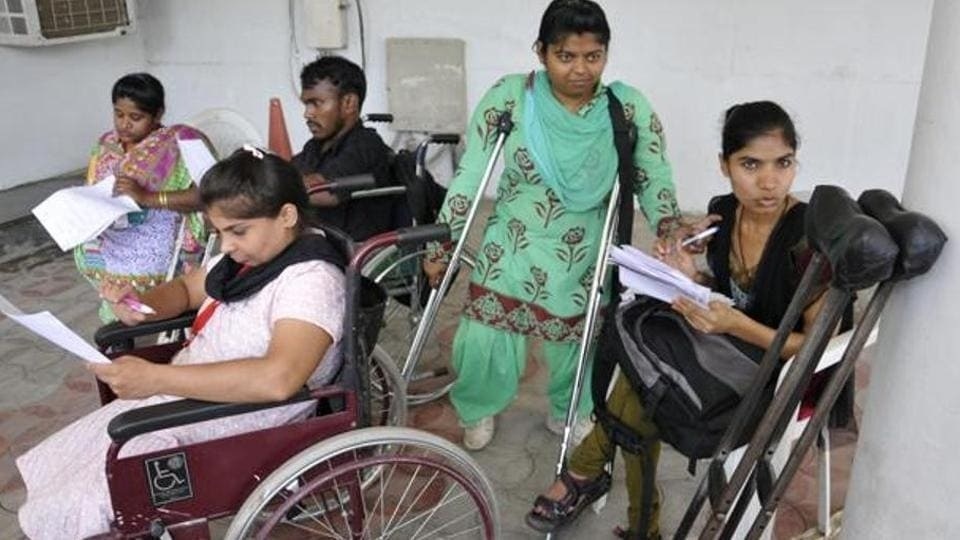
Multiple data sets reflect a sharp dropout rate among students with disabilities from school to higher education. This raises critical questions about what these students are missing in school education that is not enabling them to reach higher education.
From the ones who work exceptionally hard to fight against the odds and apply to the institutions of their choice, many are not able to make the cut because of stringent admission processes. This compels us to check what is missing in our higher education system that prevents students from transitioning.
A baseline mapping report undertaken by the Office of Learning Support (OLS), Ashoka University, has attempted to highlight some of these issues and delineate some possible solutions.
Amongst some of the most significant concerns found to be holding students back were lack of aspirations, lack of exposure, absence of quality education, lack of autonomy, advocacy, and rights awareness. In a society structured on ableism, the biggest challenge for a young student with a disability is to be able to aspire and think freely for herself without being told what she can’t do.
On the contrary, factors found to be enablers for transitioning to higher education despite the difficult environments were — familial support, mentorship, a non-judgemental environment to practise and operate within preferred learning, communication, and expression styles and students’ grit and determination.
These are telling thinking points for the inclusion programmes in our schools. Are they geared towards preventing these barriers and facilitating the enablers? If we hope to see students with disabilities get the same access to higher education as others, our schools must start addressing these issues.
Within these factors, some are unique to different disability groups. Early exposure to technology for students with blindness, encouragement with responsibility-taking for students with specific learning disabilities, support with socialisation and awareness for students on the autism spectrum, early construction of a sense of identity and agency for students with locomotor disabilities, early intervention with supportive teachers for the deaf and hard of hearing are some of the disability-specific factors found to be enabling for students.
This leaves much to be desired within our current reality. The long-term aim should be to bolster the school system to address these gaps as early as possible. In the meantime, diverse stakeholders — NGOs, parent groups, government education programmes, and higher educational institutes (HEIs) — can help build collaborative bridge programmes that facilitate the transition of students within the current systems.
Programmes that will enable students to build aspirations with a strong sense of self with disability acceptance at its centre, and bridge academic gaps that might exist, will have better outcomes for students’ academic and career prospects. Such interventions could take diverse creative forms, such as youth fellowships and summer programmes. They may not be restricted to being viewed as a structured training programme alone.
Colleges or universities can partner with local NGOs to offer multi-year bridge programmes. Such interventions can work with secondary school students to prepare them for the future, building independence and self-sufficiency from the beginning.
Universities and colleges can also aim to integrate a preparatory course within their academic structure for students with disabilities who need it. This programme can be integrated into the degree structure of the college/university, where students spend an additional year at the beginning. The college or university can design and curate its programme based on cross-cutting themes for different disability groups. Additionally, NGO partners can supplement disability-specific training at such courses.
Youth fellowship programmes can also be offered to high-school students with disabilities to expand their aspirations and help them strive for a career of their choice. These fellowships can be creatively designed to meet disability-specific needs but also be designed on the lines of youth fellowships aimed to inspire young leaders.
It is also perhaps time to start looking at education gaps for students with disabilities as not a disability sector problem but an educational sector issue. With the higher education space in India set to see significant expansion in the coming decade, what is it doing to address the challenges of this group of students?
We need to begin a cross-sector dialogue on the issue to scan education sector solutions to drop out and start making those solutions inclusive.
The baseline report seeks to outline some of the necessary steps. Its findings can benefit any practitioner, organisation, or educational institution interested in enhancing access to education for students with disabilities. Practitioners should leverage this report for designing their interventions and share feedback on their experiences. Through collaboration and shared insights, we can collectively advance as a community, ensuring inclusivity and equal opportunities for all students.
Reena Gupta is director, Office of Learning Support, Ashoka University, and Neha Trivedi is founder, Spandan: Inclusion and Accessibility Consultancy Services. The views expressed are personal


