
 E-Paper



The violence in Manipur is a by-product of three interlocking processes
The real question with such clashes is not why, but why now, and why mostly in Kuki areas

 Prefer HTon Google


Manipur’s chief minister, N Biren Singh, didn’t expect the eruption. Such is the Bharatiya Janata Party’s (BJP) dominance in the Northeast that it’s easy to conflate electoral success with political hegemony. The “prevailing misunderstanding between two communities” that Singh offered as a causal explanation for the riots, and efforts to pin the blame on “vested interests” for disturbing “the culture of communal harmony” — his government, too, is partly responsible for this — are not new. His promise to “suitably address” the long-term grievances of different communities “in consultation with the people and their representatives” after the convulsions of violence underscores the risk of majoritarian agendas in communally sensitive regions.
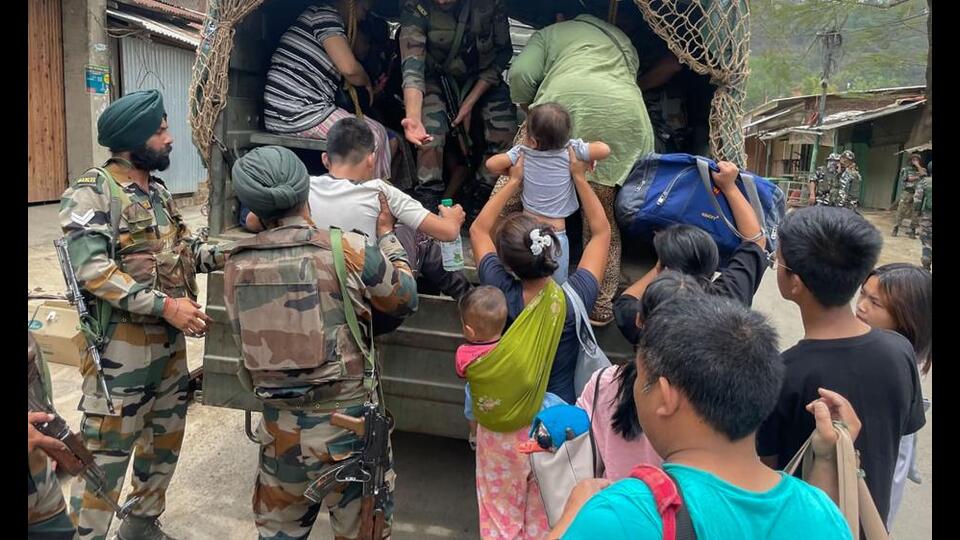
The real question with such clashes is not why, but why now, and why mostly in Kuki areas. The Meiteis have long nursed a grievance and perceive that they’re being shortchanged by India with their cultural hegemony steadily eroded, whereas the rights of the Christian-dominated minorities are constitutionally upheld. The existence of Article 371C, which protects tribal land rights, feeds such tensions, despite the majority of assembly seats being allocated to Meitei-dominated pockets. Unsurprisingly, non-Meitei communities have been wary of Meitei dominance for just as long. But such realities don’t automatically turn into violence.
These riots are a byproduct of three interlocking processes. One, a communal turn in pre-existing ethnic fault lines. Ever since the BJP’s second electoral victory in the 2022 assembly elections, Manipur has witnessed increased religious partisanship. Two, the breakdown of equilibrium between the state’s licit and illicit political economies since the 2021 Myanmar coup. There’s a reason why some Kuki groups remain silent, whereas others protest, and the felt need for tribal unity in the first place. Three, the state’s risky exploitation of strains in the Kuki-Naga relations in tandem with the dislocation of the Naga accord in north Manipur, which is ground zero for the National Socialist Council of Nagaland (Isak-Muivah).
On the first count, the BJP has long promised the Meitei communities a rectification of historical errors. This includes regaining lost cultural respect and economic empowerment. The recent demand to implement the National Register of Citizens in Manipur, for example, sought to address these agendas. This is paralleled by the desire to secure reservations by scheduling Meitei as a Scheduled Tribe, and amending Article 342A that offers such affirmative privileges to local Christian minorities. That Hindu Right-wing groups’ demand for such amendments in Meghalaya and Nagaland offers a clue into the communal churn across the Northeast.
Expectedly, clashes erupted after the declaration of the Kuki-Zomi-Hmar-inhabited areas as reserved forest, protected forest, and wildlife sanctuary, and the initiation of forced evictions, depriving people of land and livelihood. This was coupled with the recent introduction of invasive face-recognition systems to detect “illegal” migrants and aggressively enforce the Inner Line Permit— a technology that requires a pre-existing set of recognised faces. Justified as a response to the Kuki-Chin “illegal migration” from war-torn Myanmar and Bangladesh, such practices bring into sharp relief the direction Manipur is headed in. But this leads to the next question: Why the call for tribal unity?
The answer lies in Manipur’s political economy. Predominantly agrarian, and dependent on central government grants and loans, the only other major source of state revenue is cross-border trade, much of which is illicit. Moreh, a Kuki-dominated border trading town, is believed to be doubling up as a transhipment hub for the Golden Triangle-linked drug trade, which has exploded in recent years. Since the 2021 Myanmar coup, there has been an uptick in junta-controlled opium production in the northern Chin state, which is connected to south Manipur. This is where an Assam Rifles commanding officer combating drugs was killed by a Myanmar-based insurgent group on the junta’s payroll. Ever since, there’s been a struggle between the state and insurgents to control and tame drug profits. If reservations for the Meitei communities promised to restructure the distribution of jobs and grants away from minorities, the government’s attempt to reshape the drug trade generated turbulence in the underground. This explains why Imphal ended Suspension of Operation pacts with the Kuki national and Zomi revolutionary armies, but not other Kuki outfits. It is a time-tested tactic to divide and dominate the insurgent landscape, necessitating the tribal unity rally that snowballed into violence.
This is where the third, interlinked driver, comes in i.e., strains in Kuki-Naga relations. Clashes between the NSCN-IM and Kuki outfits are routine. This partly explains the silence of the Manipuri Nagas. But these communities, too, resent Meitei dominance. Imphal’s apparent encouragement of the Naga-Kuki divide and fostering of intra-Kuki discord are seemingly shrewd. But such strategies are risky. Violence in the south could offer the NSCN-IM an opportunity to rekindle violence in north Manipur. Apart from viewing Imphal with suspicion, the NSCN-IM has also lashed out against the Rashtriya Swayamsevak Sangh for impeding the accord. The overreach with the Kukis could reignite the Naga conflict.
None of this means that the Meitei grievances are groundless. India’s acceptance of colonial boundaries as truths, and sops to Naga and Mizo insurgents, deepened the Meitei sense of injustice. Reservations are a way Singh felt he could satisfy his constituents while coopting segments of the minority communities. It was a miscalculation. Most northeastern states depend on the central government for their financial viability. If the BJP rules the Centre, it’s logical to have it rule the state too. This brutal logic ensured the Congress’s decades-long dominance and explains its unrelenting collapse. For the BJP to confuse this as political hegemony is an error Singh may be forced to walk back from.
Avinash Paliwal teaches at SOAS University of London and is the author of My Enemy’s Enemy: India in Afghanistan from the Soviet Invasion to the US Withdrawal (2017)The views expressed are personal


