
 E-Paper



Nithari’s cry is a wake-up call for police reforms
The Nithari serial murders are another example of poor investigation, which depends more on perceptions than professional skills.

 Prefer HTon Google


The newspapers of October 17, which reported the acquittal of Moninder Singh Pandher and Surinder Koli by the Allahabad High Court, also carried the photograph of a middle-aged man throwing stones at the palatial but now deserted bungalow, D-5 of Noida Sector 31. This was the residence of a rich businessman living with his servant amid a jhuggi-jhopri cluster, whose residents used to work mostly as domestic servants in the surrounding kothis. Nithari was one of those villages that were fast becoming part of an urban world through the ill-planned urbanisation process in the National Capital Region. The unfortunate morning of December 29, 2006, could have been the beginning of another normal day for the children playing if a human skeleton had not appeared in the filthy drain next to the kothi. Over the next few days, dozens of skeletons were recovered from the drain. The area was already abuzz with rumours about the mysterious disappearances of girl children of various age groups. The police, as usual, were indifferent to the plight of poor parents who kept knocking at the doors of an unresponsive State. There was no evidence of any concerted efforts to trace their children.
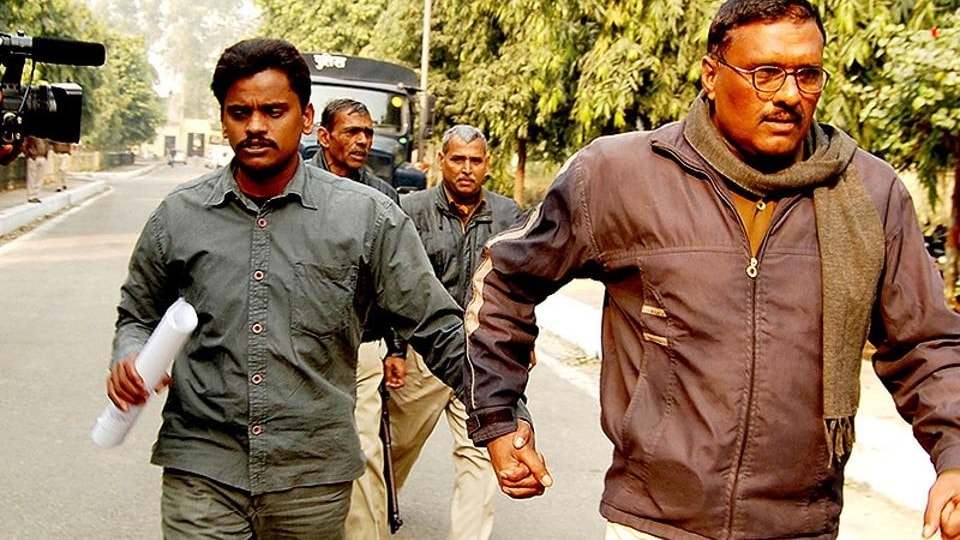
Expectedly, the recovery of the skeletons led to huge agitations on the road and after a big hue and cry and a lot of political drama, two persons, Moninder Singh Pandher and Surinder Koli, were arrested, investigated, prosecuted and sentenced to death in multiple cases by sessions courts. Both have now been acquitted by the high court. The man in the photograph mentioned at the start of this article was only showing his anger by throwing stones at the bungalow, where dozens of children were lured to go in only to disappear.
Nithari is another example of poor investigation, which depends more on perceptions than professional skills. In high-profile cases like the Nithari serial murders, a furious public demands blood and that too instantly. There is pressure to arrest the culprits within a timeframe that may be as unreasonable as 24 hours. Political leadership of all hue and shade also throw their hats in the ring and the quality of investigation becomes the first casualty. The investigating agency has to prove its worth which they do using largely dubious means. In this case, it was the CBI, the premier investigating agency of the country.
It was very natural that the two-judge bench of Allahabad HC had to observe: “The investigation otherwise is botched up and basic norms of collecting evidence have been brazenly violated. It appears to us that the investigation opted for the easy course of implicating a poor servant of the house by demonising him, without taking due care of probing more serious aspects of possible involvement of organised activity of organ trading.”
The reference to organ trading is drawn from the report of a committee constituted by the central government, which suggested that the investigators should also look into the possibility of the involvement of an organised gang in the business of human organ trading. The court found no efforts in this direction. “Inferences of many kinds, including collusion etc., are probable on account of such serious lapses occasioned during investigation. However, we do not intend to express any definite opinion on these aspects and leave such issues to be examined at the appropriate level,” the court said.
The court also found instances of procedural lapses, third-degree methods for extorting confessions and complete ignorance of the importance of scientific aids to the investigation. These lapses led the court to believe that “upon evaluation of the evidence…, on the touchstone of fair trial guaranteed to an accused under Article 21 of the Constitution of India, we hold that prosecution has failed to prove the guilt of the accused… beyond reasonable doubt.”
The level of shock and disbelief in the hearts of the families of the victims could be gauged by the anger with which a single person was pelting stones at the house in which the gullible children disappeared in the winter of 2006.
The State might prefer an appeal against the judgment in the Supreme Court, but some questions need to be asked in a democracy, which is expected to have a robust legal system. Why can’t the world’s fifth-largest economy spend enough to create a better-equipped, properly trained and more accountable investigation machinery?
We boast of making world-class roads, railways and ports, then why can’t we make our justice dispensation system world-class? It will certainly require a huge expenditure on training and equipment but it should be less than the price we are paying for having non-professional investigating agencies and courts with poor resources. As per the court observations, professionalism in the CBI is no better than in state police forces.
Last but not least, it is necessary to educate our people and political parties to understand that the investigation of a case equal in proportion to Nithari requires a lot of patience, hard work and professionalism. Agitating on the streets or blocking roads demanding immediate retributory action only tempts an investigator to adopt shortcuts to satisfy public opinion through methods that may not stand the scrutiny of the courts. Due process requires the prosecution to prove charges beyond any shadow of reasonable doubt for convicting an accused.
Vibhuti Narain Rai, former Director General of Police, UP, is the author of Hashimpura 22 May. The views expressed are personal


