
 E-Paper



Policies and People | Involve local communities in river-cleaning programmes
It will help foster broader environmental concerns among the general public, subsequently creating pressure to comply with environmental laws and regulations.

 Prefer HTon Google


Earlier this week, Delhi water minister Satyendar Jain took to social media to say that the Haryana government is not releasing the National Capital's “fair share of water”, amid a severe supply disruption. In response, Haryana chief minister Manohar Lal Khattar said the state is “providing full water to Delhi”. As the two governments sparred over water-sharing, certain parts of Delhi faced severe supply disruption, amid unprecedented severe heat waves.
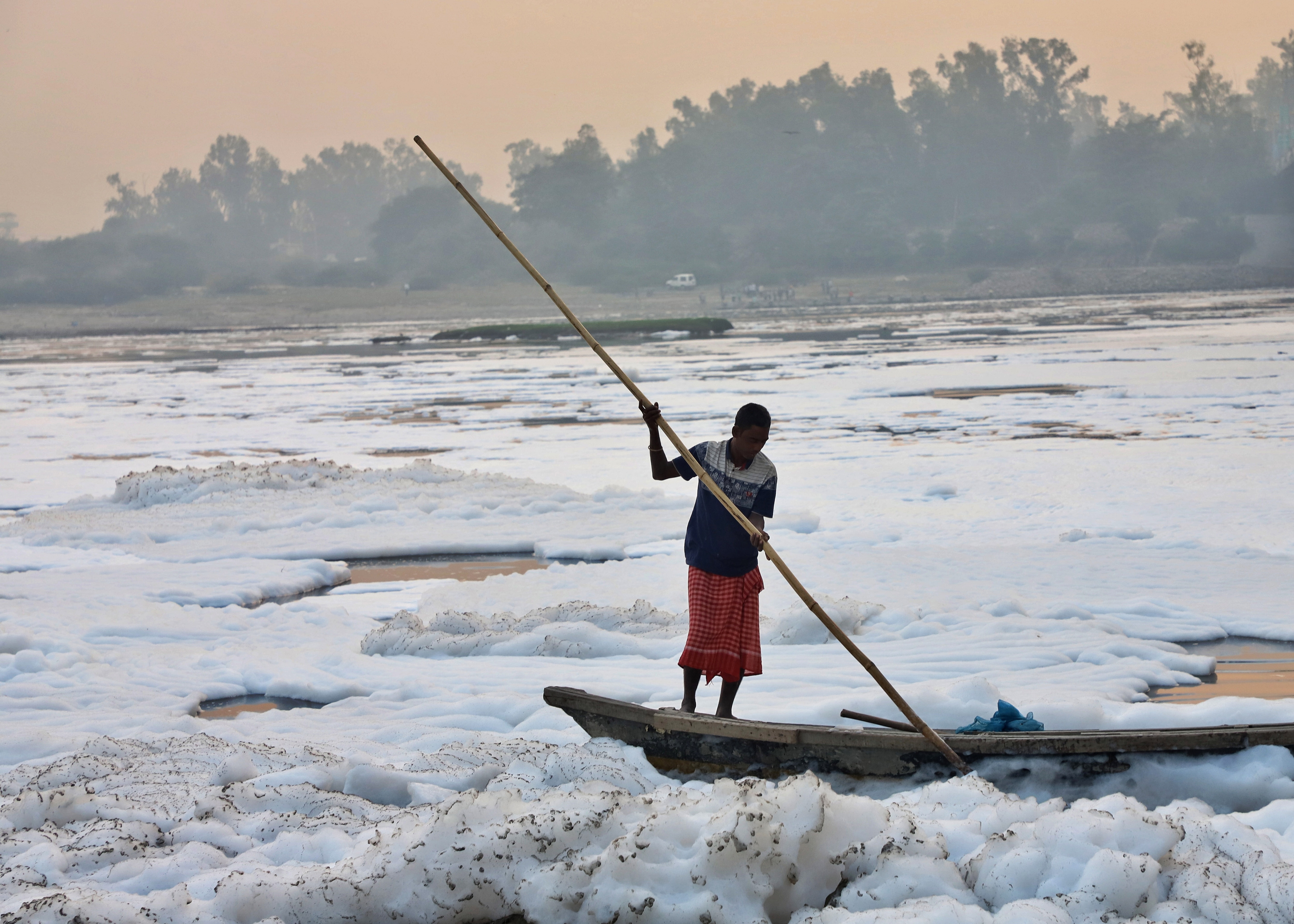
The daily demand for water for an estimated Delhi population of 20 million is around 1,200 million gallons per day (MGD), and the Capital relies on the Yamuna for about 90% of its water needs. But the river is drying up, and one of the key reasons is its high pollution load.
For those interested in a blow-by-blow account of how pollution is killing the river Yamuna, here’s a piece by Manoj Misra (Yamuna Jiye Abhiyan) and Bhim Singh Rawat (SANDRP): Blow by Blow, how pollution kills the Yamuna river: A Field Trip Report.
Rejuvenating the Yamuna
One of the ways to rejuvenate the river is to decrease the pollution load on the Yamuna, and also involve riverine communities in river-cleaning programmes, says a recent NCAER study done in collaboration with the University of Chicago’s Tata Centre for Development (TCD) at the University of Chicago. The report, River Yamuna: Deteriorating Water Quality and its Socio-economic Impact (Voices from the Ground), found that wastewater drains were a major source of river pollution and that Delhi’s stretch of the Yamuna is not fit for drinking or outdoor bathing purposes and rarely meets permissible Sewage Treatment Plant discharge standards.
While most studies on river pollution focus on the “degradation discourse”, the NCAER-TCD report focuses on other crucial-yet-under-examined aspects: The centrality of the Yamuna in the daily lives of riverine communities, their attitude towards the river, and their assessment of the status of river pollution and indicators of pollution, as well as, mitigation strategies.
This approach is pioneering and crucial because policymakers often do not see river communities as part of the river ecosystem. Therefore, urban river pollution has mostly ignored the riverine communities’ livelihood and health concerns.
Yamuna: Divine and polluted
The NCAER-TCD study results indicate that most respondents considered the river Yamuna to be divine and polluted at the same time. They could assess even slight changes in the already polluted water of the river. But, they believed that this pollution had no impact on the divinity of the river.
The study also found that traditional occupations of the riverine communities have been adversely affected by river water pollution. Most of the respondents, who are dependent on the river for their livelihood and with a household monthly income of less than ₹10,000, believe that pollution has a negative impact on their income. These people, the study noted, already living in economic stress, did not want their next generation to pursue their respective traditional occupations, such as fishing/washing.
Interestingly, the study found people were aware of the causes of river pollution. For example, the majority of respondents pointed out the discharge of untreated wastewater from the drains as a major cause of river pollution and suggested treating and reducing the flow of drain water into the river to check the river pollution. But people could not see agency in themselves or means available to them to play a role in pollution mitigation.
Based on the study, the report suggests several ways to revive the river:
Treat pollution at the source: The main source of pollution is drains carrying domestic wastewater and industrial effluents, such as Chandni Chowk and Najafgarh drains, as well as rubbish is thrown along and, in the river, such as ritual waste, polythene bags, and plastics. To effectively clean the river Yamuna, the study recommends stopping pollution at its source. For this, wastewater generated from household areas and industries could be treated and recycled at its generation point and recycled water could be used to meet non-potable needs, such as for irrigating the parks, lawns, sidewalks green belts on the roads, etc.
Improve community participation: Unlike popular perception, the study found that many people still have a vital relationship with the urban stretch of the river Yamuna. Thus, they should be looked at as a component of the larger riverine ecosystem. These riverine communities, who are still involved in traditional occupations and spend a significant amount of time interacting with rivers, have rich local knowledge about the river. They should be considered as one of the stakeholders and could be given preference to take part in monitoring and implementation of river cleaning programmes on a local level.
A reliable, transparent, and participative Water Quality Monitoring System is the bedrock for a healthy river and riverine community. The study used the Water-to-Cloud approach, which measures water quality in real-time and displays it near real-time on publicly available portals. The cost of sensors is dipping, a similar sensor-based real-time monitoring approach can be deployed at critical segments of Yamuna and the data can be shared with the local community and wider stakeholders through either LCD display boards or mobile applications.
“Effective river basin management and water policy formulation requires access to reliable and up-to-date data in easy-to-understand formats for timely decision making. Traditional water quality monitoring approach involves grab sampling, followed by transportation of samples to a laboratory where they are analysed using scientific instruments and the results are produced in a couple of weeks,” says Dr Supratik Guha, professor, Pritzker School of Molecular Engineering at the University of Chicago and principal investigator, Water-to-Cloud project. “Traditional laboratory-based testing is tedious, slow, expensive and prone to inaccuracies due to mishandling. The Water-to-Cloud system ensures high-resolution spatial and temporal monitoring to gain insights that may be missed with the traditional approach.”
Build a deep understanding of economic and health costs of river pollution: To better understand the impact of river pollution on livelihood, it is important to collect data regarding the economic cost of pollution being borne by these riverine communities in the form of change in income and occupation due to poor water quality. An understanding of the economic cost of river pollution can help prioritise the need to solve the issue of river water quality, which mostly remains neglected.
Rivers are complex, dynamic systems. They need regular monitoring at various sites to get a complete sense of the health of the river system. Along with active monitoring, involving communities in pollution management could be a win-win situation for all stakeholders.
The views expressed are personal


