
 E-Paper



Policies and People | The RE sector must be mindful of its impact on people
As India transitions towards a low-carbon economy, it is critical that its future energy systems are designed to foreground ecological health, human dignity and well-being

 Prefer HTon Google


In 2014, I went to Chhindwara in Madhya Pradesh (MP) on a general election-related assignment. While talking to local reporters, I learned that a few villages in the district had opted for the NOTA (none of the above) option on the ballot day, instead of voting for any candidate. "They are angry because the state government has allotted 750 acres land from five villages to a power plant developer," said one of the reporters. Later, when I met the protesters, they raised other issues as well: The developer had barricaded a public road (forcing villagers to take a longer route to go out of the village), demolished the community's crematorium, sealed drinking water wells, and encroached upon their cattle grazing ground and forest land.
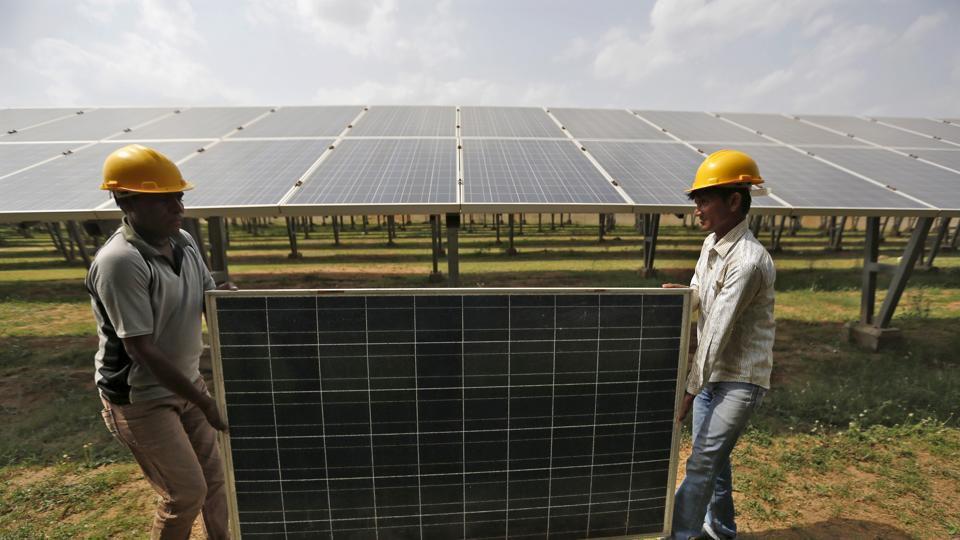
I remembered the troubles of the MP villagers (and several other such incidents from different parts of the country) while I was talking to Uttara Narayan of World Resources Institute (India), a global research organisation, on a new report that the organisation, along with four think-tanks, released recently.
The report, Renewable Energy to Responsible Energy: A Call to Action, focuses on why the growing and evolving renewable energy (RE) sector must be mindful of the need to ensure that their value chain and operations don't adversely impact the environment, communities, and human rights. Avoiding adverse impacts, the report explains, will be critical in ensuring that the RE sector operates in an environmentally and socially responsible manner and avoid damaging investor confidence in ways that may hamper the uptake and growth of RE in India. In other words, the RE developers cannot make the same mistake many of the fossil fuel sectors or other large infrastructure project developers have done in India. "This is a moment for the RE sector in India to take steps to better understand its impacts more holistically and commit to mitigating negative impacts," the report added.
At the Glasgow climate meet in November 2021, Prime Minister Narendra Modi said India will increase its capacity of non-fossil energy capacity to 500 GW and meet 50% of its energy requirements through RE by 2030.
Pressure on resources
"Many think that RE projects are benign and do not harm the environment or society. This view is flawed. Or we hear the alternate moral argument that climate is very important and so RE growth should be unfettered," says Narayan. "While the benefits of RE are substantial, virtually no sector is yet to universally sustainable in its impact."
While the growth of RE is enabling the transition towards a low-carbon economy, it, like the old fossil fuel economy, is also putting pressure on resources, albeit on a relatively lower scale than conventional systems. This is because utility-grade projects need a wide range of resources such as land and water. In a densely populated country such as India, unfettered access to both can be a challenge. "There is a lot of talk about building solar/wind plants in wasteland. But there will be some kind of negative impact because wastelands have ecological value and local dependence, which many seem to disregard," says Narayan.
Besides land and water, a wide range of minerals is also crucial to the RE sector for manufacturing equipment.
The World Bank calculates that under a 2-degree climate scenario, the world may see over 1000% rise in global demand for minerals used for energy storage technologies essential for RE and related technologies such as electric vehicles such as aluminium, copper, zinc, indium, iron, lead, lithium, manganese and nickel. Similarly, a 300% rise in global demand is forecast for crucial minerals used in solar panels, including aluminium, copper, indium, iron, lead, molybdenum, nickel, silver, and zinc. Mining them could lead to loss of land and livelihood for local communities.
Is the RE sector listening?
Although awareness and management practices are growing worldwide, the report says, the Indian and global RE sectors' current response is at best "nascent".
Nevertheless, there is a clear case of action: RE actors have an opportunity and a responsibility to create an RE system in India that ensures the imperative to reduce emissions from energy is met in a regenerative and just way. For India's RE sector, achieving this balance is critical because the country is betting big on RE with a target of 500 GW by 2030.
Interestingly, the report adds that while many RE companies acknowledge the need for increased environmental oversight and environmental, social and corporate [ESG] governance, they necessarily did not want increased regulation on environmental and social clearances.
"A renewable energy company cannot claim to be a socially responsible company just by the virtue of being in this industry. Transitioning to renewable energy systems should not be viewed as an end in itself. This is a means to achieving broader societal objectives,” says Rajat Panwar, associate professor, Responsible Business Practices, Oregon State University. “The company needs to adopt a comprehensive framework such as ESG and should holistically define each of the three parameters.”
Governance issues
The report looks at laws that apply to RE projects as part of the broader infrastructure and manufacturing sectors. They include the land acquisition act of 2013, the forest rights act, and the environmental impact assessment act. In addition, developers also need a NOC for groundwater and comply with the waste management rules.
But in a rush to attract RE investments, many governments are sidestepping laws to make their states "attractive" for businesses, resulting in social tension. For example, in Gujarat's Charanka Solar Park, land acquisition led to the enclosure of commons used by a number of pastoralist communities, thus impacting their livelihood. In Rajasthan alone, communities have filed at least 15 cases since 2011 against solar projects, says a Mint report.
In Assam, farmers in Mikir Bamuni Grant and Lalung village have been protesting against the alleged forced eviction from their lands to make room for a 15 MW solar power plant. They allege that they were beaten for their protests and many were jailed on false pretexts.
There are various examples of judicial responses holding the RE sector to account. For instance, in 2010, the Bombay high court directed the state to prohibit the new windmills inside the Koyna Wildlife Sanctuary. The ruling was in response to an application filed under the Right to Information Act, which revealed that 215 of the 1240 windmills in the region were inside protected forest areas.
“There are many ESG-related factors to land acquisition, health and safety that are common across infrastructure projects. However, wind, solar projects have additional considerations around biodiversity and threat to endangered bird habitats and those need to become part of the ESG risk assessment,” says Anand Krishnamurthy, co-founder, Envint, a sustainability and ESG services firm.


