
 E-Paper



Policies and People | What’s fuelling anti-coal mining protests in West Bengal
The growing resistance against the Deocha-Pachami coal mine shows the people’s lack of trust in the Indian State’s ability to carry out a fair and equitable rehabilitation process

 Prefer HTon Google


In a world badly battered by the climate crisis, coal is the biggest climate villain.
Yet coal is a critical input for many developing nations such as India, which needs the energy to grow. More than 70% of all power produced in the nation comes from coal-fired power plants. Coal is also a source of considerable taxes and royalties to governments and provides many people with jobs and livelihoods.
Despite the pressure to move away from coal, in 2021, India announced a target to produce one billion tonnes of coal by 2024 to secure the nation’s energy requirements. At the same time, India made a new pledge at COP26 to install 500 gigawatts of renewable power capacity by 2030 and achieve net-zero by 2070.
As the energy transition happens, there are also ongoing debates and discussions about “just transition”, which means greening the economy in a way as fair and inclusive as possible to everyone concerned, creating decent work opportunities.
Global promises, local protests
However, far away from high-powered discussions and debates on coal phaseout/phasedown/just transition/renewable energy policies, there is another story unfolding in many parts of the country: Strong community protests against new coal mines.
Take, for example, the latest one in West Bengal’s Birbhum district. The local community is against the proposed Deocha-Pachami coal mine project, which the state government claims to be the world’s second-largest coal mine. According to state government reports, the Deocha-Pachami-Harinsingha-Dewanganj block has an estimated reserve of 2,102 million tonnes of coal. Bengal chief minister Mamata Banerjee has said it can bring investment worth ₹12,000 crore ($1.63 billion) and generate around 100,000 local jobs.
The proposed mine will be spread across a little over 11,200 acres. Over 9,100 acres belong to local communities, most of them indigenous.
According to the ₹10,000-crore compensation and rehabilitation package announced by the CM in the assembly on November 9, 2021, ₹10 lakh-13 lakh will be paid for every bigha acquired apart from homes in resettlement colonies.
Several ground reports have detailed why residents are against the mine.
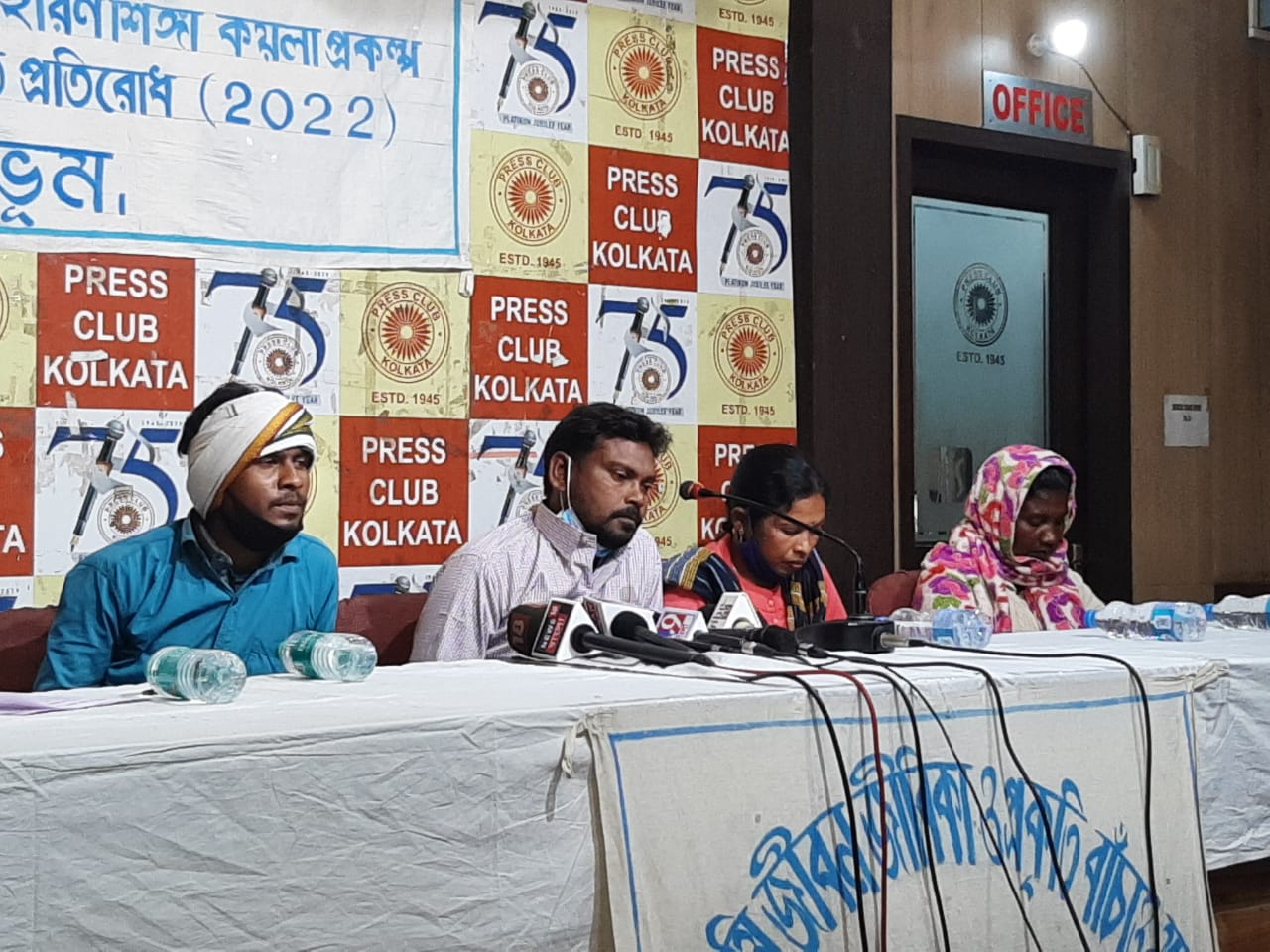
The first is the fear of displacement. While the government claims that 784 families will be displaced, the protesting communities say the number is around 4,000, most of them belonging to Scheduled Tribes, Scheduled Castes, and Muslim minority. They fear that they will have to leave their land but will not be adequately compensated.
Second, displacement doesn’t just mean leaving their houses; they would also be cut off from accessing their lands and forests. This will have an impact on their traditional culture since they worship forests as their deity.
Third, environmental pollution. The protesters allege that the area is already experiencing pollution due to dust caused by stone quarries and crushers, primarily illegal operations. This is impacting their health, and a coal mine will only add to their woes.
Fourth, mining will impact the Dwarka river, a critical water source, and farmlands.
Others feel the massive carbon emissions from burning another two billion tonnes of coal would accelerate global warming.
“The districts of East Medinipur, North 24 Parganas, and South 24 Parganas in West Bengal, which also includes the Sundarbans, face inundation and submergence in the next few decades, due to rising sea levels. Unfortunately, the West Bengal government seems to be oblivious to the serious challenges posed by climate change,” says a joint statement of political parties, people’s organizations, and individuals.
Historical injustices
While the Banerjee government has been assuring the people that they would execute the rehabilitation process properly, the promise has not cut ice with the people. So come Sunday (February 20), another big protest has been planned.
“The trust deficit between the government and the people is not surprising. People have no faith in the bureaucracy and the rehabilitation process, thanks to India’s poor record. There is ample amount of data that show people who lost their land and forests in other infrastructure projects across the country have got either minimum compensation or no compensation at all, and have not been rehabilitated or resettled properly,” says Ramesh Sharma, national convenor, Ekta Parishad.
“In 2013, India passed the Right to Fair Compensation and Transparency in Land Acquisition, Rehabilitation and Resettlement Act, 2013. But to date, I have not found a single case, where this act has been implemented in letter and spirit”.
Sharma argues that this is that people are hardly the “beneficiaries” of a project; they come much after big industry, mining companies, ruling parties, and bureaucrats.
He warns that the efforts of just transition could also go the same. “For the people of India’s mining regions, the question of justice will be more important than transition,” Sharma added. “Unless institutional (such as the forests rights act, the land acquisition legislation) and political questions (promises) are not adequately addressed, any transition will be meaningless.”
Why coal?
“The primary question that needs to be answered is whether we need the coal from the Birbhum mine. If we need it then the government must talk to the communities and ensure a better rehabilitation process. But my answer to the question is we don’t need the coal,” says Nanikesh Sivalingam, director, Centre for Research on Energy and Clean Air.
Sivalingam says that Coal India (CIL), an Indian government-owned coal mining and refining behemoth, has enough coal blocks and that CREA data shows that CIL is under-producing.
“If there is a shortage in the country; it is easier to get CIL to produce more coal and ship it, rather than opening new coal mines. The same holds true for private mining companies,” he adds.
He argues that India is in a comfortable position to accelerate clean energy sources.
The salient points of the CREA reports are: The minable capacity of already allocated coal blocks is around 15 to 20% higher than the expected demand in 2030; increasing coal production beyond what is required will lead to oversupply, creating financial stress and turning into stranded assets; and that the Indian government can increase coal production at existing mines to end coal import.
While India, Sivalingam adds, is committed to renewable, it is also aggressively moving on coal. Due to these split priorities, everything from funds to efforts is divided. India’s public sector banks invest more in coal than in RE.
“India needs to make up its mind quickly and figure out the right pathway. It is unnecessary to travel down a road that will have an inter-generational impact on thousands of people like those who will be affected by the Birbhum mine,” asserts Sivalingam.


