E-Paper



India to release AI regulation consultation paper within a month, says Ashwini Vaishnaw
The Centre will publish a consultation paper within a month that will form the foundation of India’s techno-legal regulatory framework for artificial intelligence

 Prefer HTon Google


The Centre will publish a consultation paper within a month that will form the foundation of India’s techno-legal regulatory framework for artificial intelligence (AI), electronics and information technology minister Ashwini Vaishnaw said on Thursday. The paper will focus on five areas — safety, humanity, skilling, inclusivity and harm mitigation.
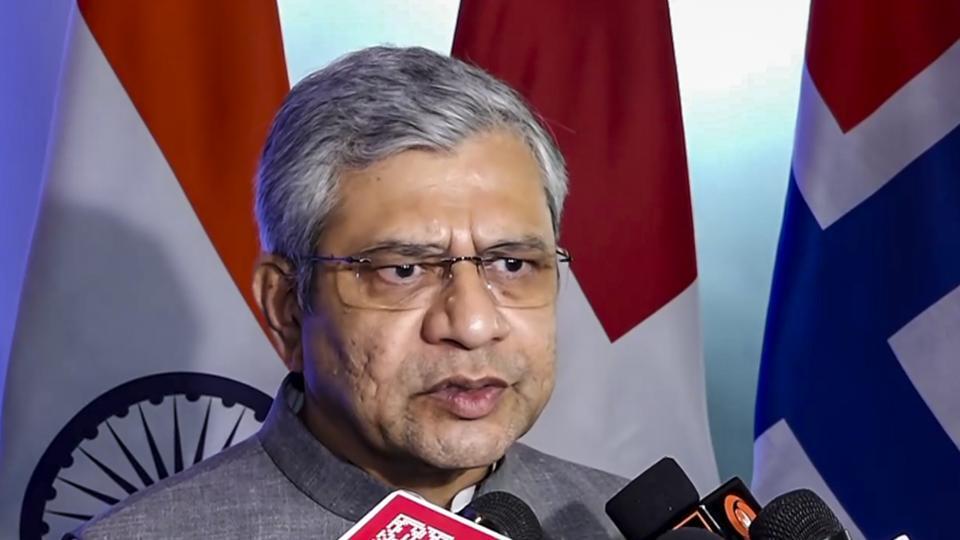
The government’s view is that AI cannot be regulated through legislation alone and requires a techno-legal approach, which the minister has said many times before, with stakeholders brought on board from the start. Much of the implementation, MeitY believes, will fall to industry, which must take primary responsibility for addressing user harm, cybersecurity, safety, psychological disorders and deepfakes.
“Time has come for AI regulation. I have asked the department to come out with a regulation-focused consultation paper which will focus on safety, humanity, skilling, inclusivity and harms which come from society…in a month’s time we should be able to publish the consultation paper - which will form the base for the AI regulation that has to come,” Vaishnaw said, while speaking at the launch of World Development Report ‘The Promise of Artificial Intelligence’ in New Delhi.
The position marks a notable shift as the government earlier was of the view that the risks and harms posed by AI could be dealt with existing provisions under Information Technology Act and rules. They had also amended IT rules to bring in provisions for synthetically generated information.
MeitY secretary S Krishnan said that certain threats have not been addressed yet, so the government will be looking at them in the consultation paper.
Beyond the consultation paper, the government announced several other measures. It has begun the next stage of its long-term procurement of 10,000 GPUs, and an order for 5,000 of them has already been issued. A three-to-four-year roadmap for using Indian-made GPUs for AI inference will be announced in the coming months. The government will also empanel AI models for official use within government departments.
Vaishnaw added that the government has received industry suggestions on an AI-focused curriculum for students and young people, and has forwarded them to the Ministry of Education. The ministry, industry and universities can work together to upgrade course curricula, he said, so that students entering college today can benefit from AI.
The World Bank’s report on AI ‘The Promise of Artificial Intelligence’ released Thursday is an assessment of what AI means for the 6.8 billion people in low- and middle-income countries. It argues that AI is a general-purpose technology, like steam power, electricity and the internet, but one that is spreading far faster.
The report flags risks such as pressure on outsourcing industries such as call centres, bias, fraud and misinformation, and dependence on technology controlled by a handful of firms, mainly in the US and China. Its policy advice is to keep investing in electricity, internet and education, expand affordable computing and local-language data, rely first on voluntary standards and existing laws rather than heavy regulation.
Krishnan said, “The part of the world that the report seems to address, India clearly holds a leadership position and a lot of it got recognised during the AI Summit in February. From the time the report was brought out, I think the times have again changed. There are more challenges. The existential risks are laid out far more explicitly. The report itself advocates a roadmap on regulation similar to what we have proposed earlier saying make it on existing laws and regulations which is in place.”