
 E-Paper



Power struggles rage on in political families
Ajit Pawar's rebellion is a blow to Sharad Pawar, highlighting the challenges faced by political parties run by families. Future of these parties is uncertain

 Prefer HTon Google


Right now, it is advantage Ajit Pawar in Maharashtra’s politics. Is this the beginning of the end of Sharad Pawar, once seen as unbeatable in Indian politics? So, how is such misery imprinted on the fate of political parties run by families?
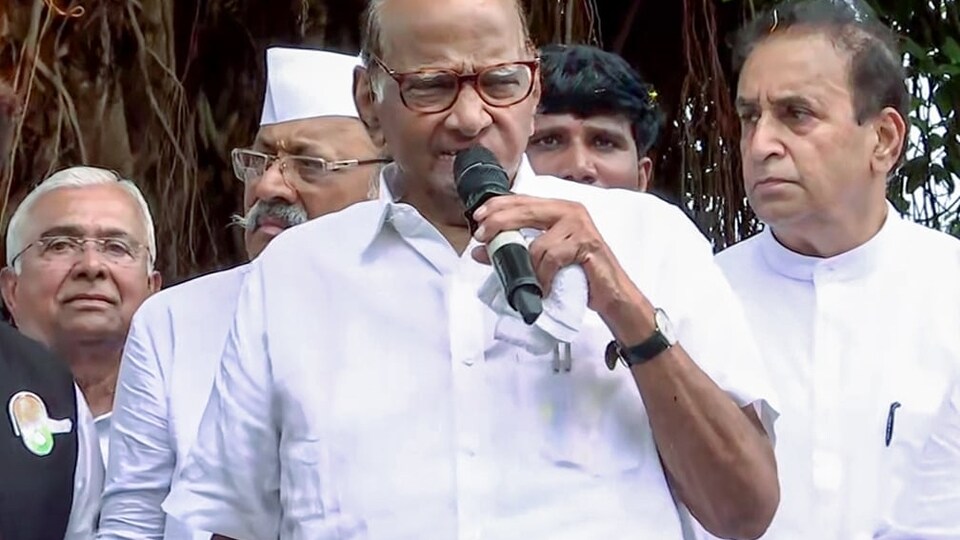
Examples include the families of Devi Lal, Mulayam Singh, Nehru-Gandhi, Rama Rao and Karunanidhi. The events in Maharashtra are just the most recent chapter in this never-ending saga.
Let us first discuss the rebellion in Shiv Sena. The party’s split was unusual in a sense. The party founder Balasaheb Thackeray chose his son Uddhav as his successor, despite the fact that his nephew Raj was more similar to his working style.
It is an old custom for the son to sit on his father’s throne. This is why a big segment of the Shiv Sena has accepted Uddhav’s leadership. But Raj parted ways to form the Maharashtra Navnirman Sena. Nonetheless, ‘Matoshree’, the mansion of Balasaheb, which had a distinct status since the foundation of Shiv Sena in 1966, remained supreme.
Instead of taking command of the government when the Shiv Sena was given the opportunity for the first time in 1995, Balasaheb gave a chance to senior Shiv Sainiks such as Manohar Joshi and Narayan Rane to be the chief minister. It was a prudent choice to avoid unneeded controversies and to preserve supremacy until the very last breath. Uddhav did just the opposite. He formed a government with the Congress and the Nationalist Congress Party after falling out with the Bharatiya Janata Party. Following this, voices rose against Matoshree, accusing it of compromising the agenda of nationalism and Hindutva.
After Uddhav was elected chief minister, many Shiv Sainiks, including Eknath Shinde, started worrying about their future. As Shinde saw a dark cloud over his political ambitions, he began gravitating towards the BJP.
But when 40 Shiv Sena MLAs revolted last year, it came as a surprise. Sharad Pawar’s remark about Uddhav’s lack of experience had gone viral at the time. Uddhav, though, was unable to see signs of a coup in time. Sharad Pawar now faces the same misfortune.
In 2019, Ajit Pawar had similarly tried breaking away from Sharad. The elder Pawar had then thwarted the insurrection, but he failed this time. This is yet another manifestation of the evils of dynasty politics.
This development caused outrage among Shiv Sena (Shinde) MLAs. The comment of Bharat Gogawale, one of these MLAs, is noteworthy. “Until yesterday, we were eating whole roti; now we have to survive on half,” said Gogawale.
There will undoubtedly be a commotion in Maharashtra’s political heartland. Let us be prepared for fresh ups and downs. It is now being speculated whether Bihar will follow Maharashtra.
On 9 August 2022, Nitish Kumar parted ways with the BJP and decided to form a government with his old colleague Lalu Prasad’s party Rashtriya Janata Dal. Politically, Bihar’s case is similar to Maharashtra’s, although BJP leaders claim they have no such intention. Is the saffron party determined to fight the 2024 Lok Sabha and 2025 assembly elections solely with its coalition partners?
Currently, it does not seem possible to replicate Maharashtra in Bihar. Reason? The NDA has 82 MLAs in the Bihar Legislative Assembly, thus they need the support of 40 more members to form a majority. This will necessitate the removal of two-thirds of the members of the Rashtriya Janata Dal and Janata Dal (U). At the moment, it does not appear feasible.
The stature of Nitish Kumar and Lalu Prasad in Mandalist politics, as well as the presence of RJD Assembly Speaker Awadh Bihari Choudhary, makes such an attempt highly unlikely.
It is important to remember that Nitish Kumar is always known for making the impossible possible. He used to consider multiple options at the same time and chooses the best one when the time arrives. However, a new situation is emerging.
Last Monday, a charge sheet was filed in New Delhi’s CBI court against over a dozen people, including Lalu Prasad, Rabri Devi, Tejashwi Yadav, and his sisters Misa Bharti and Ragini Yadav. These people must now appear in court. If they are not granted bail immediately, who will temporarily lead the Rashtriya Janata Dal? Tejashwi Yadav’s wife Rachel, his brother Tej Pratap, or someone else?
If we get this answer, we’ll have answers to all of our other political questions.
Shashi Shekhar is editor-in-chief, Hindustan. The views expressed are personal


