
 E-Paper



Lucas’ ideas will continue to shape economic debates
Combining insights with a rigorous treatment of topics, Recursive Methods in Economic Dynamics is one of the best training manuals for mathematical economists

 Prefer HTon Google


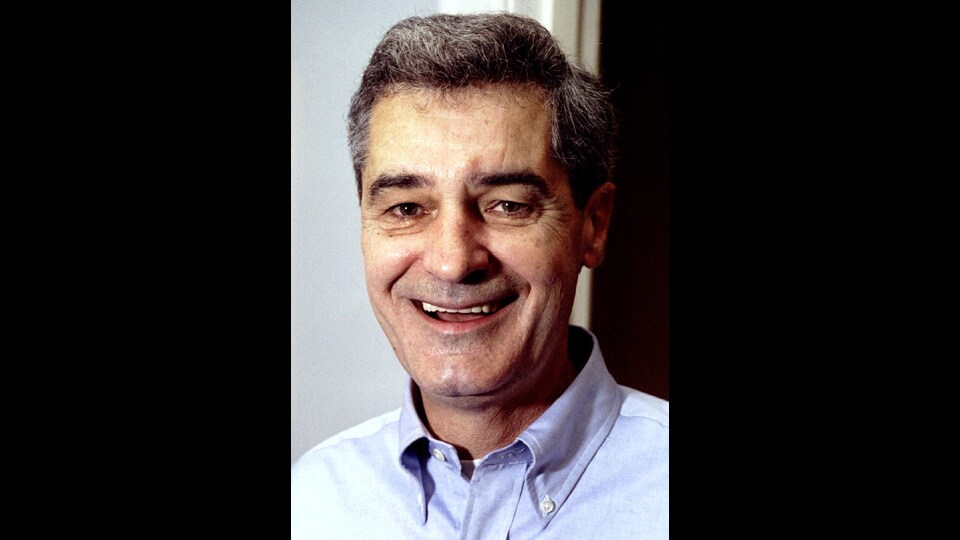
Robert Lucas Jr, the recipient of the Economics Nobel Prize in 1995, breathed his last on May 15. Lucas was a preeminent macroeconomist in the Chicago tradition.
Lucas had an interesting academic trajectory. Though he ended up as an economic theorist, Lucas started his academic journey as a student of history. He later wrote about the formative experience that led him towards economics: “The most exciting modern historian I had read at Chicago had been the Belgian historian Henri Pirenne, whose account of the end of the Roman era stressed the continuity of economic life in the face of major political disruptions.”
The apparent resilience of the economic system, even in the face of numerous political shocks, is a puzzle. As the quote above shows, this puzzle intrigued and challenged Lucas, shaping his research agenda as an economic theorist.
One way social sciences and economics differ from other natural sciences is the way time affects their subject matter. Usually, in natural sciences, temporal effects are unidirectional: The past affects the present, and the present affects the future.
However, in economics, temporal effects may be bidirectional. Expectations of future outcomes affect the current behaviour of individuals and, thereby, current results. For example, people will behave differently if they expect there will be a run on the bank where they have hoarded their savings. And their behaviour may affect the solvency and liquidity of the bank, thereby affecting present outcomes. Given the critical role of expectations, it becomes important to model this process consistently.
The crucial question is how should the expectation formation process be modelled? Lucas’ answer was that expectations are formed rationally. This is a roundabout way of saying people refrain from making systematic errors while forming their expectations.
This simple idea has several remarkable implications for policymaking and econometric evaluation.
For policymaking, the critical insight is that the outcomes generated by the anticipated and unanticipated policy changes may differ substantially. Therefore, people will factor in anticipated policy changes in their decision-making, potentially neutralising the impact of the said policies.
For econometrics, Lucas’s view may be seen as a critique of “reduced form estimation”. A “reduced form estimation” is a theory-free way of describing the correlational patterns in the observed data.
The problem is that the observed variables depend in part on the agents’ expectation of the continuation of the existing policies. If, for example, the policy changes drastically, upsetting people’s expectations, the correlation patterns seen in the data will break down. “Lucas critique”, as this insight came to be known, has been hugely influential in setting the research agenda in the niche area of macro econometrics.
Influential as it is, Lucas’s scholarly work has also come under criticism. Paul Romer, another Nobel laureate, criticised Lucas for promoting “mathiness”, a term he coined to describe the use of mathematics for hiding unrealistic assumptions. The field of behavioural economics focuses on uncovering systematic biases in people’s behaviour. Such biases tend to invalidate the Rational Expectations hypothesis. Lucas’s work has made the explanation of some stylised features of capitalist economies, like the persistence of involuntary unemployment, difficult. Further, the econometric models that pass Lucas's critique – Dynamic Stochastic General Equilibrium (DSGE) models– remain a work in progress.
The discussion of Lucas, the researcher, will remain incomplete without mentioning his pedagogic contributions. He wrote a well-received textbook ‘Recursive Methods in Economic Dynamics’ with Nancy Stokey. Combining deep insights with a rigorous treatment of various topics, this textbook has become one of the best training manuals for budding mathematical economists.
Robert Lucas may not be alive, but his ideas will continue to shape economic debates in future in one form or another.
Avinash Tripathi teaches economics in Azim Premji University, Bangalore.
The views expressed are personal


