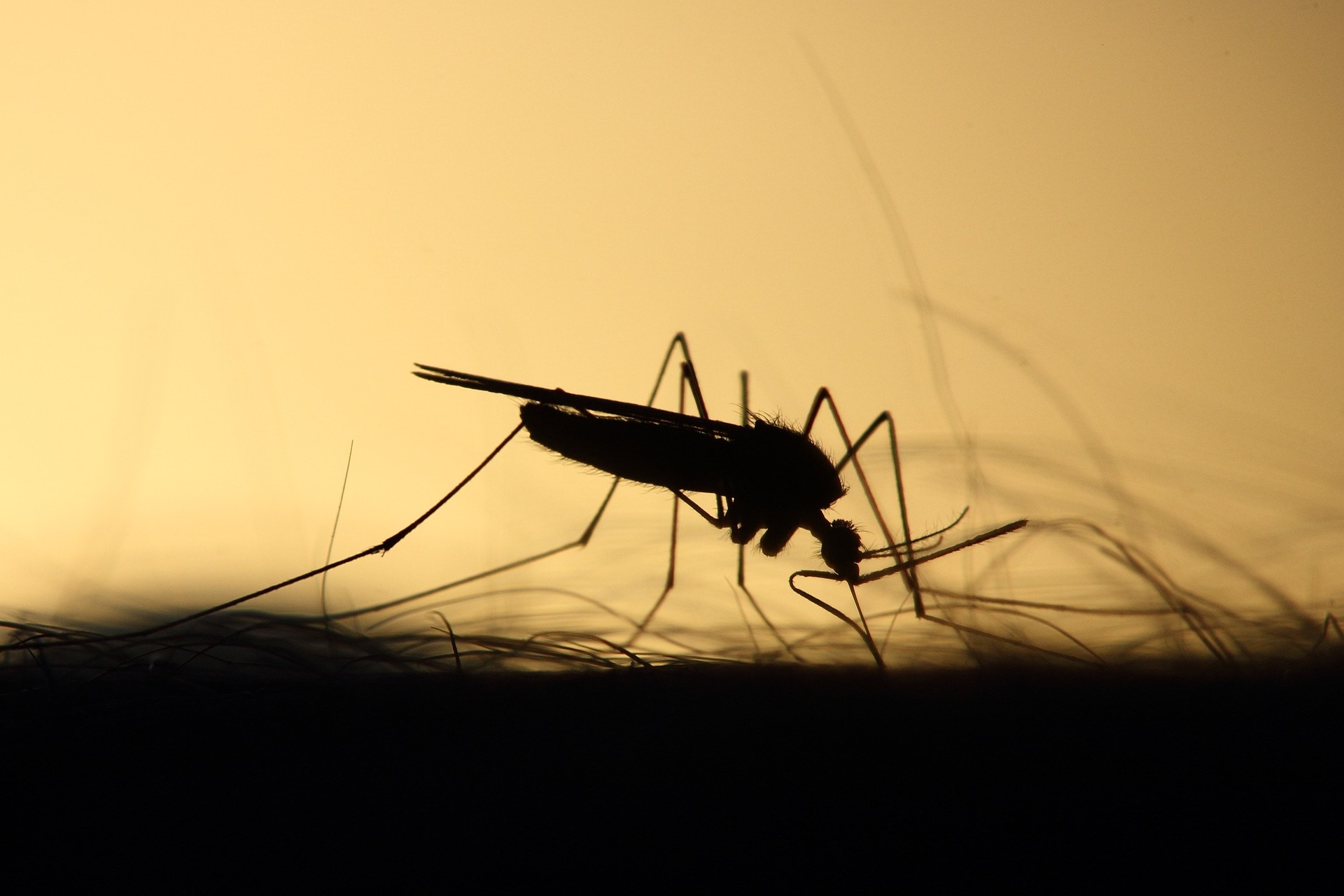
Scientifically Speaking | How do mosquitoes know who to bite?
Once mosquitoes get a whiff of carbon dioxide, they search for red, orange, and cyan colours. We all emit a signal in this colour range, which mosquitoes then pick up.
It’s a question each of us must have asked at one point or another: Why do mosquitoes seek out some people more than others? If we knew the answer to this question, we could also figure out what could be done to prevent mosquitoes from biting us.
Why do mosquitoes seek out some people more than others? (Unsplash)
It has been known for a few decades that certain species of mosquitoes are attracted to people who wear dark colours. Now, researchers led by Jeffrey Riffell, a professor of biology at the University of Washington, have found that a certain species of mosquitoes that bites people uses a combination of smell and colour to home in on us. The research, published in the scientific journal Nature Communications on February 4, found that mosquitoes are alerted to the presence of humans by the carbon dioxide that we exhale. Carbon dioxide is a gas that is odourless to humans, but mosquitoes have the ability to smell it. The researchers found that once mosquitoes get a whiff of carbon dioxide, they search for red, orange, and cyan colours. Humans have differing levels of pigmentation, but we all emit a signal in this colour range that mosquitoes can pick up. So, these colours are a reliable indicator of human skin.
Riffell likens the ability of mosquitoes to first smell carbon dioxide and then see red as similar to our experience when we whiff bread baking while walking on the street and then we turn around and search for signs of a bakery. The work was done on female Aedes aegypti mosquitoes. This species of mosquito spreads dengue, chikungunya, and Zika among other diseases. By knowing what colours mosquitoes are attracted to, they can also be trapped more effectively.
This work also provides guidance on how to prevent mosquito bites. The researchers discovered that these mosquitoes ignore green, blue, purple, and white. In the past, the cosmetics industry has shown that humans have minimal signals of green in our skin, so it makes sense that mosquitoes that bite us, don’t care for that colour either. But one way to avoid getting bitten might be to cover exposed body parts with white or green clothing.
The current work certainly builds on over a decade of observation. In fact, way back in 1902, two researchers, George Nuttall and Arthur Shipley, recommended wearing khakis when venturing into mosquito-infested areas to prevent bites.
It’s also likely that the red-orange preference is specific to mosquitoes that bite humans and those that prefer to bite animals other than humans will be attracted to different colours.
Vision plays a major role in how mosquitoes find people. The CRISPR-Cas9 gene-editing system that won its pioneers the 2020 Nobel Prize in Chemistry has been used to create transgenic Aedes mosquitoes with certain genes knocked out. Last year, researchers led by Craig Montell at the University of California, Santa Barbara, published a study in the journal Current Biology that showed that when two genes for specific light-sensing proteins were knocked out, mosquitoes could no longer see people. The mosquitoes weren’t totally blind, however. They just lacked the recognition of the shades that they find attractive in people.
But there’s more to mosquito perception than meets the eye. Mosquitoes have other cues apart from red-orange colour and the smell of human breath, such as skin temperature and odour. Mosquitoes detect carbon dioxide that we exhale from up to 10 metres away. Then they sniff out volatile compounds in human sweat, along with the colour and warmth of skin. In 2019, researchers found that knocking out a specific smell receptor that let mosquitoes detect a component of human sweat, made them less attracted to people.
Tying all of these studies together, we are rapidly building a holistic picture of how female mosquitoes find and home in on people to bite. But there’s still much more waiting to be discovered about how we can avoid our formidable buzzing foes.
Anirban Mahapatra, a scientist by training, is the author of COVID-19: Separating Fact From Fiction

 E-Paper