
 E-Paper



The Art Of A Good Unicorn: Startup founders, will AI regulation impact your funding?
Issues such as deepfakes highlight the need for India to regulate AI. However, could regulation impede funding and growth for AI startups in India?

 Prefer HTon Google


Look at the groundbreaking applications of AI. It may have been around for a while, but people stopped slouching and sat up to pay attention when OpenAI’s ChatGPT was released to the public in late 2022. While there was both awe and worry, one thing was evident: The unbridled rise of AI.
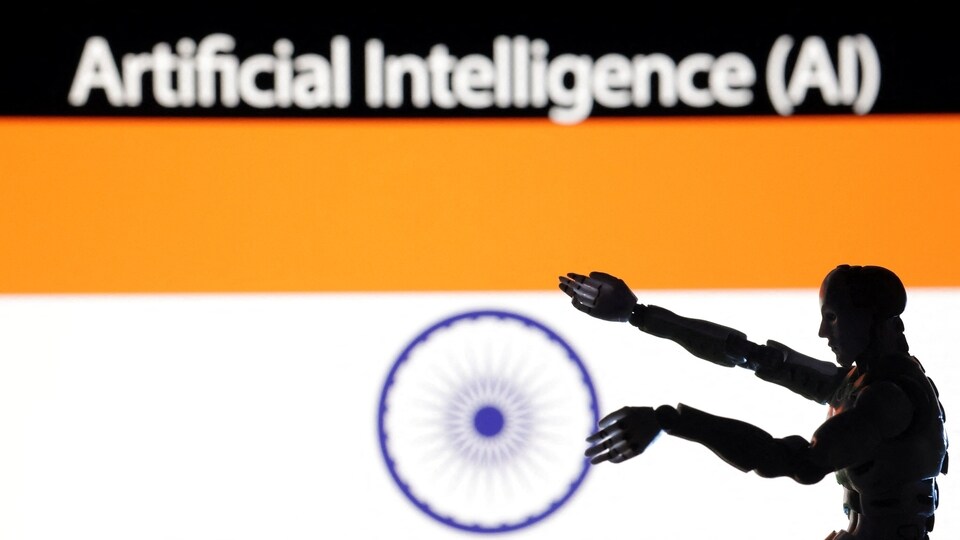
With promises of advancement, convenience and efficiency, an allure surrounds AI. But beneath the surface of progress, there lies a complex web of ethical quandaries and potential pitfalls. These might threaten to undermine the foundations of a societal equilibrium that is already a bit shaky to begin with. If people hadn’t paid attention to the risks of AI before, despite organisations prophesying how it may lead to job cuts, the rise of AI deepfakes with near-perfect accuracy, used with malicious intentions, have further troubled the waters in 2023.
In a country like India, where digital penetration has been unfolding, people are eager to quickly embrace new technology. The unrestricted access to AI calls for a framework to deal with a force that may be hard to put a leash on. Can a developing country like India regulate AI at a time being described as the golden age of this new technology? Even more so when AI seems to be a horizontal technology that could impact all sectors.
AI regulation may already be in the works in India
“I think India is very much ahead in its AI game, whether it’s innovation or regulation. The ministry of electronics and information technology (MeitY), for example, is way ahead, in terms of identifying issues and talking with stakeholders," said Tanu Banerjee, partner, Khaitan & Co.
"It’s not that India wants to just follow the format of the EU, China or the US. Of course, those nations are more developed and lean towards a stricter regime, but we’re not necessarily copying them. Perhaps, we will borrow principles from them, but there is definitely a focus around balancing innovation," Banerjee added.
In December 2023, the European Union reached a provisional agreement on a groundbreaking AI Act. The EU's proposed act operates on a risk-based paradigm: Low risk, limited risk, high risk, and systems with unacceptable risk.
"Every AI framework globally is trying to balance risk against opportunity," said Arjun Goswami, director of public policy, Cyril Amarchand Mangaldas. “But, this balance of risk and opportunity is of special importance for India, because our country is aiming to become a $5 trillion economy, out of which $1 trillion is supposed to come from the digital economy. The AI-driven part of it is potentially the most powerful. So, we should have an Indian framework that takes into account the drive and opportunity. The digital economy powered by AI could leapfrog us into a more powerful position," he added.
In India, AI regulation faces an uncertain path. In April 2023, Union IT minister Ashwini Vaishnaw noted that the government is not considering bringing a law or regulating the growth of artificial intelligence in the country. Despite this, experts are optimistic about AI regulation, based on their interactions with policymakers working behind the scenes.
“India is an innovative country; we have a large number of entrepreneurs, especially in the tech industry. If you look at the government's approach, it wants to set up Centres of Excellence (CoE) that will partner with startups. MeitY has come up with a proposal around how to fund these startups and funding upscaling," said Banerjee.
The rapid progress of AI is forcing policymakers to adapt faster, Goswami said. “The sophistication and thinking of our policymakers are tremendous. When you sit down at the table with them and interact with them, you can sense how deep their thinking is. They're doing global benchmarking, they're thinking about different types of technology, they're holding all kinds of focus-group meetings; they’re not at all arrogant about this. They are seeking information, they’re reaching out to industries and they're reaching out to law firms," he said.
Distinguishing EU and India's future AI regulations
The EU Parliament, through its proposed AI Act, aims to make sure that AI systems used in the EU are "safe, transparent, traceable, non-discriminatory and environmentally friendly." The Parliament also underscored that AI systems should be overseen by people, rather than by automation, "to prevent harmful outcomes."
Banerjee said, “There are so many aspects that the EU has already examined, which the other countries haven't looked at yet. They are more focused on how to make a strict regime around things. The EU’s approach is largely around safety and risk mitigation and trying to categorise different AI tools and their risk impact, whereas, we are more focused on how to regulate the deployment of emerging technologies. That's the principle that we are looking at and how to identify user harm and how to focus on safety”.
“I don't think our playbook should be a carbon copy of what the Europeans and Americans are producing. Their regulation is very strongly anchored around human rights and human values, which are relevant in their context," Goswami remarks. "In our context, the balance will be different. We shouldn't have a one-size-fits-all. We should have coexistence of rules appropriate for a multi-polar world, where we can fashion things in terms of a balance that fits us," he adds.
Mitigating risks from AI regulation
Can upcoming AI regulation impede funding for AI startups in India? This question becomes even more relevant as the funding for Indian generative AI startups in India is reported to be close to $600 million as of May 2023, according to a 2023 Nasscom report.
“I don’t think AI regulation is going to reduce the attractiveness of the tech sector and opportunities in terms of raising capital, innovating and scaling it up. This is simply because I think the approach of the government is balanced at the moment. They’re trying to set up institutions, which would help startups raise capital," Banerjee states.
Still, can AI complexities pose challenges for innovation and scalability, regardless of the government's efforts? What could the future hold in this regard?
According to Banerjee, “There is a risk of displacement of resources and we’re bound to see it across industries at the beginning. But, I think, eventually what will happen is that people will upskill themselves and the way we work will change. For example, the Indian Copyright Act, 1957 is not up to speed when it comes to generative AI. We don’t know who owns the product generated by AI. Similar to this act, many aspects are in a transitionary space and we all will eventually upskill ourselves. There is no other way. AI is the future and there’s no value in resisting it.”
“The pace and disruptiveness of technology will always outpace regulation. It is virtually impossible for regulation to keep up. If we say that we're going to stay ahead of innovation in a disruptive sector like AI technology, the chances are we’ll be strangling it. Of course, as a result of that regulatory lag, there’ll be some element of risk, as things go on without adequate regulation”, adds Goswami.
Banerjee adds, “I think something the people and the government could think about is what sort of policies should eventually come about. Not just national regulatory policies, but how organisations could be helped in developing their internal policies around using AI. For example, could there be policies for developers who are coming up with newer AI tools and assessing the risks that a particular tool may have before it is released to the world? Perhaps, it would be helpful to make the developers responsible for think about the potential and risks that their tool poses and task a team to review it and evaluate it before it's released.”
How businesses should prepare for AI regulation
As the world tries to navigate a new world of opportunities and threats, even in the face of substantially powerful counterparts, India might be looking to stand at the forefront of the AI game: Not just as a mere follower, but as an entity trying to shape its destiny in the digital era. So, what’s the kind of future that India would craft in the new AI realm?
“I think we’re now in a co-regulatory space. Businesses would have to look at the completeness and accuracy of their datasets. They would have to look at robust training standards and yes, it’s going to be difficult. They should properly explain sensitive AI products, they should try to push for human oversight, to push for cybersecurity and business entities are in the best position to take this forward. This can be a business and government partnership. At the international level, if we do that, the future looks bright," Goswami said.
So, would generative AI startups be able to prioritise ethical considerations while developing AI? Would they be able to implement measures for transparency, accountability, and bias reduction in their algorithms? And would it impact the way they operate and how they get funded?
“The idea is not to come in the way of innovation. India is, perhaps, the largest opportunity for Big Tech, but that opportunity is as much ours as is anybody else’s”, said Banerjee.
Shrija Agrawal is a business journalist who has covered startups and private capital markets before it was considered cool in India.
The views expressed are personal


