
 E-Paper



The gains of curbing anaemia in women
Recent advances in health technology are beginning to shift outcomes in anaemia cases, as health workers are able to deliver immediate, reliable diagnostics.

 Prefer HTon Google


The gains of curbing anaemia in women
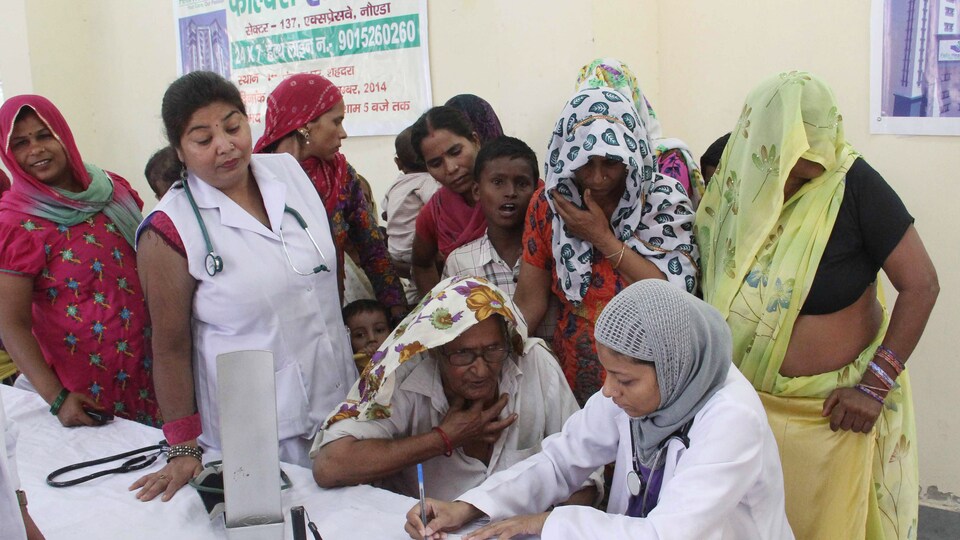
Of the many health concerns of women that get overlooked, anaemia is one of the most dangerous. Earlier this month, the South Asian Association for Regional Cooperation (SAARC), the government of Sri Lanka, Unicef, WHO, and other partners hosted the Nourishing South Asia — Reducing Anaemia in Adolescent Girls and Women regional conference in Colombo, which threw up alarming figures on anaemia in the region. If India is to realise both its demographic dividend and increase female labour force participation, anaemia has to be tackled as it goes far beyond being a health issue. It is a sign of poor nutrition, inequality, chronic infection, and with this comes poor health and lost opportunities for women.
In India, 57% of women of reproductive age (15-49 years), 52% of pregnant women, and 67% of children under five are anaemic. This represents not just a health crisis, but deep-rooted gender inequities. While women are biologically more vulnerable to anaemia during menstruation and pregnancy, their elevated risk is largely shaped by social and systemic disadvantages: Poor dietary diversity, repeated pregnancies with inadequate recovery time, limited autonomy in health decisions, and unequal food distribution within households. Women in many Indian households eat last and eat the least.
This is despite the fact that, today, many scalable, science-backed solutions are within reach, signalling a strategic investment in women’s health and empowerment. Ensuring that these reach the last mile is key.
Recent advances in health technology and treatment protocols are beginning to shift outcomes. Digital screening tools such as point-of-care digital hemoglobinometers are being rolled out through the Anaemia Mukt Bharat programme. These enable frontline health workers to deliver immediate, reliable diagnostics — some models have demonstrated 80-86% accuracy. IV iron therapies can replenish iron stores much faster than oral tablets. A 2024 guidance note from the MoHFW now recommends this for moderate to severe anaemia from the second trimester onward. Evidence suggests it is not only more effective, but more cost-effective too. Anaemia prevention and treatment can be factored into India’s fairly robust grassroots health delivery schemes. Hema Divakar, member, International Federation of Gynaecology and Obstetrics (FIGO) executive board, says, “Investing in maternal anaemia, particularly through rapid iron-repletion, is fundamentally an investment in community health, women’s agency and our economy.”
Addressing anaemia may begin with clinical tools, but the intent and impact go much further. Deployed equitably and at scale, these innovations can help build a foundation for broader gender justice by restoring health and strength during critical life stages like pregnancy and early motherhood — and generally enabling women to engage more fully in education, livelihoods, and community life. The Economist recently reported a decline in traditional preference for sons, with a growing aspiration for daughters in some countries. This evolving mindset, which will hopefully manifest itself in India sooner rather than later, must be matched by meaningful investment in women’s health.
Tulika Seth, professor of haematology, AIIMS, Delhi, says, “Correcting maternal anaemia reduces complications like postpartum haemorrhage and boosts neonatal iron stores, breaking intergenerational cycles of malnutrition. India has both the responsibility and the capacity to implement these interventions at scale.” Tackling anaemia will not only address a major health challenge but also help women access the tools, resources, and platforms they need to thrive.
The views expressed are personal.


