
 E-Paper



The Taste With Vir: Is Batman a super hero or is he someone who is much darker?
Grown-up fans of Batman will not be surprised by the darkness. But it will leave some kids disappointed. And it has come as a bit of a shock to fans of other superhero movies, especially those from the Marvel Universe. There are few wisecracks here and there are hardly any laughs.


It’s beginning to seem likely that The Batman, the new film starring Robert Pattinson, will be among the year’s biggest hits. But so many people I know have come away saying that it is very dark. This theme has been reflected in the reviews (“the darkest Batman yet” etc.) and my guess is that the filmmakers are happy with this response: Why else would every scene in the movie be shot with so little light?
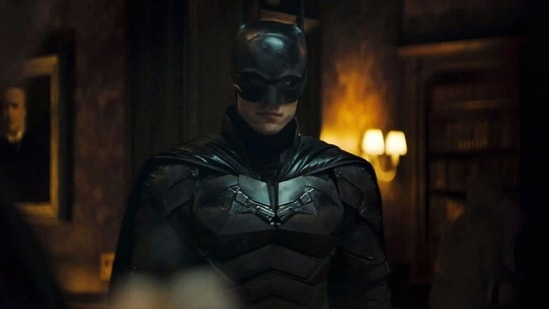
Grown-up fans of Batman will not be surprised by the darkness. But it will leave some kids disappointed. And it has come as a bit of a shock to fans of other superhero movies, especially those from the Marvel Universe. There are few wisecracks here and there are hardly any laughs.
So, is Batman different from every other super-hero? Why is the character so dark? Why is nearly every Batman movie a bit of a downer? Why isn’t it your typical superhero movie?
ALSO READ: The Taste With Vir: Two cities
I guess it depends on how you see Batman: Is he a super hero or is he someone who is much darker?
The semi-official mythology runs something like this: Batman was created in 1939 by Bob Kane as a dark avenging character. But in the 1960s, the hit TV series had a lighter, zanier touch and this influenced how Batman was perceived. It was only in the 1980s, that writers went back to Batman’s dark 1940s avatar. And the movies picked up on that.
As somebody who started reading Batman comics in the early 1960s, I am suspicious of this mythology. It is true that the 1960s TV show went for a camp tone and was often written for laughs. But even before TV came along, Batman was not the dark figure he is in the new movie. There were always outrageously costumed villains and the presence of Robin (who I find intensely annoying) ensured that there was a certain wholesomeness to the Batman of the comics.
Was it very different in the 1940s? I don’t know. But judging by the reprints I have read of the early comics, starting with the first story, The Case of the Chemical Syndicate, he was never particularly dark. Admittedly he had no compunctions about sending criminals to their deaths in those days. He would say things like ‘a fitting end for his kind’ when a criminal died.
The two Batman movie serials—in those days serials were made for cinemas with new episodes released each week—that were produced during the 1940s (now forgotten, they marked the first appearances of Batman on the screen with Lewis Wilson and Robert Lowery playing the hero) were not in the slightest bit dark --- one was just a nasty bit of wartime anti-Japanese propaganda.
So, like so much of the Batman mythology --- Bob Kane didn’t actually draw most of the comics and the world of Batman was really created by Bill Finger who was denied credit till recently ---- the references to the darkness of the early years are based on a rewriting of Batman history. He was your average costumed crime-fighter till the 1980s, even without the influence of the TV show.
The folks at DC Comics credit the re-interpretation of the character to Denny O’Neil who looked after the comic book in the 1970s but my view is that the Batman we see now on the screen (and not just in the new movie) is not the comic book character. He owes his creation to the boom in what are called ‘graphic novels’, that is, comics written for older readers with longer stories and adult themes.
The first graphic novel I read that portrayed a darker Batman was The Dark Knight Returns by Frank Miller. Set in the future, it had a 55-year-old Batman getting back into his stride. Later, Miller also wrote a comic book series that was published as a graphic novel called Batman: Year One. There were other graphic novels, among them The Killing Joke by Alan Moore, that seemed to me to redefine the character I had grown up reading about.
It is this graphic novel version of Batman, dark, screwed up by the killing of his parents and emotionally inadequate, that Tim Burton incorporated into his first Batman movie. Burton went against type and cast Michael Keaton, a former stand-up comedian and a fine comic actor as Batman to the horror of fans. Burton’s message was: Batman is not a super-hero, he is just a screwed up guy with no superpowers who has an obsessive compulsive need to fight crime.
For people like me who had grown up on the comics, this was heresy. Basically, what Burton was saying was not that different from what Frank Miller had suggested: Batman was only slightly less deranged than the criminals he was confronting.
And that’s pretty much how it has been in most of the movies ever since. The Christopher Nolan films went with a dark Batman. The two multi-hero films (Batman vs. Superman and Justice League) never had a chance to develop the character fully but the Batman vs. Superman idea came directly from the original Frank Miller Dark Knight graphic novel. And now Robert Pattinson has become an even darker Batman.
There are two exceptions. The first Joel Schumacher Batman (with Val Kilmer) moved away from Burton’s dark world with bright Day-Glo colours. I liked it (critics did not) and the film made more money than Batman Returns, the second Tim Burton movie. But Schumacher set the stage for the downfall of his version of the character by introducing the dreaded Robin. The next film Batman and Robin (with George Clooney) was packed with Robin and Batgirl and comic book villains and seemed designed to sell toys and merchandise. This was a bridge too far and the movie killed off the Batman franchise till Nolan rebooted it years later.
All Batman directors face a core problem. If you are going to make a film about a man or a woman with superpowers, then it may make sense to have strange, costumed villains. But if you are going to make a film about a deeply disturbed guy who wants vengeance then can you really introduce cartoonish costumed enemies? The two approaches don’t match.
Schumacher had lots of costumed villains in his films so he chose to go with a less dark Batman. Burton who had a dark Batman, tried to overcompensate by making the Penguin so dark that children left the cinema halls in tears. Nolan steered clear of costumed villains for the most part: his Joker was a psychopath who used his joker make-up like war paint.
The reason I liked the new film, directed by Matt Reeves, is because he finally creates a world in which a dark Batman can truly belong. In the comics, Batman is ‘the world’s greatest detective’, an aspect of the character that the movies always ignore. But The Batman plays up the detective element and though the word ‘dark’ is always used to describe the movie, it is more in the tradition of detective noir. There are no costumed villains. The Penguin is just a gangster and the Riddler is a serial killer like the real-life Zodiac Killer. There is a fancy Batmobile but Batman often seems to arrive walking. And like the Batman of Frank Miller’s Year One, he is still learning.
I don’t think this Batman can survive in the extended movie universe that DC has created where Batman has to fight demons and gods alongside super beings, Amazons and kings of the sea. This Batman has to inhabit a more realistic world.
Is that a problem? I don’t think it is. Just as there are many versions of the character, there can be many Batmans on the screen. Already DC plans to have two different Batmans in the new Flash movie (they are played by Michael Keaton and Ben Affleck). And we have got used to different Supermen (the Superman of the Supergirl TV show operates outside of the movie universe as does the Superman of the TV show Superman and Lois) and we accept that there are different Flashes (the movie Flash is not the TV Flash).
So why can’t we have many different Batmans? After all, there have been so many versions of the character through the years: Why stick with just one version?
Light or dark, realistic or fantastic; there can be a Batman for everyone.
Speaking for myself though, I will persist with the Pattinson version. And judging by the early box office returns, I am not alone.


