
 E-Paper



UCC Debate | In Uttarakhand, BJP's long-standing promise is now fulfilled, but gender equality is still some work away
No, a uniform civil code does not guarantee non-discriminatory rights. Reforms in personal laws, however, do – women's organisations have long understood this

 Prefer HTon Google


Uttarakhand’s Uniform Civil Code (UCC) offers a prototype for the rest of Indian states — and holds out the promise of fulfilling yet another electoral vow of the ruling Bharatiya Janata Party (BJP). The UCC involves imposing a standard set of laws governing marriage, divorce, succession, and adoption on all Indians, with the ultimate aim of making existing personal and customary laws defunct.
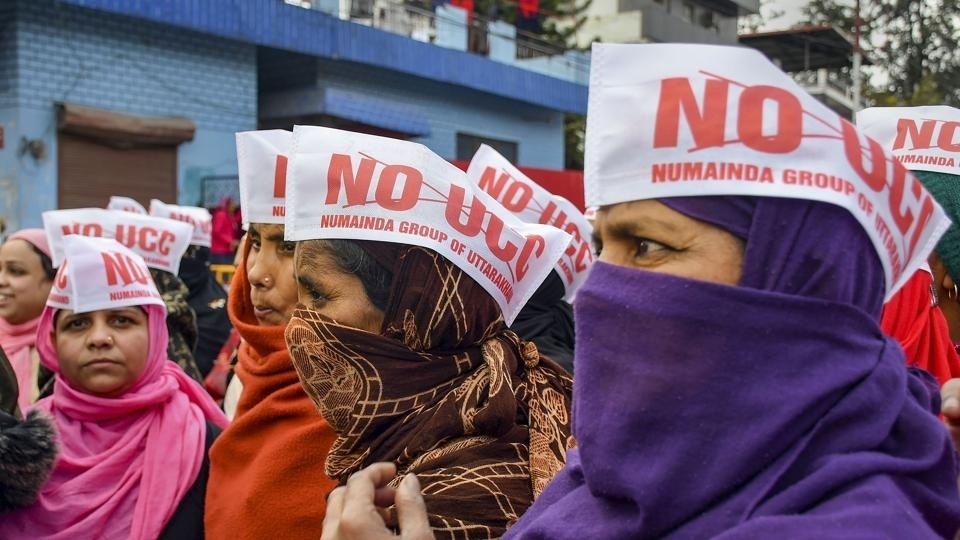
At present, all communities and religions in India are governed by personal and indigenous laws regulating civil matters — except in Uttarakhand and Goa. The rest of the states have an optional form of UCC in the form of Special Marriage and Succession Acts. A closer scrutiny of the text of the Uttarakhand’s UCC reveals aspects that concern me as a Muslim and as a woman.
One, there is a particular misconception that uniform laws guarantee equal rights and are non-discriminatory. The UCC in the state of Goa has a provision that a Hindu man can engage in a polygamous relationship if his wife has attained the age of 30 without having a son. In the Special Marriage Act (SMA), two Hindus marrying are governed by Hindu Succession law, whereas for Christians and Muslims, the Indian Succession Act applies.
These examples have been cited by organisations such as the All India Democratic Women's Association (AIDWA), Stree Mukti Andolan Sampark Samiti (Forum for Women’s Liberation Agitation, and Majlis to prove that even uniform laws are not uniform and that all laws have the potential to discriminate against women.
This is also the case of Uttarakhand’s UCC, in which adult choices have been both criminalised and morally policed.
A feminist issue…
The restriction of the marriage age to 21 for men and 18 for women and the difference in the age of the genders is rooted in patriarchy, lacks uniformity, and has no sound reasoning. The issues of poverty, lack of access to education, and socio-economic barriers that women face cannot be cured overnight by increasing the age limit, but through equal and enhanced opportunities and access to health and education.
Social work organisations working in villages and towns have repeatedly communicated that this heavy-handed, top-down approach only creates a facade without addressing multiple vulnerabilities in women’s lives.
After all, if one can elect a leader, vote, sell, and buy property at 18, why can’t one choose one’s spouse/partner at that age? UCC is an attempt of the state to control consenting adults' sexuality and bring them under the purview of the criminal justice system. Often, lovers choosing to be in a relationship end up with the man sent to an undertrial prison for rape charges while the woman is confined to the four walls of ill-kept shelter homes as a punitive measure. This also erodes any distinction between women who are actually facing abuse and need protection from adults who pursued love and were held guilty for it.
...And a Muslim one
As much as this is a feminist issue, it is also a Muslim one. Interfaith couples are branded as a form of love jihad, and often Muslim men become the subject of violent attacks. Any alleged crime or elopement which involves a Muslim man's name alongside Hindu women is given a communal colour. This was evident in a recent case in Purola, Uttarakhand, where many Muslim traders were forced to shut their shops and leave their towns after an alleged incident of kidnapping.
As a Muslim woman, there is a genuine fear that a Uniform Civil Code may potentially enforce a code that is influenced by codified Hindu practices at the cost of others given the BJP’s emphasis on one culture and one language, the strengthening of Hindu nationalism and the government's inability to secure the safety of minorities.
In 1996, the BJP’s manifesto stated, “We will adopt a Uniform Civil Code which will be applicable to every community and foster a common Bharatiya identity, apart from ensuring gender equality.”
What would it mean to be subordinate to majoritarian aspirations, norms, interests, and practices? Muslim organisations such as the All India Muslim Personal Law Board highlight how secular laws, such as the SMA of 1954, are designed as per majoritarian morality. This is also visible in Uttarakhand’s UCC, where prohibited relationships include marital alliances with cousins, with some leeway for customs. Marrying first cousins is fairly common — neither prohibited nor encouraged — in Islam. Similarly, many tribal groups engage in such marital alliances. In these ways, the UCC criminalises minoritarian practices while normalising majoritarian ways of life.
Not everyone may agree with the practices followed by minority communities.
For example, among Muslims, religious identity is linked to religious laws that accord individuals different responsibilities. Men are legally responsible for the running of the household and the upkeep of the family, including wife and children. At the same time, women are under no obligation to contribute to household expenses. Hence, the inheritance of women, though half the share of that of a man, stays with them, and both men and women are mandated to give the zakat (obligatory charity for Muslims) separately, highlighting each person's financial independence. While everyone may not agree with these norms and their justifications, it only goes to show the diversity of ways of living — erasing it is not the way to go; reforming it might.
During a 2023 address in Madhya Pradesh, Prime Minister Narendra Modi expressed his support for the UCC, stating, “If there is one law for one family member and another for another family member in a household, can that family function smoothly?” However, the present Uttarakhand’s UCC leaves tribals out of the purview of the law, which raises more questions than it answers.
In its 2018 report, the Law Commission of India stated: “Most countries are now moving towards recognition of difference, and the mere existence of difference does not imply discrimination but is indicative of a robust democracy.”
At the heart of UCC lies a multi-layered debate highlighting the conflict between religious vs. secular law, gender equality vs. freedom of religion, and multiculturalism vs. national unity.
The Uttarakhand UCC seems to be a collection of arbitrary constraints and punitive measures. Women's organisations that are in touch with grassroots realities and the Indian legal system seek gender-sensitive reforms in personal laws for long-lasting reform.
Sania Mariam is pursuing a PhD in International Relations and Politics from IIT Bombay-Monash Academy. She also runs an Indian women’s collective called Muslim Women’s Study Circle. The views expressed are personal.


