
 E-Paper



UN@80: Reforms essential for continued relevance
The reform of the Security Council must remain front and centre. Though now it may seem implausible, there is no avoiding this

 Prefer HTon Google


September 23, 2025 — this should have been a milestone to write home about. Eighty years of the United Nations — eight decades since 1945 — ought to have produced a moment that feels consequential, not merely ceremonial. A standout deliverable, not just a commemorative logo. The leaders will show up. The numbers and the spectacle will be there. But will the substance match the stage?
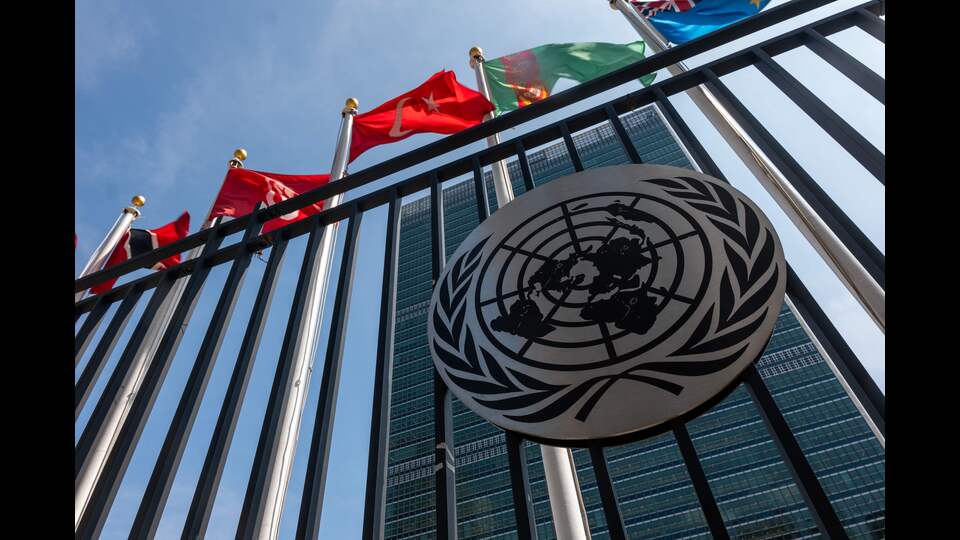
The reality is pragmatic, even mundane: Internal administrative reform to make the UN more coherent, effective, and better equipped to serve “we the peoples”. The UN80 Initiative explicitly urges change in how the organisation works — with belt-tightening as the burning platform. As secretary-general António Guterres warned in May 2025, “The United Nations’ resources have been shrinking because member-States are not all paying their dues, some not paying on time, contributing to what many describe as a liquidity crisis.”
That’s welcome and long overdue. For years, the UN has suffered from unrealistic mandates, siloed structures, overlapping duties, and bureaucratic drag. It needs to streamline, rationalise, optimise. That could mean trimming overlapping mandates between peacebuilding and development agencies, consolidating back-office functions across the UN system, or enforcing stricter budget accountability.
Now, the core question. With rising conflicts, climate change accelerating, new technologies outpacing regulations, and inequality soaring, is the UN fit for purpose? Can it really serve us for the next 80 years? Secretary-general Guterres warned on September 18, 2024, that “without fundamental reform, we risk sleepwalking into irrelevance”.
The recently adopted Pact for the Future, a 42-page agreement with 56 specific commitments on peace, climate, development, security council reform, digital governance and inequality, is one attempt to answer those questions, but implementation will be the test. Germany’s presidency has already singled out building on the Pact and ensuring its delivery as a key priority this year.
Take the Security Council. Its meeting schedule is intense — 10,000 meetings and counting — but its impact tells a different story. Conflicts like those in Ukraine and Gaza grind on. Despite its promise, the Council often lacks the unity, the teeth, or both, to enforce peace. This erodes public trust in the UN, even as its many specialist programmes, funds, and agencies continue important work.
But is this new? Have we not been here before? Multilateralism has always contended with headwinds. The push and pull of 193 nations carries within it the seeds of frustration: Five members remain “more equal than others,” fortified by the veto, while national interests often trump global cooperation.
The Cold War was the UN’s first great stress test. From Korea and Hungary to Berlin and Cuba, the Security Council was paralysed by vetoes wielded by Washington and Moscow, and the institution was derided for inertia. The 1990s offered respite, even a so-called golden era. A cascade of treaties and agreements followed — the UN Framework Convention on Climate Change, the Kyoto Protocol, the creation of the WTO, and the Millennium Development Goals. One could almost believe in the rhetoric: “We’re all in this together.” Yet even then, Rwanda and Srebrenica exposed the UN’s inability to protect civilians, reminding us that failure does not always stem from vetoes alone.
The post-2000 period brought renewed turbulence. The 2003 US-led invasion of Iraq and the 2014 campaign against ISIS bypassed the UN altogether. This inability to keep the peace spurred reform debates. In 2003, then secretary-general Kofi Annan convened a high-level panel on “Threats, Challenges and Change.” Its report recommended strengthening peacekeeping, peacebuilding, counterterrorism, human rights, and development. Some ideas bore fruit, notably the creation of the Peacebuilding Commission. Not all talk, then, but talk that led to action.
The lesson: the UN has weathered crises before. Today’s polycrisis may feel unprecedented, but the cycle of doubt, reinvention, and survival is part of its DNA.
Speaking in Davos earlier this year, secretary-general Guterres had sounded the alarm saying, “We are living in an increasingly rudderless world. … We face widening geopolitical divisions, rising inequalities and an assault on human rights. … On every front, our systems of governance are often ill-equipped to deal with these challenges. Many were built for a different era, a different economy, a different world.”
So, what’s the way forward? The reform of the Security Council — the UN’s lynchpin for international peace and security — must remain front and centre. Though now it may seem implausible, there is no avoiding this.
Of course, the P5 will resist — reform threatens entrenched privilege. A 2025 study on Security Council reform suggests that radical proposals will meet the strongest resistance, while gradual change remains more feasible. Delaying, however, is not an option either — it only raises the costs in lives and credibility.
And it is not for lack of proposals. The G4, the L-69, the African Union, and the Uniting for Consensus — coalitions within the UN — all tabled plans during the intergovernmental negotiations at the 79th session of the UN General Assembly.
The real choice lies between comprehensive reform, which commands broad support, and quick-fix expansion limited to elected seats. Despite passionate debate, no headway has been made — but stalemate should not be mistaken for surrender.
This is not an optional debate for better times; it is existential now. Delay will mean more wars, more displacement, and further erosion of trust.
Because we must remember: The UN was not born in perfection, but has grown thought by thought, drop by drop, through contributions of the best minds from every nation. A mammoth of humanity we created — and one we cannot afford to replace with cynicism or breakdown.
For all its flaws, the UN remains unparalleled. Its global public goods — peacekeeping, humanitarian coordination, norm-setting, development platforms — are not optional extras. If they weaken, the world grows more dangerous faster than any environmental disaster. Its specialised agencies, funds, and programmes — from World Health Organisation and Food and Agriculture Organisation to Unicef, UNHCR and UNEP — are lifelines for millions. If this goes, we are truly heading for destruction.
We are living in a changed world. Old metrics no longer suffice. Emerging powers, rising populations, new challenges — those realities demand a UN whose structure reflects them. More democratic, more diverse, more responsive. Global South representation among permanent members is now a prerequisite for any expanded Security Council.
As the president of the UN General Assembly, Annalena Baerbock reminded us in her media briefing ahead of UNGA80, the UN must “adapt and evolve to carry us through the next eight decades to show eight billion people why this Organization still matters”. That is the bottom line.
Ruchira Kamboj is former permanent representative of India to the UN, New York. The views expressed are personal


